
Reviewed · SUSHI-MAKING CLASSES
Sushi Making in Kyoto! Same-day bookings welcome!
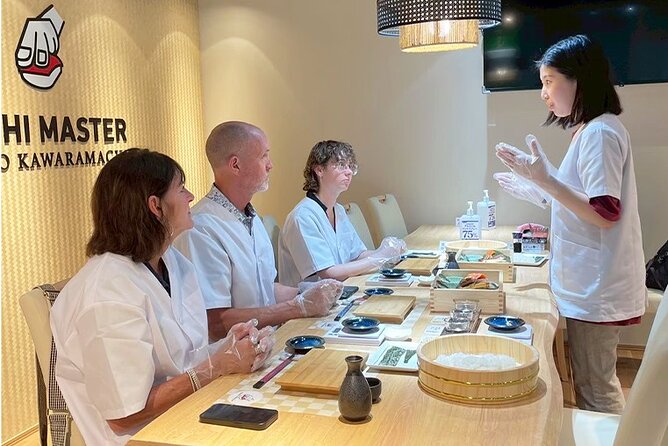
Making sushi in Kyoto is less about becoming a chef and more about learning with your hands. In this 90-minute Kawaramachi class, you’ll hear a short introduction to sushi, practice shaping rice, prepare nigiri and rolls, then eat what you make. English-speaking instructors such as Kioko and Rio have led especially warm, patient sessions.
I like the central location and the fact that the class suits children, couples, first-timers, and families. I also like that your finished sushi becomes lunch, with optional sake or soft drinks available. The main catch is finding the room, since it is tucked inside a shopping center and the address can be confusing.
Key points at a glance
- Make and eat your own sushi: The course includes sushi ingredients and the pieces you prepare.
- Beginner-friendly instruction: English-speaking staff demonstrate the techniques and help you along.
- A useful Kyoto rainy-day activity: The class takes place indoors and lasts about 90 minutes.
- Family appeal: Children as young as six have taken part, with staff offering plenty of hands-on help.
- Kawaramachi setting: The class is near one of Kyoto’s most convenient shopping and dining areas.
- Plan your arrival carefully: Look for the building at 4071 Sakuranocho, then head upstairs near the Skechers store.
What you actually do during the 90-minute class
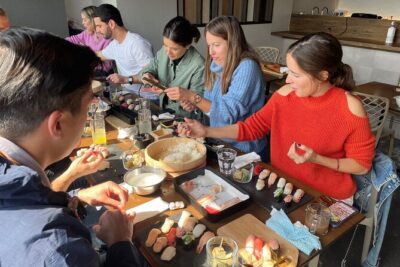
The class follows a simple rhythm. You begin with a short introduction to Japanese food culture and the background of sushi. Then the instructors demonstrate the basic methods before you prepare your own pieces. At the end, you sit down and eat your work.
That order matters. You get enough context to understand what you are making, but the session remains practical rather than turning into a long lecture. I would think of it as a food activity with a cultural introduction, not professional culinary training.
The advertised course focuses on nigiri and rolls, with 10 pieces listed as the standard amount. Some class descriptions from past sessions refer to three types of sushi and 12 pieces, including temari sushi. Ingredients can change with availability, so you should expect the exact selection and number of pieces to vary.
You will learn how sushi rice is used and how the pieces are formed. The available information does not promise a full rice-cooking lesson or fish-cutting workshop. If you want to learn detailed knife skills, fish preparation, or the complete process from raw ingredients to finished rice, this class may feel too light.
For most people, that is not the point. You are here to make something edible in a short time, with an instructor close by when your rice shape goes crooked. The pace keeps the experience approachable.
Other classes behind the counter in Kyoto:
- The Original Small-Group Sushi Making Class in Kyoto
★ 5.0 · 436 reviews - Sushi Making Tokyo Roll and Authentic Japanese Sushi Class
★ 5.0 · 3,971 reviews - Tokyo: Roll and Authentic Sushi Making Class in Asakusa
★ 4.9 · 1,957 reviews
The sushi lesson: hands-on, but not a chef school
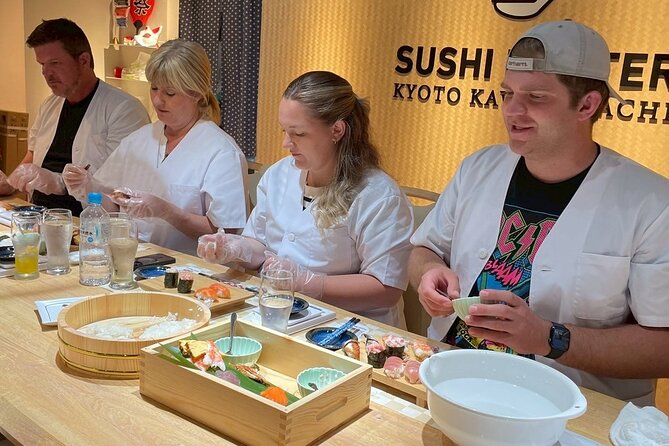
The strongest part of this activity is the direct instruction. You are not simply watching a chef work behind a counter. You handle the ingredients, shape the rice, roll sushi, and cut the finished rolls.
The staff demonstrate each step, then give you time to copy it. Several instructors are described as patient and playful, which is useful when children or first-time sushi makers are involved. Names connected with past sessions include Kioko and Rio, while other classes have been led by friendly Japanese instructors who speak English.
The class teaches the basics rather than demanding precision. You may learn small tips for forming different types of sushi, but the aim is to enjoy the process. Your pieces do not need to look perfect to taste good.
That makes this a solid choice for a mixed group. One person can be very interested in food, another can simply want a fun break from temples, and both can take part. Children have enjoyed shaping rolls, cutting them, and choosing Japanese soda with a marble in the bottle.
There is also a useful distinction to keep in mind. This is a sushi-making activity, not a serious cooking course. One past assessment found the class more focused on having fun than on advanced kitchen technique. I would agree with that reading based on the format described.
Eating your work, plus optional sake
The class ends with the best reward: you eat the sushi you have made. That turns the activity into a meal as well as a lesson, though you should not expect a large restaurant-style feast.
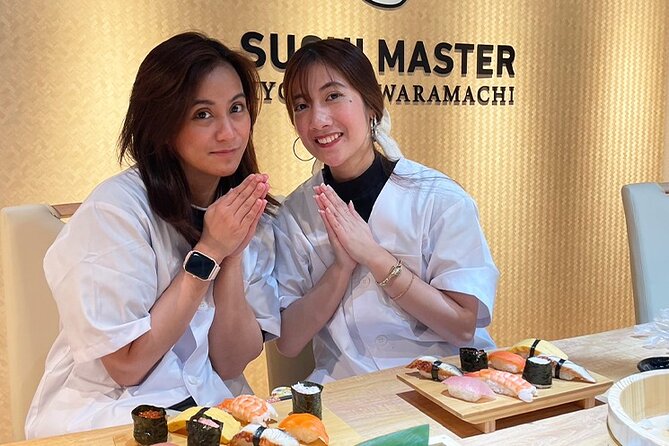
The portion has been described as a good lunch serving, and the course includes the sushi ingredients and the completed meal. You may also order drinks during the class, including soft drinks and alcohol. Sake flights or samplers have been available, which can add a pleasant Japanese touch if you want to compare a few styles.
Drinks are not included in the listed price. One useful warning is that alcohol and soft drinks can feel expensive for the quality. I would treat the drink menu as optional rather than part of the value calculation.
Families may prefer Japanese soda, especially children who enjoy the marble inside the bottle. Adults who want sake can order it separately. If you are watching your budget, simply enjoy the sushi you make and skip the extras.
The food itself is part of the appeal. You get to see how a small amount of rice, filling, and careful shaping becomes a familiar Japanese dish. Even a slightly uneven roll tastes better when you made it yourself.
A central Kyoto location with one real nuisance
The class is in Kyoto’s Kawaramachi area, a convenient part of the city for shopping, restaurants, and evening walks. The meeting address is 4071 Sakuranocho, College Town Shino Koji Building, Nakagyo Ward, Kyoto 604-8035.
The practical problem is that the room can be hard to spot. The building sits on a small street, and the class is inside a shopping center. A useful landmark is the Skechers store. The room is upstairs, on the second floor, near the stairs beside the store.
I would not arrive at the last minute. Search for Sushi Master Kyoto Kawaramachi on Google Maps, save the location before leaving your hotel, and allow extra time to look around. One person lost about an hour trying to locate the venue, while another specifically found it after using the Skechers landmark.
This is the one logistical weakness that comes up repeatedly in the available information. The class itself may be easy to enjoy, but getting there can add stress if you rely only on the formal street address.
There is no hotel pickup or drop-off. You make your own way to the meeting point, and the activity ends there. That is normal for a short central-city class, but it means you should fit it around your own Kyoto plans.
Same base, a different sort of day:
- PERFECT KYOTO 1-Day Bus Tour
★ 5.0 · 13,518 reviews - Kyoto: Fushimi Inari, Kinkakuji, Bamboo Grove 1 Day Bus Tour
★ 4.8 · 4,316 reviews - Kyoto: Tea Ceremony in a Traditional Tea House in Kiyomizu
★ 4.9 · 3,519 reviews - Kyoto Geisha Walking Tour: Gion District & Hidden Gems
★ 4.7 · 3,273 reviews
Is $53.72 a fair price?
At $53.72 per person, the value depends on what you want from a food class. The price includes the instruction, ingredients, English-speaking staff, the sushi meal, and small gifts. It does not include drinks or transportation.
I consider it fair for a short, central activity that also provides lunch. You are paying for an organized class, a staff member who demonstrates each step, the ingredients, and a meal. For a family, the shared activity may be worth more than buying another ordinary lunch.
The value is weaker if you expect detailed professional training. The class does not promise to teach every stage of sushi preparation, and one critical assessment wanted more instruction on rice-making and fish-cutting. If your main goal is culinary skill, compare this with a longer cooking course before booking.
For a couple or family seeking a light activity between sightseeing stops, the price is easier to justify. You get a clear beginning and end, a meal, and a small souvenir rather than just a demonstration.
Why families tend to do well here
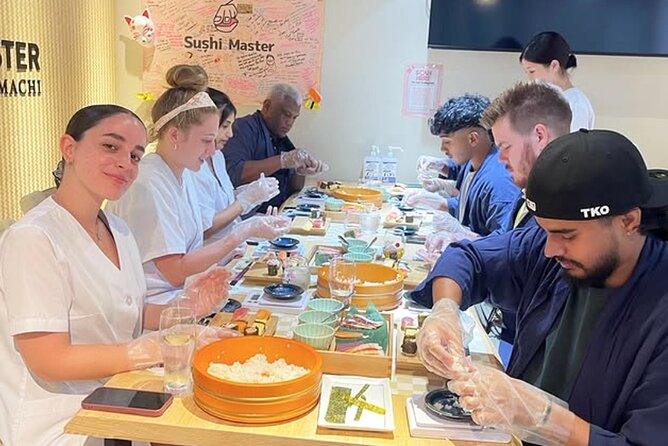
This is one of the better food activities for a family because the work is immediate and visual. Children can roll sushi, cut it, and eat it without waiting through a long explanation.
Past sessions have included children aged six, eight, nine, and eleven. Instructors have made young children feel involved and important, offering close help when needed. That does not mean every child will enjoy it, but the format gives them something real to do.
The 90-minute length also helps. It is long enough to feel worthwhile, but short enough to fit into a busy Kyoto day. On a hot or rainy afternoon, an indoor class gives you a break from the weather without wasting a large block of time.
I would still explain the activity to younger children in advance. They will be handling sushi ingredients and following several steps. If they mainly want to eat rather than make food, the class could feel slower than expected.
Couples, solo visitors, and food lovers
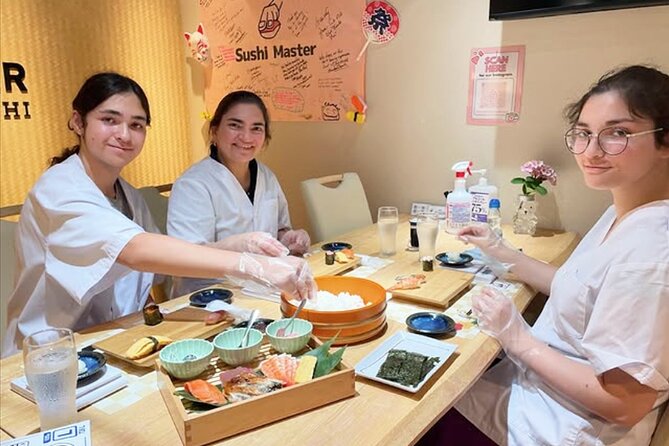
Couples can use this as a relaxed shared activity. You work side by side, laugh at imperfect rolls, and finish with a meal. It is less formal than a high-end sushi counter and more social than simply ordering dinner.
Solo visitors can also fit in easily, since the class brings people together around a common task. The group can reach up to 30 people, so the feel may range from a small class to a fairly full session. Some past classes have been described as small and personal, while others were full.
If you are a serious cook, set your expectations carefully. You may enjoy the cultural background, the demonstrations, and the chance to make several sushi styles. But the class is designed for a broad audience, not for chefs seeking advanced instruction.
Food lovers who want a taste of Japanese food culture without committing to a full-day cooking school are the best match. You learn a few foundations, make a meal, and leave with a small gift and, in some sessions, a playful Sushi Master Certificate.
What to tell the class before you arrive
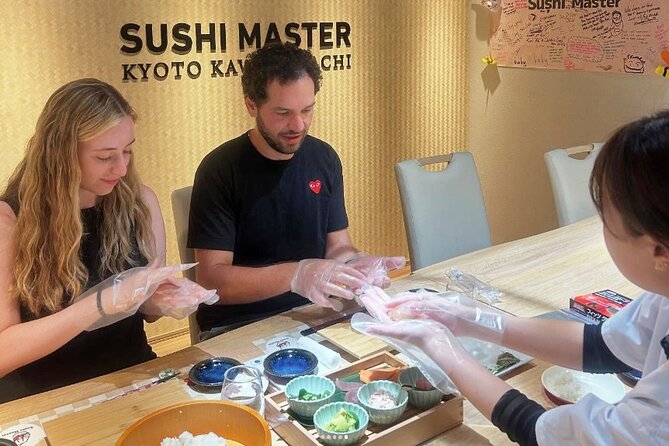
You should state allergies or vegetarian preferences in the Special Requirements section when booking. This is important because ingredients may vary, and the staff need advance notice.
The supplied information does not give a full list of possible substitutions, so do not assume every dietary request can be handled on the spot. Send the details before the class rather than hoping to explain them after you sit down.
You should also remember that drinks cost extra. If you want sake, a sampler, or a soft drink, budget for that separately.
Mobile tickets are accepted, and confirmation is provided at booking. The experience allows same-day bookings when space is available, but I would not depend on last-minute availability if you have a fixed Kyoto schedule.
Cancellation and timing advice
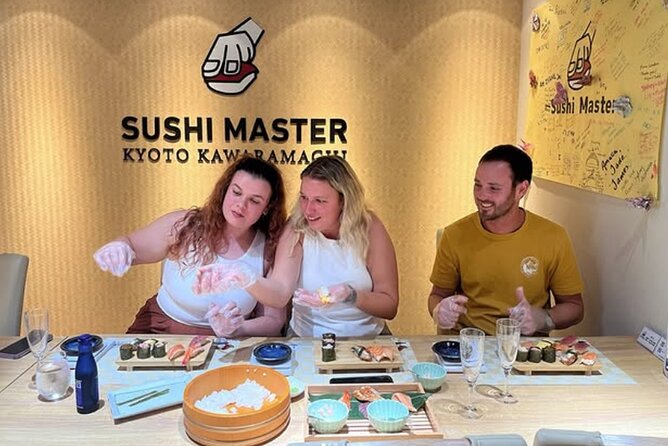
Free cancellation is available up to 24 hours before the experience begins. Cancel later than that, or request a change inside the 24-hour window, and you will not receive a refund.
The cut-off follows local Kyoto time. This matters if you are arranging the class while moving between time zones or making several bookings at once.
Because the activity lasts about 90 minutes and begins and ends at the same location, it is easy to place into a day near Kawaramachi. I would avoid scheduling it too tightly against another timed attraction. The room can take extra time to find, and a late arrival would start the class on the wrong foot.
The biggest strengths and the fair criticisms
The strongest points are clear:
- Friendly English instruction: You can follow the demonstrations without needing Japanese.
- Real participation: You make the sushi instead of only watching.
- Good family format: Children have room to take part and receive help.
- Meal included: Your finished sushi serves as the final meal.
- Convenient area: Kawaramachi makes it easy to combine the class with other plans.
The limitations are just as clear:
- The exact sushi selection can change.
- The class may not teach rice cooking or fish cutting in detail.
- Drinks cost extra and may not feel like good value.
- The venue is difficult to locate without careful preparation.
- A group of up to 30 people may feel less personal than a tiny workshop.
The rating is listed at 5 out of 5 from 713 reviews, with 99 percent recommending it. Those numbers point to a highly consistent appeal, but they do not erase the practical drawbacks. I would book it for the fun, the meal, and the guided activity, not for advanced sushi certification.
Should you book Sushi Making in Kyoto?
I would book this class if you want a short, hands-on Kyoto food activity with English instruction, especially if you are traveling with children or want an indoor break. It is also a good choice for couples who would rather make lunch together than sit through another restaurant meal.
I would skip it if you already have strong sushi-making skills or want serious training in rice preparation, fish cutting, and knife work. In that case, seek a longer and more technical cooking course.
For everyone else, the decision is simple: arrive early, use the Skechers landmark, send allergy details in advance, and treat the optional drinks as extras. Do that, and the class offers a cheerful way to make, eat, and better understand one of Japan’s best-known foods.
FAQ
How long does the sushi-making experience last?
The activity lasts about 90 minutes, including the introduction, sushi-making instruction, hands-on preparation, and time to eat your finished sushi.
Where does the class meet?
The meeting point is at 4071 Sakuranocho, College Town Shino Koji Building, Nakagyo Ward, Kyoto 604-8035, in the Kawaramachi area. Search for Sushi Master Kyoto Kawaramachi on Google Maps.
Is the class taught in English?
Yes. English-speaking staff lead the sushi-making instruction.
What types of sushi will I make?
The advertised course includes nigiri and rolls, with 10 pieces listed. Past formats have included three sushi types and temari sushi, and ingredients may vary according to availability.
Is food included in the price?
Yes. Sushi ingredients and the sushi you make and eat are included. Drinks are not included.
Can I order sake during the class?
Yes. Soft drinks and alcohol can be ordered during the class, but they cost extra. Sake flights or samplers may be available.
Is the activity suitable for children?
Yes. The experience is presented as suitable for families and beginners, and children aged six, eight, nine, and eleven have taken part in past sessions.
Can I cancel for a full refund?
Yes, if you cancel at least 24 hours before the experience start time. Cancellations or changes made less than 24 hours in advance are not accepted for a refund.
Just added in Kyoto
- Kyoto Rickshaw Tour★ 5.0 · 210 reviews
- Kyoto: Private Photoshoot Service★ 5.0 · 158 reviews
- Izakaya Style Cooking Class★ 5.0 · 219 reviews
- Kyoto: Traditional Concert at Townhouse or Bathhouse★ 4.9 · 224 reviews
- Ninja 2-hour Hands-on Lesson by Japanese master in Kyoto -Medium★ 5.0 · 218 reviews
- Kyoto: Arashiyama Bamboo, Temple, Matcha, Monkeys & secret spots★ 5.0 · 219 reviews
- Kyoto: Maiko Makeover and Photoshoot Experience★ 4.7 · 239 reviews
- South Kyoto in a Nutshell: Gentle Backstreet Bike Tour!★ 5.0 · 225 reviews
Sushi-Making Classes, compared.
Sushi Making Tokyo Roll and Authentic Japanese Sushi Class
Read our review →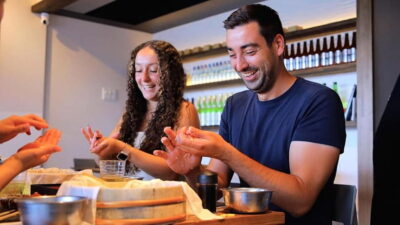
Roll and Authentic Sushi Making Class in Asakusa
Read our review →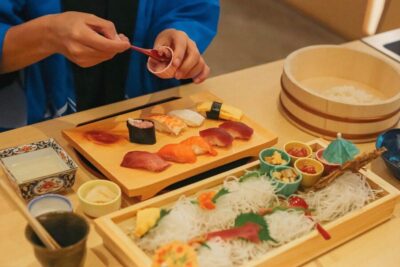
Sushi Making Class in a Happi Coat near a Famous Spot
Read our review →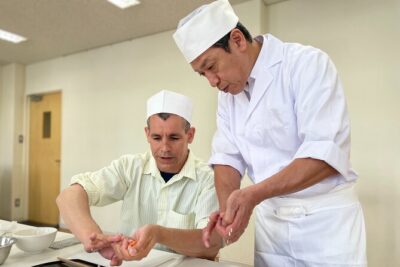
Tokyo Sushi Making Class in Tsukiji with Professional Chef
Read our review →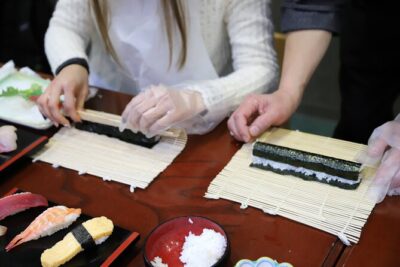
Tsukiji Fish Market Guided Tour and Sushi Making with Pro Chef
Read our review →
Tsukiji Fish Market Sushi Making Class with Pro Chef
Read our review →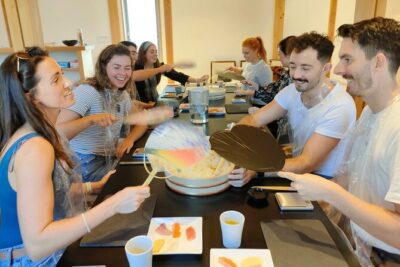
The Original Small-Group Sushi Making Class in Kyoto
Read our review →
Browse the lists this tour appears in