
Reviewed · TSUKIJI & TOYOSU FISH MARKET TOURS
Tokyo Sushi Making Class in Tsukiji with Professional Chef
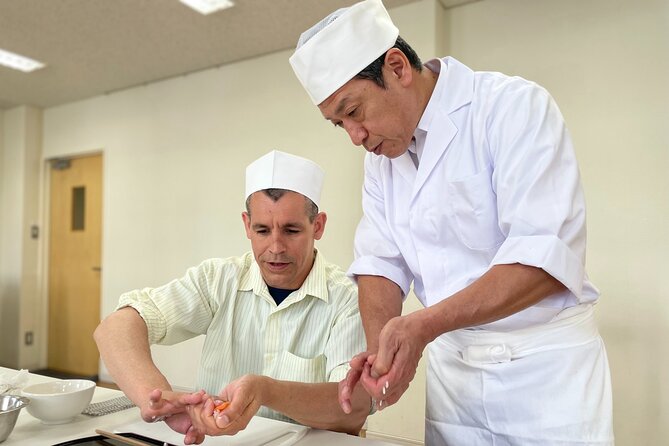
The best part of this Tsukiji class is that you do not just watch a sushi chef work. You handle the rice, fish, and rolling mat yourself, then eat five nigiri and one maki roll for lunch. The fish-cutting demonstration gives the lesson a proper Japanese kitchen feel.
I like the 90-minute length, which fits neatly into a Tokyo morning or afternoon, and I like the patient English support. Hosts including Yuko, Yugo, Kanon, and Emma have helped explain the chef’s instructions, while chefs such as Tanaka and Kate have guided beginners through each step. The main caution is simple: the classroom is on the third floor with no elevator, and the class can sometimes run past its scheduled end.
Key points to know before booking
- Watch a fish-cutting demonstration: A sushi master shows how fish is prepared and explains the Japanese knives used for the job.
- Make two classic styles: You prepare five kinds of nigiri and one rolled sushi, with help at each stage.
- Eat what you make: Your finished sushi becomes lunch, with extra sushi prepared by the chef and fresh wasabi served alongside it.
- Meet in the Tsukiji market area: The class takes place in a traditional Japanese-style building near Tsukiji’s outer market.
- Good for families and beginners: Children and first-time sushi makers have plenty of guidance, and no previous cooking skill is required.
- Plan around the stairs: The classroom is on the third floor, accessible only by stairs.
A sushi lesson in the heart of Tsukiji
Tsukiji is one of Tokyo’s best places to think about food. The famous wholesale market moved to Toyosu, but the Tsukiji Outer Market remains a lively food district filled with shops, counters, ingredients, and kitchenware. This class uses that setting well.
You make your own way to the meeting point at 4-16-2 Tsukiji, near public transportation. The classroom sits inside a traditional Japanese building, away from the main street. It is not a large cooking school with a polished commercial feel. Instead, you enter a more intimate local space, climb the stairs, and sit down at a prepared workstation.
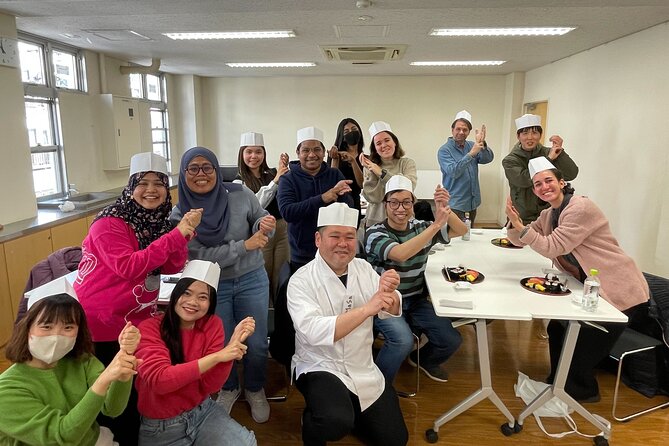
That small setting matters. The maximum group size is 20, so this is not a private lesson, but the chef and English-speaking host can still move around the room and correct your technique. The class has a friendly, family-oriented tone. Children aged 7 to 12 have taken part successfully, and several families have used the activity as a gentle introduction to raw fish.
The location also makes the class easy to pair with a visit to Tsukiji Outer Market. You can arrive early to look around or stay afterward for more food browsing. Just do not treat the class as a guided market tour. Tsukiji Fish Market, Tsukiji Jogai Market, and the nearby Nippon Fish Port area form the setting, but the central activity is the lesson itself.
Other market mornings in Tokyo:
- Tokyo Tsukiji Fish Market Food and Culture Walking Tour
★ 5.0 · 3,184 reviews - Tokyo: Tsukiji Fish Market Food and Walking tour
★ 5.0 · 1,724 reviews - Tokyo: Tsukiji Fish Market Guided Walking Tour
★ 4.9 · 1,397 reviews
The fish-cutting demonstration comes first
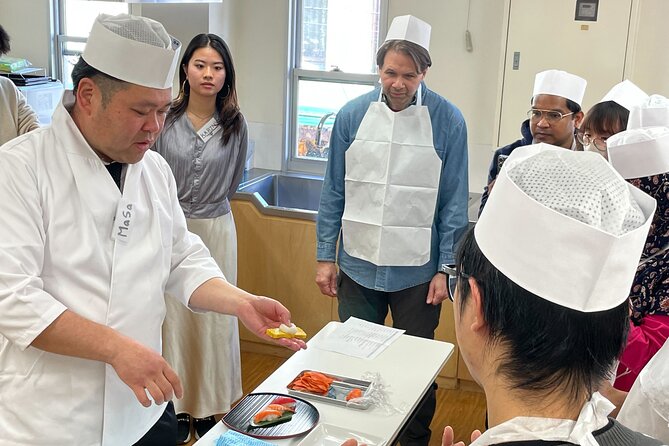
The class begins with a demonstration by the professional sushi chef. You watch the chef break down fish and see the steps needed before it can become sushi. This is more useful than a quick cooking tip because it shows how much work sits behind one neat piece of nigiri.
The chef also explains the Japanese knives. You will not be expected to perform the full fish preparation yourself, but you get a clear look at the tools and the precision involved. For many people, this is the most eye-opening part of the class. A restaurant may bring you a perfect plate, but here you see the careful preparation that makes that plate possible.
The explanation also gives context to the different sushi forms. You learn what makes nigiri different from rolled sushi and why the rice, fish, and shape all matter. The lesson is not an advanced certification course, but it gives you a practical base you can use at home.
English support is built into the experience. A host translates and explains the chef’s instructions, which is important during the knife and shaping demonstrations. Names vary by session, but instructors have included Tanaka and Kate, with hosts such as Yuko, Yugo, Kanon, Emma, and Nao helping English-speaking groups. The exact staff cannot be promised, but the format includes both a sushi master and an English-speaking host.
Making five nigiri and one rolled sushi
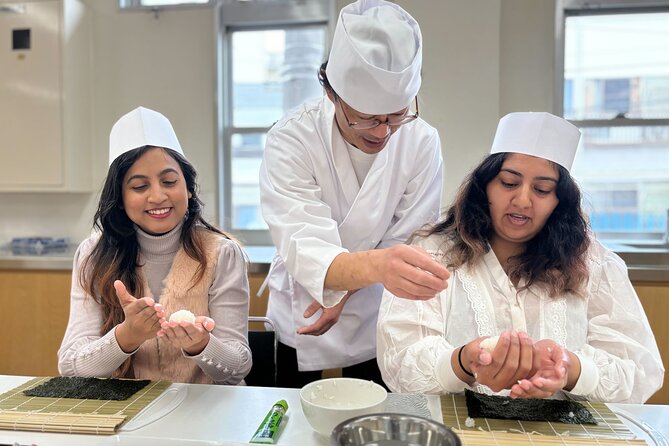
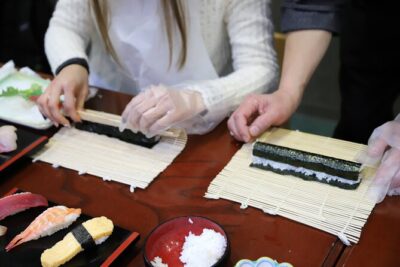
After the demonstration, you begin the hands-on section. The chef takes you through the correct steps for making nigiri, the hand-formed sushi topped with fish. You also make one rolled sushi, or maki, using the proper utensils and tableware supplied through local shops.
The number of pieces is generous for a short class. You make five different nigiri sushi and one rolled sushi, so you practice more than one version of the same shape. The point is not to produce restaurant-perfect pieces on your first attempt. It is to learn how to handle the rice, place the topping, apply the right pressure, and form a roll without crushing it.
You will receive help as you work. The chef demonstrates first, then the host translates and the staff offers corrections when needed. Several participants have found the staff especially helpful when their first attempts looked less tidy than the chef’s. That is part of the fun. Your sushi may not have the exact shape of the master’s, but you understand why the shape is difficult.
You also learn about ingredients, including wasabi. During the eating portion, the sushi master prepares additional sushi and serves freshly prepared wasabi. The ingredients are sourced from the market, which gives the meal a direct connection to the surrounding food district.
The class is suitable for complete beginners. You do not need to know how to cook Japanese food or have previous sushi-making experience. If you are already skilled at making sushi, you may find the instruction basic, but the fish preparation and local setting still add interest.
Your handmade sushi becomes lunch
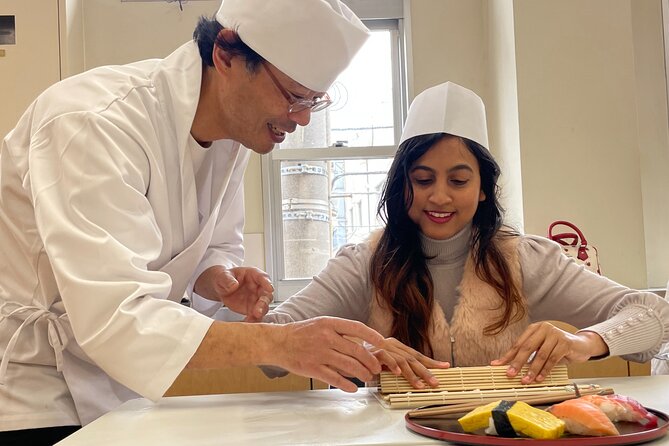
The meal is built into the lesson, so you are not simply making food for display. You sit down and eat the sushi you prepared. This is a useful feature for anyone comparing short Tokyo activities. At $49.74 per person, the price covers instruction, ingredients, equipment, and a substantial handmade lunch.
The value depends on what you want. If you are looking only for the cheapest meal in Tsukiji, you can eat for less or more depending on your choice of shop. But this class combines lunch with instruction, a chef demonstration, English interpretation, and a cultural activity. For a first-time visitor who already plans to spend time in Tsukiji, that makes the price reasonable.
The eating portion also gives you a chance to compare your work with the chef’s. Your own sushi is served alongside additional pieces prepared by the sushi master. That contrast helps you notice the details of rice shape, topping placement, and balance.
Arrive with some appetite. The class provides lunch, and the finished sushi adds up quickly. Extra food and drinks beyond the listed sushi are not included, so do not expect a broader restaurant meal or hotel pickup.
Other classes behind the counter in Tokyo:
- Sushi Making Tokyo Roll and Authentic Japanese Sushi Class
★ 5.0 · 3,971 reviews - Tokyo: Roll and Authentic Sushi Making Class in Asakusa
★ 4.9 · 1,957 reviews - Tokyo: Sushi Making Class in a Happi Coat near a Famous Spot
★ 4.9 · 1,377 reviews - Tsukiji Fish Market Guided Tour and Sushi Making with Pro Chef
★ 5.0 · 775 reviews
Why Tsukiji makes the lesson better
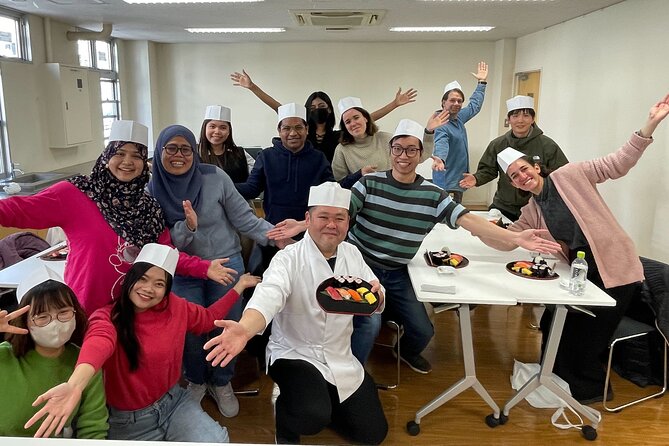
A sushi class could take place anywhere in Tokyo, but Tsukiji gives this one a useful sense of place. The ingredients and utensils come from local shops, and the market area remains one of Tokyo’s best places to see the connection between food, trade, and daily life.
You can combine the class with a walk through the outer market before or after your session. Shops sell seafood, produce, cooking tools, and other Japanese food items. The market can be crowded, and the streets are not designed as a quiet museum visit, so keep your expectations practical. This is a working food district with people shopping and eating.
The location is especially handy if you want a food-focused half day without crossing Tokyo. The activity ends back at the meeting point, leaving you free to continue around Tsukiji. You arrange your own transportation, and hotel pickup and drop-off are not included.
For a first visit, I would schedule the class alongside market time rather than treating it as the whole Tsukiji experience. Give yourself enough time to find the meeting point and climb to the classroom. If you have a reservation or train to catch afterward, leave extra room because the session may run beyond the planned 90 minutes.
A strong choice for families and first-time sushi eaters
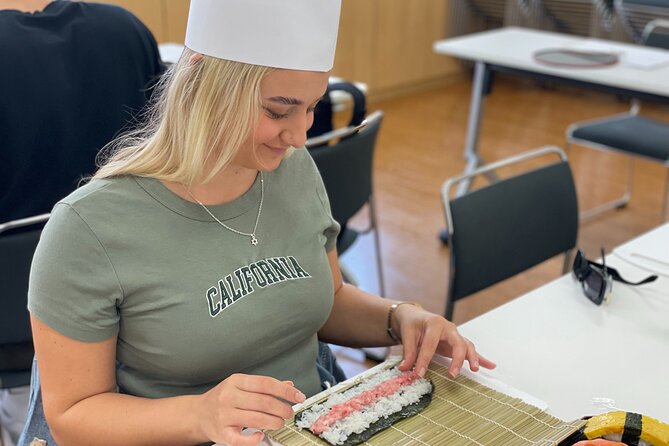
This class works particularly well for families. Making food gives children a clear job to do, and the finished sushi provides a natural reason to try ingredients they might otherwise avoid. Children have tried sushi and sashimi for the first time during the experience, with the hands-on work making the food less intimidating.
The activity also suits adults who like food but do not know much about sushi. You learn the basic categories, see how fish is cut, and practice two common styles without committing to a long cooking course. The short format keeps the lesson focused.
It can even work for someone who has eaten very little sushi. The ingredients and techniques are explained step by step, and the atmosphere is more encouraging than formal. You can ask for help and copy the chef’s movements without feeling you need to arrive with specialist knowledge.
Groups of friends can enjoy it too, especially if you want a shared activity rather than another restaurant meal. The maximum group size is 20, so the room may include several families or mixed groups. If you want a quiet, private lesson, this is not the right format.
The practical drawbacks to consider
The stairs are the clearest limitation. The classroom is on the third floor of a traditional building, and there is no elevator. You should be comfortable climbing stairs before booking. This is also worth considering if you are carrying large bags or traveling with someone who has limited mobility.
Dietary restrictions require advance notice. You should report allergies when making the reservation, and the staff will try to help, but accommodation is not guaranteed. Kosher and halal requests are not accepted. Since sushi relies heavily on fish and other specific ingredients, this is not a flexible choice for strict dietary requirements.
The class is also not a full market tour. You may visit or pass through the Tsukiji area, but the formal instruction takes place inside the classroom. If your main goal is to explore market stalls with a guide, choose a dedicated market walk instead or add one separately.
Finally, the schedule is approximate. The listed duration is about 1 hour and 30 minutes, but the activity can go longer. Avoid booking a tight appointment immediately afterward. Tokyo’s transport system is reliable, but a class that finishes late can still disrupt a carefully timed plan.
How to plan your Tsukiji visit
Use the mobile ticket and make your own way to the stated meeting point. Confirmation is provided at booking, and the location is near public transportation. Check the directions carefully because the classroom is inside a traditional building rather than a large, obvious attraction.
I would arrive with time to spare, especially if this is your first visit to Tsukiji. The market streets can be distracting, and you may want to stop for a quick look before class. Do not eat a large breakfast or lunch first, since your handmade sushi is the meal.
Wear something comfortable for a seated, hands-on activity. The supplied utensils and tableware mean you do not need to bring cooking equipment. The key items to remember are your mobile ticket, any allergy information, and enough time after the class.
The activity offers free cancellation if you cancel at least 24 hours before the start time. Changes or cancellations made within 24 hours are not accepted, and the local time in Tokyo controls the deadline.
Should you book this sushi class?
I would book it if you want a short, practical food activity with a strong sense of place. The combination of a fish-cutting demonstration, English explanation, hands-on practice, and handmade lunch gives you more than a simple tasting. At $49.74, it is a fair choice for a first sushi lesson, particularly when you value the included meal and the convenient Tsukiji setting.
Families, beginners, and curious sushi eaters are the best match. You will get the most from it if you enjoy learning by doing and do not mind your first pieces looking a little uneven.
I would look elsewhere if you need halal or kosher food, cannot manage three flights of stairs, or want a private market tour. For everyone else, this is an easy activity to fit into a Tokyo plan, and you leave with a new skill, a full stomach, and a better understanding of what sits behind a sushi counter.
FAQ
How long does the sushi-making class last?
The class lasts approximately 1 hour and 30 minutes. It may run beyond the scheduled ending time, so leave space before your next appointment.
Where does the class meet?
The meeting point is at 千社額棟 4-chōme-16-2 Tsukiji, Chuo City, Tokyo 104-0045, Japan. The activity ends back at the meeting point.
What sushi will I make?
You will make five different nigiri sushi and one rolled sushi.
Is lunch included?
Yes. You eat the sushi you make during the class. The sushi master also prepares additional sushi, with fresh wasabi served during the meal.
Is the class taught in English?
An English-speaking host supports the professional sushi master and explains the instructions throughout the activity.
Is this class suitable for children and beginners?
Yes. The class is designed for beginners, and families with children have taken part. No previous sushi-making experience is required.
Can the class accommodate allergies or special diets?
You should report allergies when booking. The staff will try to accommodate allergy-related requests, but this is not guaranteed. Halal and kosher requests are not accommodated.
Is hotel transportation included?
No. You make your own way to the Tsukiji meeting point, and hotel pickup and drop-off are not included.
Just added in Tokyo
- Wagyu & Sake Pairing in Shinjuku – Steak, Shabu-Shabu & More★ 5.0 · 112 reviews
- Small-Group Wagyu Beef and 7 Japanese Dishes Tokyo Cooking Class★ 5.0 · 190 reviews
- Nikko: Edo Wonderland Edomura Cultural Theme Park Ticket★ 4.3 · 205 reviews
- 《MEMBERS-ONLY-BAR-HOPPING》Discover Your Special Whiskey in Tokyo!★ 5.0 · 29 reviews
- Japanese Whisky Hunting《HIGH-QUALITY-ONLY》Rare Tasting Class★ 5.0 · 20 reviews
- Luxury Tokyo Sake, Cocktail, Whisky and Pairing Tour★ 5.0 · 18 reviews
- From Tokyo: Private Tour to Fuji/Hakone – Onsen, Art, Nature★ 5.0 · 116 reviews
- Tokyo: KABUKI Show at Kabukiza Theatre Admission Ticket★ 4.8 · 152 reviews
Tsukiji & Toyosu Fish Market Tours, compared.
Tokyo Tsukiji Fish Market Food and Culture Walking Tour
Read our review →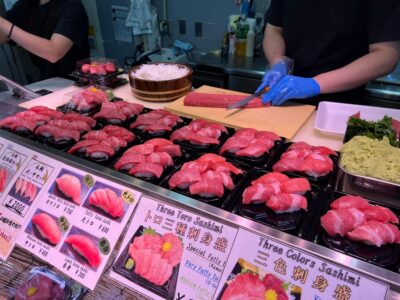
Tsukiji Fish Market Guided Tour and Sushi Making with Pro Chef
Read our review →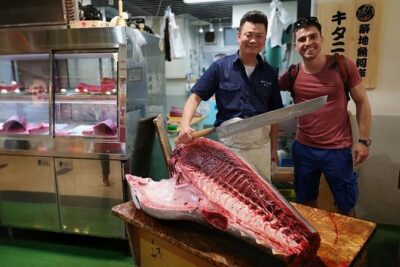
Tsukiji Fish Market Small-Group Food Walking Tour
Read our review →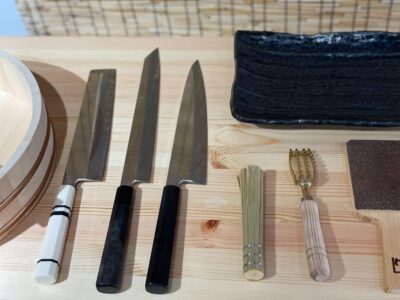
Tsukiji Fish Market Sushi Making Class with Pro Chef
Read our review →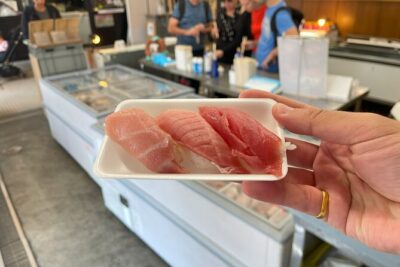
Tokyo Food Tour Taste Fresh Delights at Tsukiji Market
Read our review →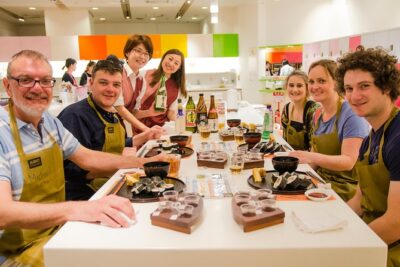
Tokyo Tsukiji Fish Market Tour and Sushi Making Lesson
Read our review →Browse the lists this tour appears in