
Reviewed · COOKING CLASSES
Kyoto: Hands-on Takoyaki and Okonomiyaki Cooking (1 Hour)
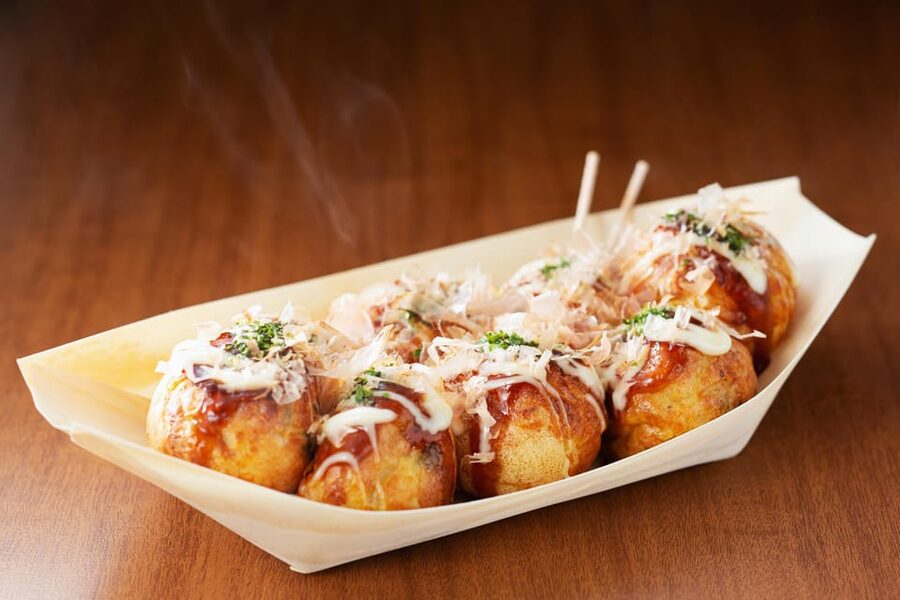
Kyoto has plenty of food demonstrations where you watch someone else do the work. This class takes a better route for many visitors: you cook takoyaki and okonomiyaki yourself, then sit down and eat the results. In one hour, you get two classic Kansai dishes without giving up half a day of sightseeing.
I like the small group limit of six, which gives you room to ask questions and get help at the hot plate. I also like the location, about a 10-minute walk from Shijo or Karasuma Station and about 15 minutes on foot from Nishiki Market. The main consideration is the tight schedule. One hour is efficient, but it leaves little room for a slow, detailed lesson.
The class is casual and beginner-friendly, with English and Japanese guidance. An instructor named Marie has been praised for her warm, friendly manner, and classes are now led or supervised by experienced instructors. Still, one recent account described a late start, limited preparation, and a host checking recipe notes, so I would choose this for a relaxed cooking activity rather than a polished culinary school session.
Key points to know before booking
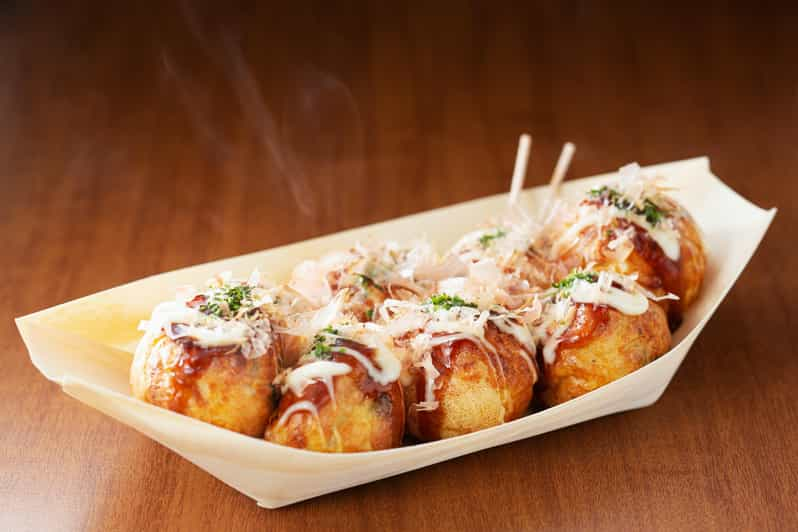
- Two Kansai comfort foods in one hour: You prepare both takoyaki, the round octopus-filled bites, and okonomiyaki, the savory griddled pancake.
- A small class of no more than six: You should have a better chance to receive personal help than in a large demonstration.
- Useful Kyoto location: The studio is roughly 10 minutes from Shijo or Karasuma stations and about 15 minutes from Nishiki Market on foot.
- Dietary requests are possible: Gluten-free, vegan, halal-friendly, and allergy-conscious ingredients can be arranged if you say so when booking.
- Cooking is the main event: This is a hands-on session, not a long talk about Japanese food.
- The price is $56 per person: That includes ingredients, lunch or dinner, an apron, utensils, and the cooking instruction.
Cooking two Kansai classics in a tight one-hour format
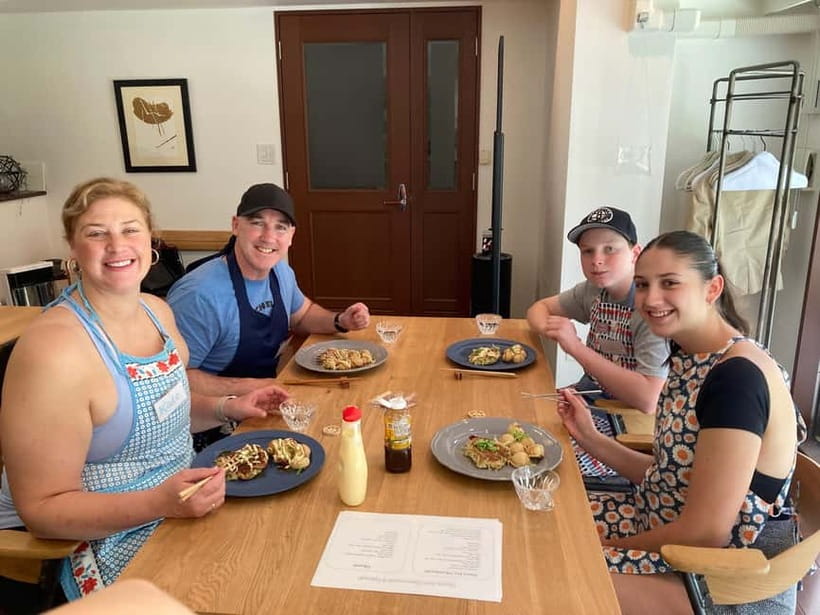
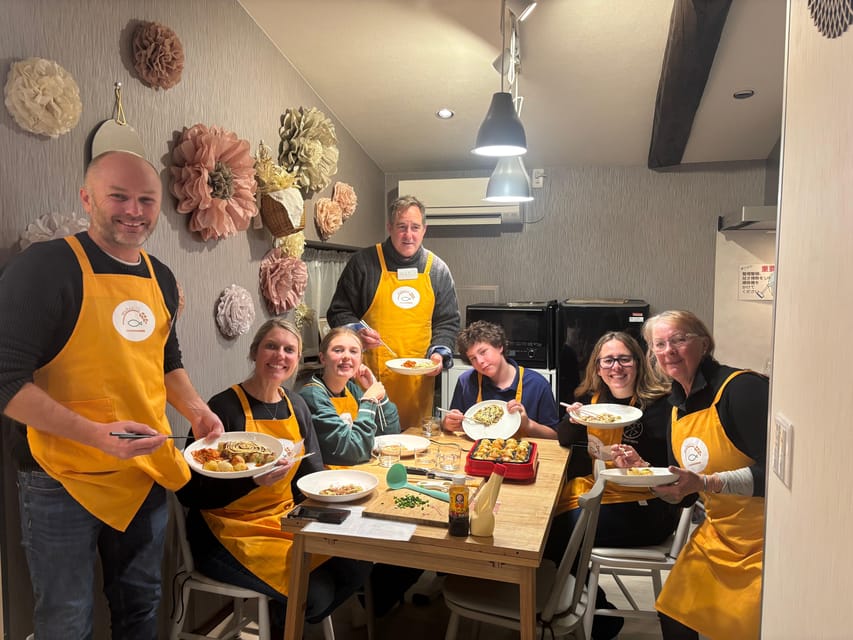
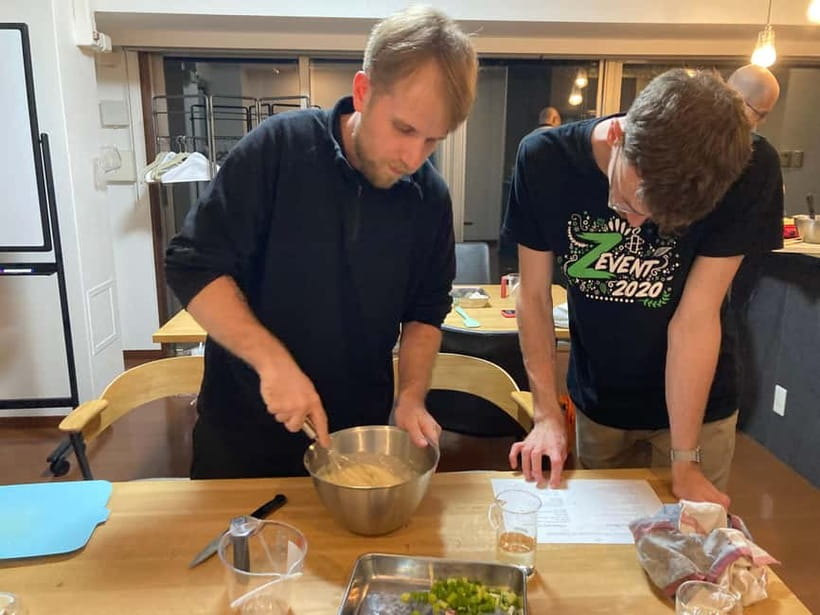
The appeal here is simple. You do not just hear about Japanese comfort food or watch an instructor prepare it. You handle the ingredients, cook the dishes, and eat the meal you made.
The two recipes make sense together. Okonomiyaki and takoyaki share some broad cooking ideas and ingredients, but they feel very different on the plate. Okonomiyaki is a larger savory pancake cooked on a griddle. Takoyaki are small, round snacks formed in a special pan, traditionally with octopus inside.
The experience explains why these foods are so familiar in Japan. Okonomiyaki has been enjoyed since the Taisho era, from 1912 to 1926, while takoyaki became popular during the Showa era, from 1926 to 1989. You are not preparing rare restaurant fare. You are making everyday food with strong ties to Osaka and the wider Kansai region.
I would expect the class to move quickly from a short introduction into preparation and cooking. The emphasis is on doing, so you should not expect a long lecture on culinary history. That is good news if you have only a free hour in Kyoto and want an activity with a meal attached.
Other cooking classes in Kyoto people book:
- Ramen Cooking Class at Ramen Factory in Kyoto
★ 5.0 · 1,937 reviews - Kyoto: Ramen Cooking Class at a Ramen Factory with Souvenir
★ 4.9 · 532 reviews - Kyoto: Ramen, Gyoza, and Onigiri Cooking Class
★ 5.0 · 445 reviews
What making okonomiyaki is like
Okonomiyaki is probably the easier dish for a first-time cook. You work with a batter and fillings, then cook the mixture on a hot surface until it forms a substantial pancake. The instructor can help you understand timing, heat, and how to manage the ingredients.
The name is often explained as meaning something like what you like, grilled. That idea fits the dish, since the ingredients can vary. In this class, the recipe is arranged as part of the experience, and the important point is that you take part in mixing and cooking rather than simply receiving a finished plate.
For you, the value is practical. You leave with a better feel for how this home-style food comes together, and you can ask questions while the dish is in front of you. The class is especially useful if you want to recreate a version at home after returning from Japan.
The short format also means you should keep your expectations in check. This is not a full lesson in regional food culture or a detailed recipe workshop. You will get the main method, some cooking guidance, and a chance to eat the finished dish.
Shaping takoyaki takes more attention
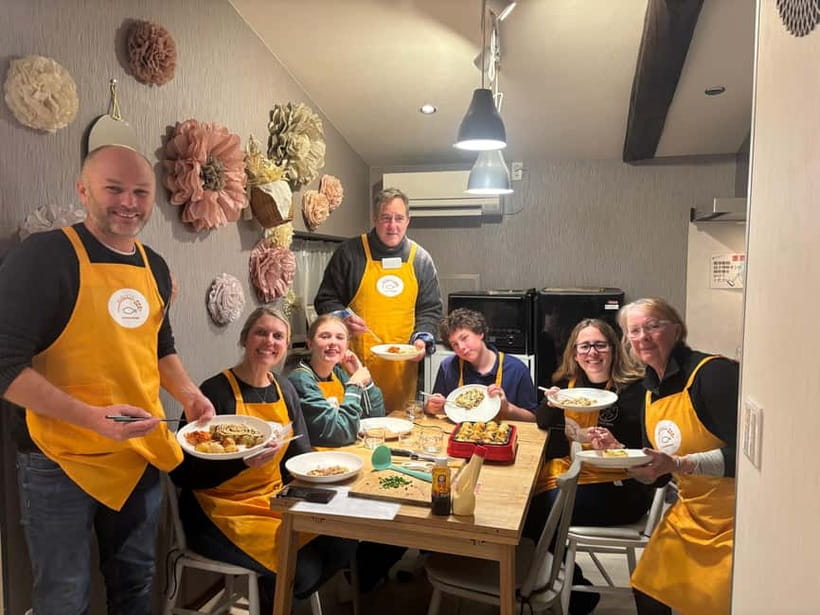
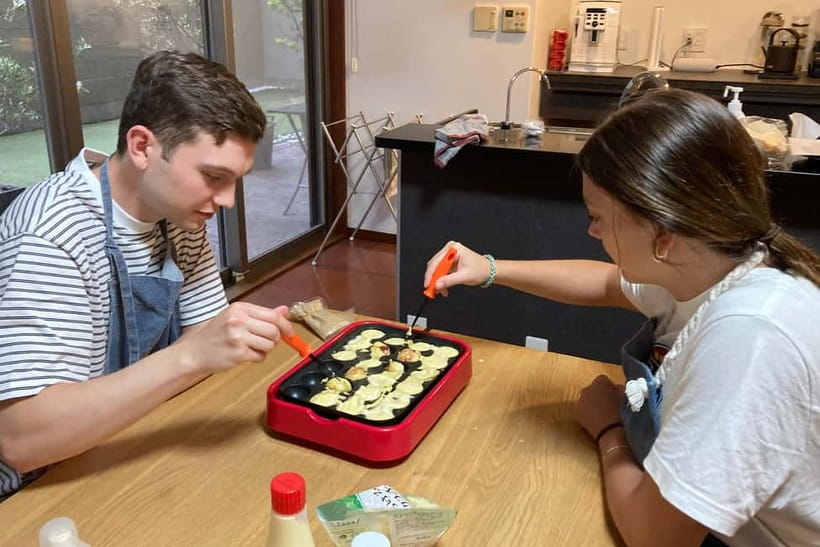
Takoyaki is the more playful part of the class, but it can also be the trickier one. The mixture is cooked in a pan with small round wells, and the pieces need to be turned as they firm up. That shaping step gives you something active to do and makes the lesson feel different from an ordinary meal.
You may need help with the timing and turning technique. That is where a small class matters. With a maximum of six people, the instructor can watch your pan and answer questions without trying to manage a crowd.
The octopus filling gives takoyaki its familiar identity, but the exact ingredients can be adjusted. If you need gluten-free, vegan, halal-friendly, or allergy-conscious food, tell the provider at the time of booking. Do not wait until you arrive, since the ingredients need to be prepared in advance.
I like the fact that you prepare both dishes in the same hour. You get a broader taste of Japanese home-style cooking than you would from making only one recipe. The tradeoff is that neither dish receives the slow, careful treatment it might receive in a longer class.
A friendly, informal class rather than a formal cooking school
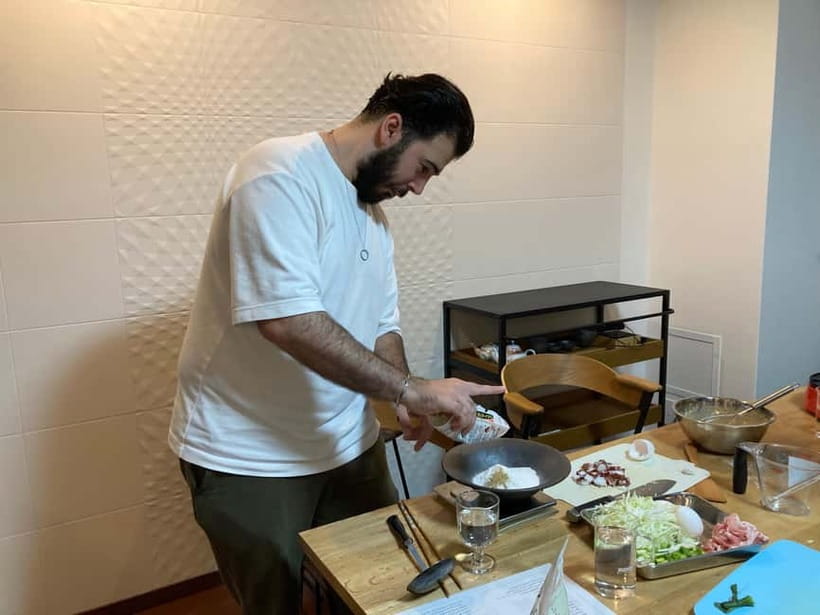
The atmosphere is meant to be relaxed. You cook at your own pace, while the instructor supports you, answers questions, and offers tips when needed. English and Japanese are available, which helps international visitors follow the basic steps.
The experience provider is the Japan Association of Washoku Lifestylists. The class is now led or supervised by experienced instructors, and the flow has been refined to fit the one-hour schedule. That update matters because a short class needs someone who can keep things moving without making beginners feel rushed.
A guide named Marie has been described as especially kind and fun. Another account praised the personal attention in a private class and the chance to ask about Japanese culture and food while cooking. If you enjoy conversation, this format should give you more contact with the instructor than a large group lesson.
There is also a fair warning to keep in mind. One account described a late arrival, a workspace that was not ready, cleaning during the session, and a host who needed to check recipe notes. That sounds like an uneven experience rather than the intended standard, especially given the later instructor update. Still, if you want a highly polished, restaurant-grade presentation, this may not be the right choice.
More cooking in Kyoto:
- Kyoto: Japanese Washoku Bento Small Group Cooking Class
★ 5.0 · 380 reviews - Kyoto Ramen and Gyoza Cooking Class with Professional Chefs
★ 5.0 · 282 reviews - Kyoto: Afternoon Japanese Izakaya Cooking Class
★ 4.9 · 241 reviews - Izakaya Style Cooking Class
★ 5.0 · 219 reviews
Why the six-person limit matters
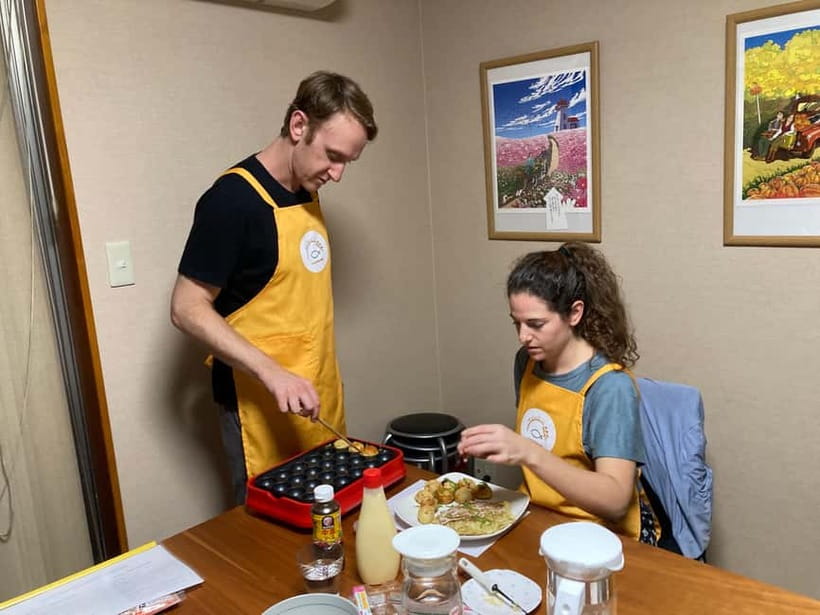
A group of six is small enough to feel personal without requiring a private booking. You can ask about ingredients, cooking methods, or Japanese food customs as you work. If your group is smaller, the class may feel especially conversational.
One couple described having a private session and valued the chance to speak openly with the instructors. Another participant had only two people in the class and found that the small size allowed more interaction with the hosts and more discussion of culinary culture.
The group limit also helps with the practical side of cooking. Takoyaki pans and hot cooking surfaces require attention. A nearby instructor can offer help when your pieces are not turning cleanly or when you are unsure about the next step.
Still, six people is a limit, not a guarantee that every session will be private. If you want one-on-one attention throughout, you should ask about the booking setup before committing. The listed format is a small group, not automatically a private class.
Location, meeting point, and fitting it into Kyoto
The location is convenient for a central Kyoto day. From Shijo Station or Karasuma Station, allow about 10 minutes on foot. From JR Kyoto Station, the journey takes about 15 minutes by train or bus, followed by a short walk.
Nishiki Market is about a 15-minute walk away. That makes the class easy to pair with market browsing, though I would avoid squeezing the cooking session into a schedule packed with timed attractions. The class lasts one hour, but you still need time to find the building and get settled.
The meeting point has a small detail worth noting: take the elevator to the third floor and press the doorbell for room 302. This is the sort of instruction you want in front of you before arrival. A small private-room setup can be easy to miss if you are expecting a large sign or storefront.
Because the activity includes cooking and eating, arrive ready to take part rather than merely observe. Aprons and cooking utensils are supplied, and the ingredient cost is included.
Is $56 a fair price?
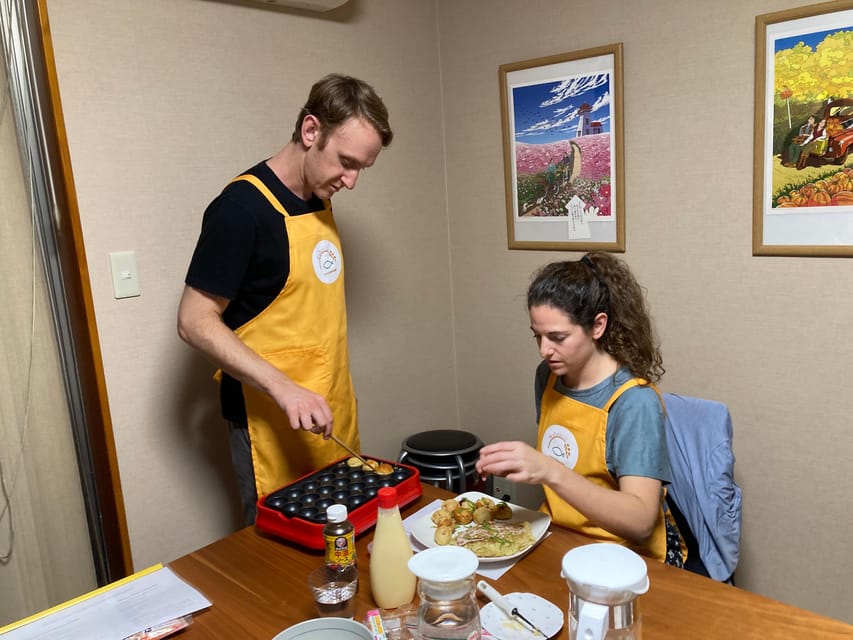
At $56 per person, this is not the cheapest way to eat takoyaki and okonomiyaki in Kyoto. You can find both dishes at casual restaurants and food stalls for much less. The price is paying for the instruction, ingredients, equipment, apron, and the chance to make the meal yourself.
I think the value works best for first-time visitors who want a short cultural activity. You receive a hands-on lesson and lunch or dinner in one booking. The small group size also gives the class more value than a large demonstration where you simply watch.
The price is less convincing if your main goal is a full cooking education. One hour is enough to learn the basic process, but not enough for a detailed lesson on ingredient selection, regional variations, knife skills, or recipe development.
It is also a reasonable option for a rainy afternoon or a spare hour between central Kyoto stops. You do not need to commit a whole morning or evening, and the location makes it easy to add to a day around Shijo, Karasuma, or Nishiki Market.
Dietary planning and what to tell the instructor
Gluten-free, vegan, halal-friendly, and allergy-conscious options are available. You must provide those details when booking so the ingredients can be adjusted.
This is important for both dishes. The standard versions of Japanese comfort foods can include ingredients that do not suit every diet, and takoyaki traditionally contains octopus. If you follow a vegan diet or have a serious allergy, be precise about what you cannot eat.
The information provided confirms that ingredients can be prepared accordingly, but it does not describe the exact substitutions or separate cooking equipment. If cross-contact is a serious concern, ask for clarification before booking. That is sensible for any hands-on food class.
Who will enjoy this most
I would recommend this class to you if you are visiting Japan for the first time, want to cook rather than watch, and have only an hour available. It is also a good fit for couples, small friend groups, and families looking for a simple food activity.
You will probably enjoy it most if you like informal instruction and do not need every step to feel highly scripted. The friendly conversation and chance to ask questions are part of the appeal.
It may not suit you if you want advanced cooking technique, a long cultural talk, or a carefully staged professional demonstration. The schedule is short, and at least one session felt less organized than expected.
The overall rating is 4.7 from 25 ratings, with strong praise for the personal attention, the friendly instructors, and the chance to make two dishes in one session. I would treat that as a good sign, while keeping the isolated organization concern in mind.
Should you book this Kyoto cooking class?
Book it if you want an easy, central, hands-on introduction to two beloved Kansai foods. The best reasons are the small six-person limit, the one-hour schedule, the included meal, and the dietary flexibility when requested ahead of time.
I would skip it if you are seeking a serious culinary course or a perfectly choreographed class. For most first-time visitors, though, making takoyaki and okonomiyaki yourself is more memorable than simply ordering them, and $56 is fair when you value the activity as much as the meal.
FAQ
How long does the cooking experience last?
The experience lasts one hour.
What foods do you make?
You make takoyaki and okonomiyaki, two popular Japanese comfort foods associated especially with the Kansai region.
Is the class suitable for beginners?
Yes. The class is designed to be casual and beginner-friendly, with hands-on cooking and instructor support.
How many people can join?
The group is limited to six participants.
What languages are available?
Instruction is available in English and Japanese.
Can I request gluten-free, vegan, halal-friendly, or allergy-conscious ingredients?
Yes. You must provide your dietary requirements or allergies when booking so the ingredients can be adjusted.
What is included in the price?
The price includes the experience, ingredients for the meal, an apron, and cooking utensils for rental.
How do I reach the meeting point?
The location is about a 10-minute walk from Shijo Station or Karasuma Station. At the building, take the elevator to the third floor and press the doorbell for room 302.
Just added in Kyoto
- Private Cooking Class Udon in Kyoto Japan★ 5.0 · 23 reviews
- Your Private Vacation Photography Session In Kyoto★ 5.0 · 110 reviews
- Kyoto: Zen Meditation at a Private Temple with a Monk★ 5.0 · 25 reviews
- Private Pewter Sake Cup Experience with a Kyoto Artisan★ 5.0 · 31 reviews
- Kyoto Wagashi(Japanese sweets) Cooking Class near Fushimiinari★ 5.0 · 60 reviews
- Kyoto:Family-Friendly Kimono & Yukata Experience at WARGO★ 5.0 · 147 reviews
- Private Guided Traditional Buddhist Cooking in Japan★ 5.0 · 16 reviews
- Kyoto: Gion Geisha District & Sake-in-Hand Walking Tour★ 5.0 · 37 reviews
Cooking Classes, compared.
Ramen Cooking Class at Ramen Factory in Kyoto
Read our review →
Ramen & Gyoza Cooking Class in Tokyo with Local Supermarket Visit
Read our review →
Ramen Cooking Class at a Ramen Factory with Souvenir
Read our review →
Japanese Washoku Bento Small Group Cooking Class
Read our review →
Sumo Stage Show with Bento or Snack + Fight & Photo
Read our review →
Ramen and Sushi Cooking Class with Sake Pairing Set in Tokyo
Read our review →Browse the lists this tour appears in