
Reviewed · TEA CEREMONY EXPERIENCES
Learn Zen in a class of making Matcha tea near Osaka Castle
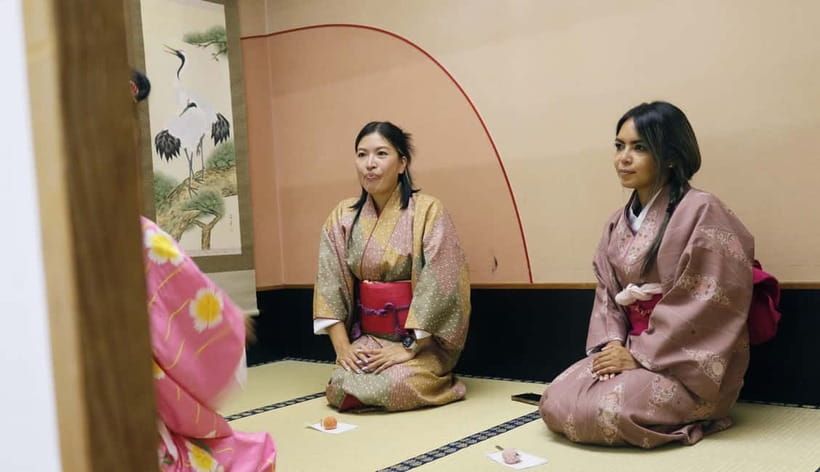
Passing through the tea-room entrance is meant to level the room: age, nationality, gender, and social rank are left outside. I like that this one-hour class treats the tea ceremony as a shared exchange, not just a demonstration. I also like the small group size, colorful kimono, and photo service.
The main consideration is time. One hour goes quickly once changing, hair styling, explanations, tea preparation, and photographs are included. The address is in Joto-ku rather than directly at Osaka Castle, and Apple Maps reportedly shows the wrong location, so use Google Maps and arrive early.
Key points to know before booking
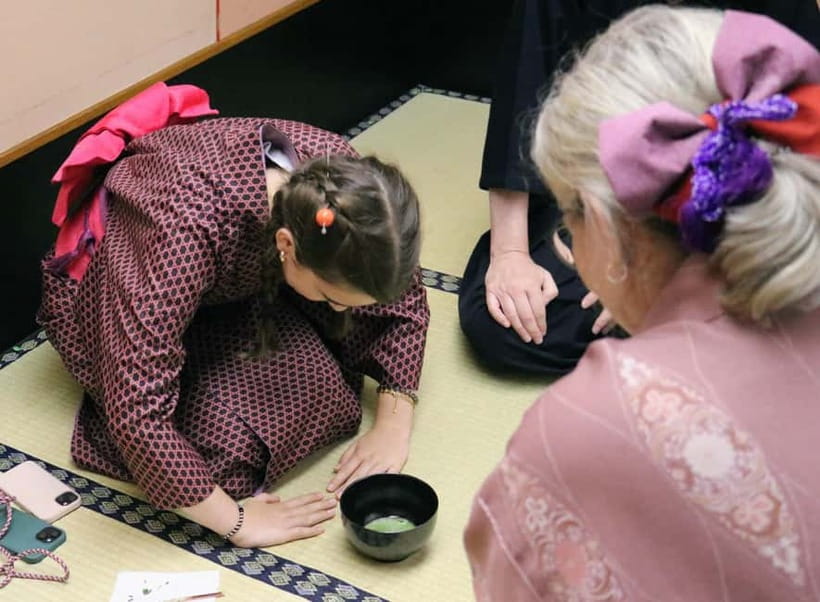
- Tea ceremony with a hands-on turn: You do not only watch matcha being made. You practice preparing tea for another person.
- Traditional clothing included: Women wear kimono, while men wear hakama and dogi. Extra hair styling and outdoor photo options may cost more.
- Seasonal wagashi matters: The small Japanese sweet is part of the lesson, helping explain the Japanese love of seasons and handmade beauty.
- Tiny class, more personal attention: Groups are limited to six, with English and Japanese instruction.
- Photos arrive by email: A photographer takes pictures during the experience, and the images are sent to your designated email address.
- Plan around the 30-minute arrival time: You need time to change before the reserved one-hour session begins.
A quiet tea lesson near Osaka Castle
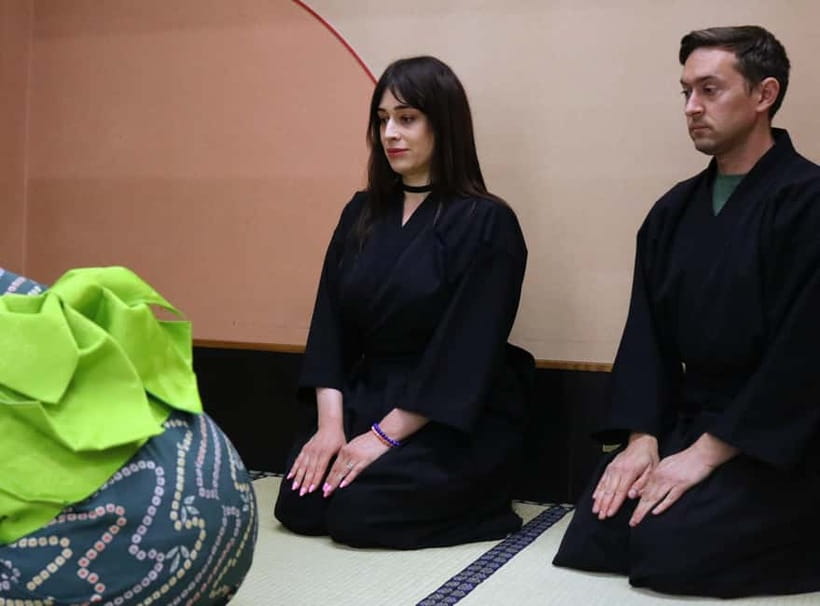
This experience offers a compact introduction to several parts of Japanese culture at once: clothing, etiquette, matcha, wagashi, hospitality, and photography. It takes place at Bushi no Homare, also called Samurai Honor, a venue that also offers martial arts and calligraphy.
The setting is not Osaka Castle itself. The activity address is Excellence Takayama 1F, 2-3-19 Shiginonishi, Joto-ku, Osaka-shi, Osaka 536-0014. Look for a wooden sign reading Honor of the Samurai, plus a rack of activity pamphlets. Kimonos and hakama may be hanging outside, which makes the entrance easier to spot.
I would use Google Maps rather than Apple Maps for this outing. The supplied directions specifically warn that the Apple Maps address is incorrect. That is a small detail, but it matters when you have a fixed start time and need to arrive 30 minutes early.
The class is limited to six people. That number works well for an activity built around careful gestures and personal instruction. In a large group, the etiquette would become a performance you watch from the back. Here, you have a better chance to ask questions and take your own turn.
Other castle tours in Osaka people book:
- Osaka Castle: Museum and Tower Entry Ticket
★ 4.5 · 2,380 reviews - Ultimate Osaka Walking Tour: Castle, Dotonbori & Hidden Gems
★ 5.0 · 862 reviews - Osaka Castle Walking Tour and Castle Tower Admission
★ 5.0 · 561 reviews
Changing into kimono or samurai dress
The experience begins with traditional clothing. Men wear hakama and dogi, becoming samurai for the session. Women wear kimono in the style described as Yamato Nadeshiko, a traditional image of Japanese womanhood.
Bring a T-shirt underneath. That is the only item specifically requested, and it makes sense for a quick change into layered clothing. You should also arrive in something comfortable enough to wear under a kimono or hakama.
For many people, this is the most exciting part before the tea even begins. You choose kimono colors, and the clothing gives the photographs a strong sense of place. One booking included careful hair styling with flowers, while the activity information lists collected hair and kanzashi as a paid option. Ask at the time of booking exactly what is included in your chosen package.
Women may also have the option to add kimono accessories such as an obi, tabi socks, zori sandals, a basket bag, and an outdoor photo session. Men can add an outfit with obi, tabi, geta wooden clogs, and outdoor photography. These extras are not included in the basic $40 price, so check the total before you book if the full portrait look matters to you.
The clothing is not only costume. It changes how you move. Sitting, standing, walking, and bowing require more care, which helps you understand why tea ceremony etiquette places such importance on controlled gestures.
Learning the manners before the matcha
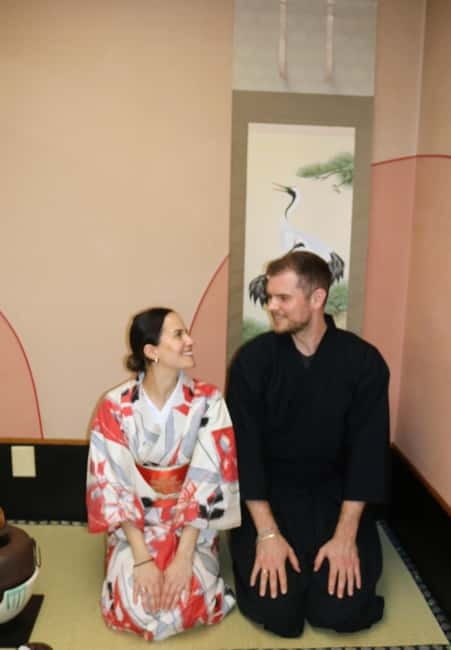
The instructor explains how to sit, bow, stand, walk, and receive tea. You learn the prescribed movements by practicing them, rather than trying to memorize a long lecture.
The central idea is hospitality shared by two sides. The person preparing tea offers careful attention, but the person receiving it also responds with awareness and respect. That is why the ceremony is more than one person serving a drink to another.
The host is expected to create a welcoming atmosphere. The person receiving tea is expected to notice that effort and respond properly. You may find this approach useful even if you have no interest in formal tea ceremony. It shows that hospitality is not simply a service delivered in one direction.
The class also explains the importance of the tea-room entrance, called the nijiriguchi. Once you pass through it, everyone is treated equally, regardless of age, nationality, gender, or status. That idea gives the ritual a social meaning beyond the mechanics of whisking green tea.
The lesson may feel formal at first. Do not worry about getting every movement perfect. The point is to learn the meaning behind the gestures and practice them with care.
Preparing matcha instead of only watching
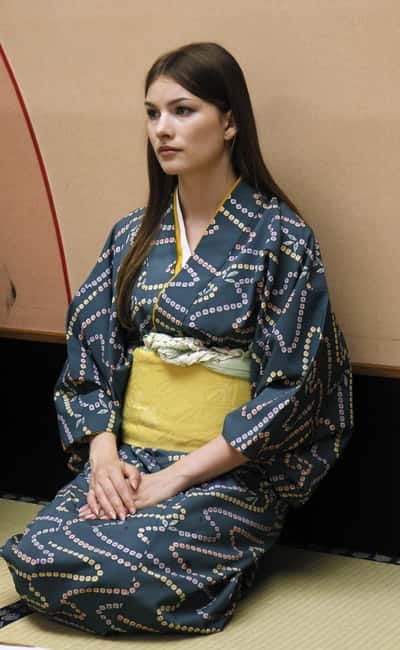
The certified instructor prepares matcha according to traditional manners, then serves it to you. You also get the chance to prepare tea for another person, an important feature that makes this more than a staged cultural display.
Matcha is powdered green tea whisked with hot water. Its flavor can be earthy and slightly bitter, especially if you are used to sweetened tea. The wagashi served alongside it provides a gentle sweet contrast.
The order of the session allows you to understand the relationship between host and receiver. You see the preparation, receive the tea, learn the correct response, and then take a turn making it yourself. That exchange is where the class becomes memorable.
English interpretation is available, and the instructors work in English and Japanese. Kaori is one instructor named in the experience feedback, and she is described as explaining the process, historical setting, and cultural meaning step by step. Staff for Italian, Spanish, French, Chinese, Thai, or Indonesian may be available, but language support beyond English depends on the schedule. Ask before reserving if that matters to you.
Other tea rooms and ceremonies in Osaka:
- Osaka: Tea Ceremony Experience
★ 4.9 · 1,426 reviews - Tea Ceremony Experience in Osaka Doutonbori
★ 5.0 · 754 reviews - Matcha Making Class in Osaka with Authentic Japanese Sweets Set
★ 5.0 · 509 reviews - Osaka: Matcha Making Experience with Japanese Sweets
★ 5.0 · 146 reviews
Wagashi and the Japanese sense of the seasons
Wagashi is the small Japanese sweet served with tea. It developed alongside the tea ceremony during the Kamakura period and reflects a Japanese habit of expressing the seasons through food.
The designs are handmade, delicate, and often shaped around seasonal ideas. Spring, summer, autumn, and winter are not simply dates on a calendar here. They influence colors, forms, and the feeling the sweet is meant to convey.
This is where the lesson introduces wabi and sabi, ideas connected with simplicity, imperfection, age, and quiet beauty. You do not need a long art-history background to appreciate the point. The sweet is made to look gentle and carefully formed, but not mass-produced or flashy.
I like this part because it gives the matcha a wider cultural setting. Without the wagashi explanation, you might remember only a bitter drink and a series of bows. With it, you begin to see how food, craft, season, and hospitality connect.
The sweet is also a useful detail for families. Children can understand the idea of designing food around spring flowers or autumn colors more easily than a lengthy explanation of aesthetics. Keep in mind that children under 10 cannot join this activity.
The photo session and what is actually included
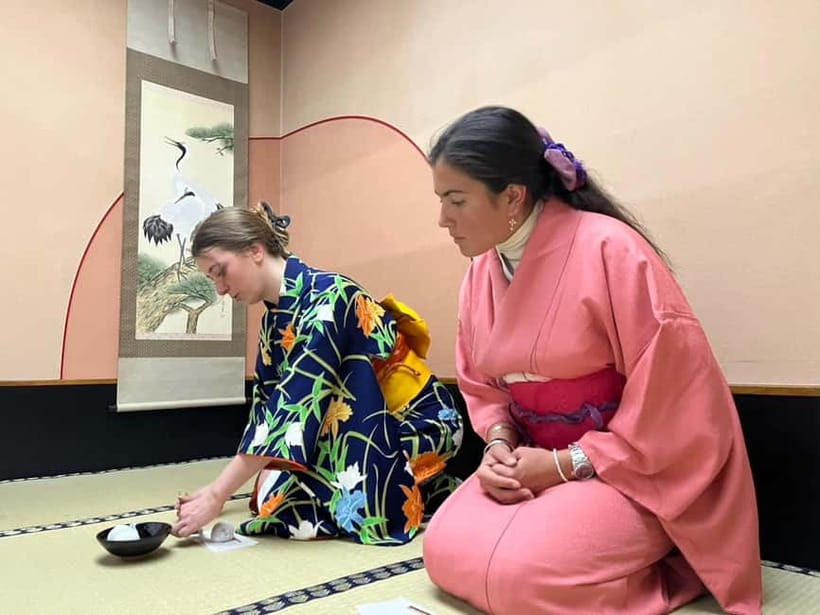
Photography is included, with images sent to your designated email address. A photographer takes pictures during the ceremony, allowing you to focus on the activity instead of trying to manage a phone while wearing formal clothing.
That is a real advantage. Kimono sleeves, hakama, tea utensils, and careful hand movements are hard to capture casually. The photo service gives you a record of the experience without turning the whole class into a self-timer exercise.
The included photography should not be confused with the paid outdoor photo options. The basic experience provides photo shooting and digital delivery, while outdoor portraits, special styling, and movie shooting are listed as extras.
If you want the strongest visual result, ask about the difference between the included photos and the paid package. You should also confirm whether hair styling and kanzashi are part of your reservation. The information supplied for this activity lists them as optional, while one booking included hair arranged with flowers at no extra cost.
Is $40 good value for one hour?
At $40 per person, the value depends on what you want from an Osaka cultural activity. If you only want to taste matcha, the price may feel high. If you want clothing, instruction, hands-on tea preparation, wagashi, an interpreter, a certified instructor, and digital photos, the cost is more reasonable.
You are paying for staff time as much as for tea. Dressing several people, explaining formal manners, adjusting the pace for a small group, and taking photographs all require work. The included kimono or hakama also makes this different from a simple tea tasting.
The one-hour duration is both a strength and a limit. It fits neatly into a day of sightseeing and does not demand half a day. On the other hand, the first 30 minutes before the start are for instructions and changing, so you should not expect a long study of tea ceremony.
I would consider it a good choice for a first introduction. Someone already deeply interested in chanoyu may want a longer, more formal school-based lesson. For most visitors, this class offers a clear and friendly entry point without taking over the entire day.
Who will enjoy this experience most?
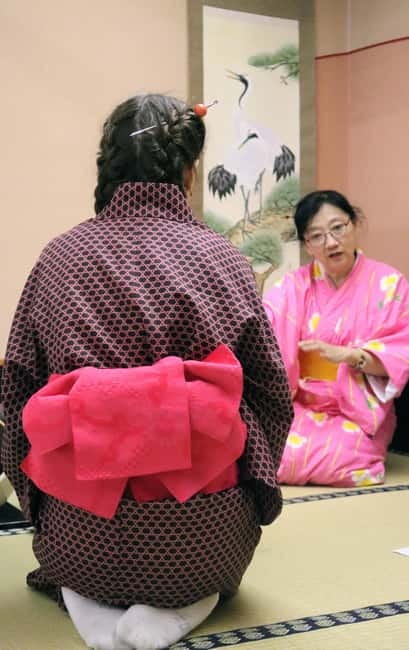
I would recommend it to couples, families with children aged 10 and older, first-time visitors to Japan, and anyone who wants photographs in traditional clothing. The small group format should suit people who prefer direct help over a large demonstration.
It also works well for parents and children who want a shared activity rather than separate sightseeing. Each person can dress up, learn the same gestures, prepare tea, and receive photos. That shared rhythm gives the class a stronger memory than simply posing in rented clothing.
The experience may be less suitable if you dislike formal sitting, careful movement, or dressing in layers. The ceremony has rules, and the value comes partly from respecting them. You should not book it expecting a casual drink and a quick costume change.
It is also not suitable for children under 10, people with altitude sickness, or people over 95. Pets, alcohol, drugs, and nudity are not allowed.
Timing, meeting details, and language support
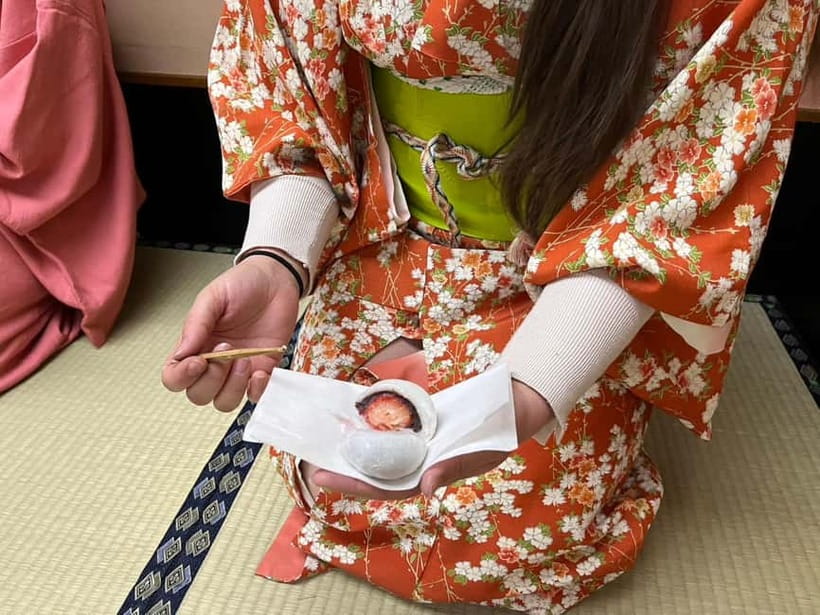
Arrive 30 minutes before your reserved time. This gives staff room to provide instructions and help you change before the one-hour activity begins. Arriving at the start time could reduce the actual tea lesson and leave you feeling hurried.
The meeting point is Samurai Honor, at Excellence Takayama 1F in Joto-ku. Search the exact address on Google Maps and look for the wooden Honor of the Samurai sign. There is no hotel or train-station pickup, and transportation is not included.
The default interpreter language is English. Japanese instruction is also available. Other languages may be possible, but you need to ask about staff schedules before booking, and availability is not guaranteed.
The price includes tax and tips, so you do not need to budget a separate gratuity. Personal expenses and optional styling, clothing, outdoor photography, and movie shooting cost extra.
You can cancel up to 24 hours in advance for a full refund, and the reserve-now, pay-later option allows you to hold a place without paying immediately. These policies are useful if your Osaka schedule is still moving around.
Should you book the Samurai Honor tea class?
I would book this if you want a short, well-organized cultural activity with a strong visual element. The best features are the hands-on matcha preparation, careful explanation of manners, seasonal wagashi, small group size, and included digital photos.
I would skip it if you want a long, highly formal tea-school lesson or if you are trying to stay directly beside Osaka Castle. The venue is in Joto-ku, and the class moves quickly once changing and photography are included.
For most people, the $40 cost is fair because it combines several paid-style experiences into one hour. Confirm the meeting point on Google Maps, ask about hair and outdoor photo upgrades, wear a T-shirt, and arrive early. If you do that, this is a practical way to add a calm, hands-on piece of Japanese culture to an Osaka day.
FAQ
Where does the tea ceremony take place?
It takes place at Bushi no Homare, also called Samurai Honor, at Excellence Takayama 1F, 2-3-19 Shiginonishi, Joto-ku, Osaka-shi, Osaka 536-0014.
Is the activity inside Osaka Castle?
No. The class is near Osaka Castle but takes place at the Samurai Honor venue in Joto-ku.
How long does the experience last?
The tea ceremony activity lasts one hour. You should arrive 30 minutes before your reserved time for instructions and changing clothes.
What clothing is provided?
Women wear kimono. Men wear hakama and dogi. Additional items such as obi, tabi, zori, geta, basket bags, and some outdoor photo options may be paid extras.
Is hair styling included?
Hair collection and kanzashi are listed as a paid option. Because inclusions can vary, ask about hair styling when making your reservation.
Is the activity available in English?
Yes. The default interpreter language is English, and Japanese instruction is also available. Italian, Spanish, French, Chinese, Thai, and Indonesian support may be possible depending on staff availability.
What is included in the price?
The $40 price includes kimono clothing, English interpreter guide staff, matcha, wagashi, a certified professional instructor, tax, tips, and photo shooting with digital delivery by email.
Can children join the tea ceremony?
Children under 10 cannot join. Children aged 10 or older may participate, subject to the activity requirements and available places.
More castle tours elsewhere in Japan
- From Osaka: Himeji Castle, Arima Onsen & Mt. Rokko Day Tour
★ 4.6 · 339 reviews - 5-Hour Osaka Bike Tour to the Neighborhood of Osaka Castle
★ 5.0 · 319 reviews - Osaka Castle Guided Tour
★ 4.7 · 249 reviews - Osaka: Castle History Walking Tour / Castle Tower Admission
★ 4.9 · 230 reviews
More meditation sessions in Osaka
- Tokyo: Zen Meditation at a Private Temple with a Monk
★ 5.0 · 510 reviews - Kyoto Zen Meditation & Garden Tour at a Zen Temple with Lunch
★ 5.0 · 441 reviews - Kyoto: Zen Experience in a Hidden Temple
★ 5.0 · 437 reviews - Kyoto: Tea Ceremony Meditation – Make Matcha with Tea Master
★ 4.8 · 406 reviews
Just added in Osaka
- Private arrival transfer from Kansai International airport to Kyoto City★ 5.0 · 32 reviews
- (Ticket Included) Explore Osaka Castle & Museum of History★ 4.8 · 21 reviews
- Hidden Osaka – Yukaku Red Light Tour & Culinary Adventure★ 4.8 · 96 reviews
- Osaka: Walking Tour and Top Highlights★ 4.8 · 104 reviews
- Pickleball in Osaka, Kobe & Kyoto with Locals!★ 4.7 · 80 reviews
- Osaka: Private Ceramic Painting Workshop★ 5.0 · 13 reviews
- Osaka:SUMO BEATS SHOWCASE: Taiko Drum and Wagyu burger!★ 4.2 · 37 reviews
- Eat Like a Local in Osaka – Private Custom Street Food Tour★ 4.3 · 33 reviews
Tea Ceremony Experiences, compared.

Tea Ceremony in a Traditional Tea House in Kiyomizu
Read our review →

World Heritage Kyoto & Nara Uji Authentic Matcha Experience
Read our review →
Arashiyama Bamboo Forest, Monkeys, Matcha & Temple Tour
Read our review →Browse the lists this tour appears in