
Reviewed · COOKING CLASSES
Kyoto Family Kitchen Cooking Class
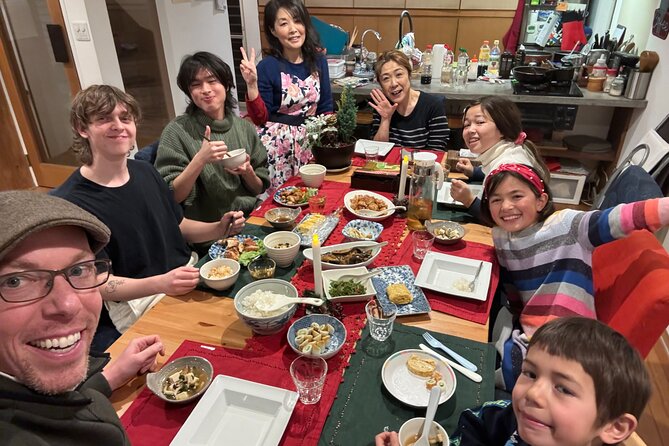
Kyoto Family Kitchen is less a formal cooking school than a seat at a local family table. You arrive at Anthony and Naomi’s suburban home, have tea, talk about your trip, then help prepare dinner with the family, their children, cat, and dog nearby. I like the warm, private setting and the chance to learn how everyday Japanese food is actually built from dashi, soy sauce, mirin, and sake. I also like that children, vegetarians, older family members, and first-time cooks can take part.
The main thing to understand is the format. This is informal family cooking, not a polished chef demonstration with a printed lesson plan and restaurant-style techniques. If you want exact knife skills and advanced recipes, look elsewhere. If you want conversation, a home-cooked meal, and a glimpse of ordinary life in Kyoto, this is a strong choice.
Key points at a glance
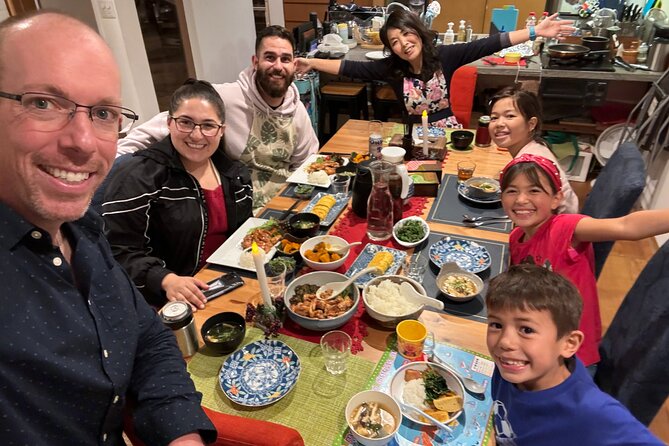
- Cook dinner in a real Kyoto family home: You spend the evening with Anthony, Naomi, their children, and household pets rather than in a commercial kitchen.
- Learn the Japanese pantry: Dashi, soy sauce, mirin, and sake form the base of the meal and help explain how many Japanese dishes get their flavor.
- Children can join in: The relaxed setup gives younger participants room to cook, eat, talk, and play.
- Expect a shared meal, not just a lesson: Dinner, coffee, or tea are included, with time for conversation after the cooking.
- Private for your group: Only your party participates, with a minimum of two people required.
- Allow extra thought for the location: The home is outside central Kyoto, with transportation provided to Kokusaikaikan subway station.
Entering a Kyoto home instead of a cooking studio
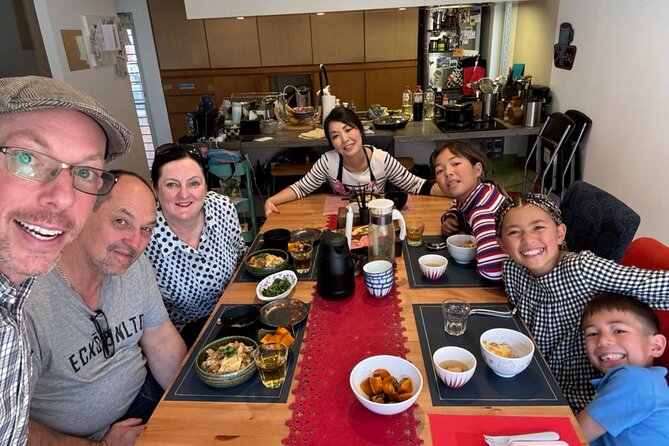
The appeal begins before the first onion is sliced. This activity takes you away from the busy sightseeing streets and into a suburban home in Sakyo Ward, near the northern edge of Kyoto. You are not being ushered through a tourist restaurant. You are stepping into the hosts’ daily world.
Anthony and Naomi welcome you with tea and a chance to settle in. That opening matters. After a full day around shrines and crowded lanes, sitting down first gives you time to catch your breath and talk about what you have seen. Food conversation follows naturally, then the hosts explain what you will prepare.
The family setting is central to the evening. Their children may join the cooking or spend time with younger people in your group. The cat and dog are part of the household atmosphere, too. That makes the visit feel relaxed, but it also means you should be comfortable around children and pets before booking.
The home is on a hill, and the setting is outside central Kyoto. That is a plus if you want a quieter local neighborhood and a break from the main sightseeing circuit. It is less convenient if you are hoping to walk from Gion, Kyoto Station, or Nishiki Market. The host provides transportation to Kokusaikaikan subway station, which helps, but you should still confirm the meeting arrangements and timing after booking.
Other cooking classes in Kyoto people book:
- Ramen Cooking Class at Ramen Factory in Kyoto
★ 5.0 · 1,937 reviews - Kyoto: Ramen Cooking Class at a Ramen Factory with Souvenir
★ 4.9 · 532 reviews - Kyoto: Ramen, Gyoza, and Onigiri Cooking Class
★ 5.0 · 445 reviews
What you actually cook during the two and a half hours
The menu is arranged with the hosts rather than presented as one fixed restaurant-style course. Past meals have included gyoza, tamago yaki, okonomiyaki, sautéed vegetables, teriyaki chicken, and other traditional home dishes. That gives the class a useful sense of real family cooking: the food can change, and the focus is on preparing a satisfying meal together.
You begin by looking at the ingredients and discussing the role of common seasonings. Dashi is especially useful to understand. It supplies the savory base behind many Japanese soups, sauces, and cooked dishes. Soy sauce adds salt and depth, mirin gives sweetness and shine, and sake helps balance sauces and marinades.
This is not a lecture about food chemistry. You learn by handling the ingredients and seeing how they are used in a family kitchen. You might slice vegetables, mix fillings, shape dumplings, whisk egg for tamago yaki, or help prepare a sauce. The hosts guide you as you work, but you should not expect every step to be handed to you like a professional culinary exam.
That loose structure is a strength for families. A child can help with simple mixing or assembly without needing to sit through a long demonstration. A confident home cook can ask questions and take on more of the preparation. A nervous beginner can follow along at an easy pace.
It is also the source of the main limitation. One visitor felt the evening was closer to helping a family cook than attending a conventional cooking class. That is a fair description. You will learn about Japanese cooking, but the larger reward is participating in a family meal. Book it for the combination, not for technical instruction alone.
The pantry lesson is more useful than it sounds
A short list of staples can tell you a lot about Japanese home cooking. Dashi, soy sauce, mirin, and sake appear again and again in everyday dishes, and learning how they work together gives you something you can use after returning home.
You may already know soy sauce as a dipping sauce. Here, it becomes part of a broader system of seasoning. Mirin adds sweetness and gloss. Sake brings another layer to sauces and cooking liquids. Dashi provides the savory foundation. Once you understand those roles, a Japanese recipe feels less like a mysterious list of unfamiliar products.
I appreciate that the class focuses on food ordinary families can make. You are not being promised an elaborate kaiseki meal or a rare regional specialty. Instead, you see how a household turns basic ingredients into dinner. For a visitor who wants practical food knowledge, that is more useful than watching a chef prepare something you could never recreate.
The hosts also show flexibility with food needs. A group of six that included a vegetarian participant received enough suitable food for everyone. You should still explain allergies, dietary restrictions, and preferences before the evening, rather than waiting until you arrive. The information provided confirms accommodation for dietary requirements, but it does not promise that every restriction can be handled.
Sitting down for dinner with Anthony and Naomi
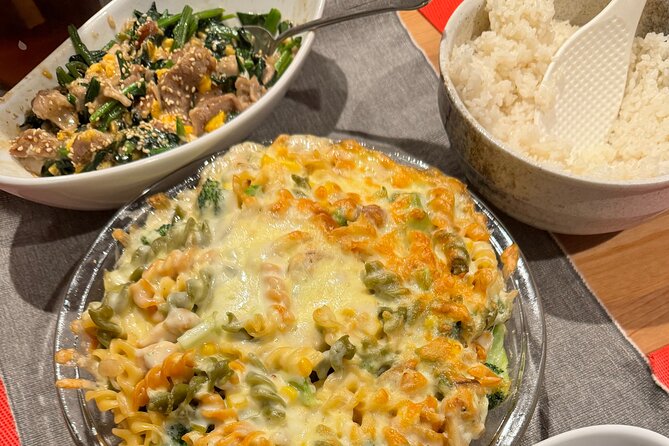
Cooking is only half the experience. After the food is ready, everyone gathers around the table. Dinner is included, along with coffee or tea, and the conversation continues while you eat.
This shared meal is where the activity becomes more than a standard class. You can ask about Japanese family life, food customs, Kyoto, language, or daily routines. The hosts have also helped people with a few useful Japanese phrases, adding a small but practical touch to the evening.
The meal can include the people who live in the home, so the table may feel lively. Children may be present, and the family’s pets are part of the evening. If you are traveling with children, this can be a relief. Your family does not need to behave like a silent restaurant party for two and a half hours.
The same quality can be a drawback for someone seeking a quiet, adult-only dinner. This is a home, not a dining room designed around formal service. The pace may be conversational and informal, and the family’s normal rhythm remains part of the setting.
Several meals described by the hosts include dishes made from scratch, including gyoza and tamago yaki. The degree of preparation can vary, as it does in any home kitchen. Some ingredients may be ready before you arrive so the meal fits into the two-and-a-half-hour schedule. That does not make the cooking meaningless. It simply means the evening is built around participation and conversation rather than preparing every ingredient from zero.
More cooking in Kyoto:
- Kyoto: Japanese Washoku Bento Small Group Cooking Class
★ 5.0 · 380 reviews - Kyoto Ramen and Gyoza Cooking Class with Professional Chefs
★ 5.0 · 282 reviews - Kyoto: Afternoon Japanese Izakaya Cooking Class
★ 4.9 · 241 reviews - Izakaya Style Cooking Class
★ 5.0 · 219 reviews
Why families may find this especially easy
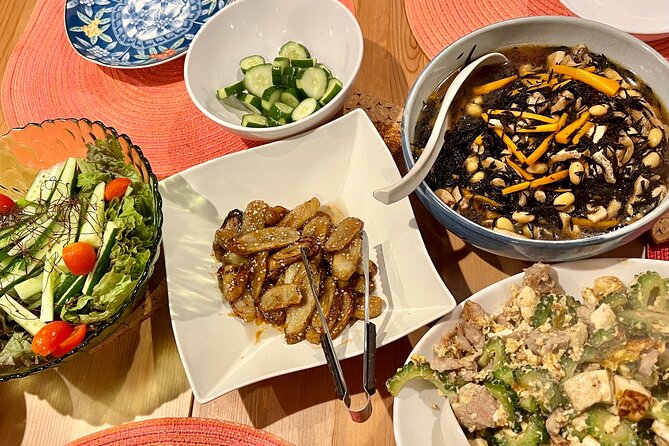
The name is accurate: this is designed with families in mind. Children can participate in cooking, interact with the hosts’ children, and spend time around the pets. That offers a welcome change from temple visits, museums, and long restaurant meals where young people are expected to sit still.
The age range can be broad, too. One family included a 78-year-old grandmother and an 11-year-old daughter, and both found a way to take part. That suggests the activity can work well for a mixed-age group, provided everyone is comfortable in a private home and able to manage the kitchen setting.
The minimum booking size is two people. The activity is private, so your group is not combined with strangers. That makes it easier to talk openly and adjust the pace to your party. A couple can have a more personal conversation with the hosts. A family can let children participate without worrying about disrupting another group.
Large groups and family gatherings are also welcomed. Still, a larger party may feel different from the intimate visits described by smaller groups. Before booking, confirm how many people the hosts can comfortably accommodate and what the menu will be.
The location and timing you need to plan around
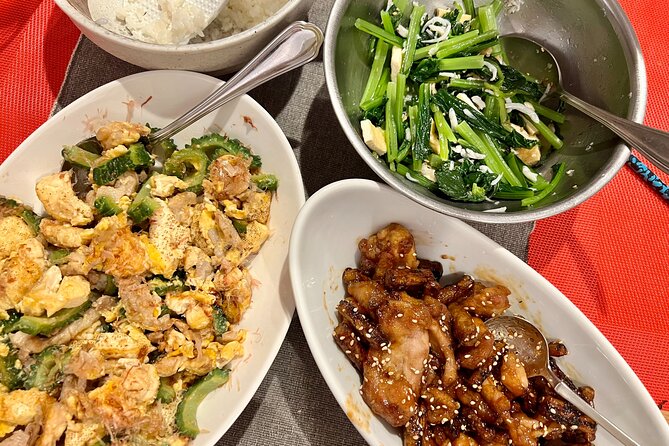
The meeting point is 33-50 Kamitakano Saimyōjiyama in Sakyo Ward, Kyoto, postal code 606-0064. The activity ends at the same meeting point. Transportation to Kokusaikaikan subway station is included, which is the most useful part of the logistics for many visitors.
The listed operating hours are Monday through Friday from 6:00 PM to 8:30 PM. That makes this a good fit for an evening when you have spent the day sightseeing. It is not a weekend activity according to the posted schedule, and you should not assume that a Saturday or Sunday booking is possible.
The schedule is also worth checking carefully. The experience is described as approximately two hours and 30 minutes, and the listed evening slot runs from 6:00 PM to 8:30 PM. After booking, the hosts finalize the meeting time, menu, and directions with you. Keep your afternoon flexible enough to reach the home without rushing.
You receive a mobile ticket, and confirmation is provided at booking. The home is near public transportation, and service animals are allowed. No separate accessibility details are provided, so anyone with mobility concerns should ask about the hill, entrance, stairs, and kitchen layout before committing.
Is $96.84 a fair price?
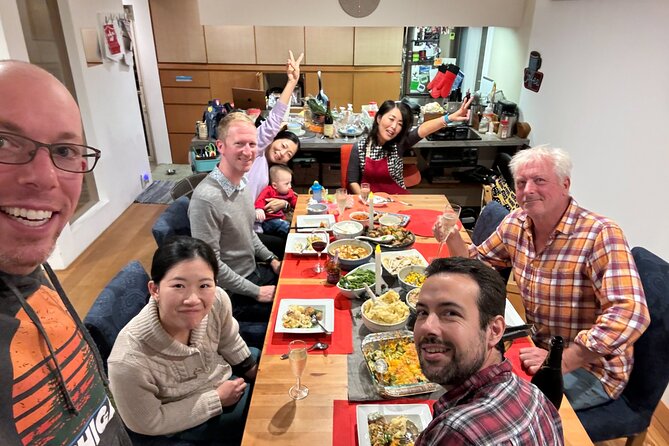
At $96.84 per person, this is not the cheapest dinner in Kyoto. You could eat a filling Japanese meal for much less, and a conventional group cooking lesson may offer more structured instruction for a similar price.
The value comes from what the fee combines. You receive dinner, tea or coffee, an English-speaking instructor, ingredients, seasonings, all fees and taxes, a private booking for your group, and transportation to Kokusaikaikan subway station. You also receive time in a family home, which is the part you cannot easily buy at a restaurant.
For a family, the price may make sense because children are included in the activity rather than treated as an inconvenience. For a couple, the value depends on your priorities. If you want recipes, precise technique, and a take-home curriculum, the cost may feel high. If you want a personal evening with a Kyoto family and a meal you helped make, the price is more reasonable.
The activity is commonly booked well in advance, with an average lead time of 43 days. That suggests you should reserve early if your Kyoto dates are fixed, especially if you need a particular weekday evening or have a larger party.
Alcohol is not included, and gratuity is not included. Plan for those separately if you want them.
What the strong and weak feedback tells me

The overall score is 4.9 out of 5, with 97 percent recommending the experience across 60 reviews. The highest praise centers on the same features: the warmth of Anthony and Naomi, the chance to meet their children and pets, food prepared from scratch, and the feeling of sharing an ordinary family evening.
That consistency is useful. It tells you the central product is hospitality, not just cooking. People who value conversation and cultural exchange tend to get the most from it. Families also receive special attention, and vegetarian needs have been handled successfully.
The lower rating points to the only serious mismatch. One person expected a more formal cooking course and instead found an informal evening of assisting the family. I would not dismiss that criticism. The description should be read carefully: you will cook together, but you are not signing up for a professional chef class.
Your expectations will decide the outcome. Think of this as a family dinner where you help prepare the food, with instruction woven into the evening. That is a very good format for some people and the wrong format for others.
Who should book this Kyoto evening?
I would choose this experience if you want:
- A break from crowded central Kyoto
- A private activity for your own group
- A family-friendly evening with children and pets
- Practical insight into Japanese pantry staples
- A meal made and eaten with local hosts
- Conversation about food, culture, and daily life
- A welcoming setting for mixed ages
- A flexible menu that can account for some dietary needs
I would choose a different class if you want advanced knife work, restaurant techniques, a fixed menu, professional demonstrations, or a polished cooking-school atmosphere. This is also less suitable if you dislike animals, prefer an adults-only setting, or want to stay within walking distance of central Kyoto.
Free cancellation is available up to 24 hours before the start time. Changes or cancellations inside that window are not accepted for a refund, so keep that deadline in mind when your schedule is still shifting.
Should you book Kyoto Family Kitchen?
Book it if the phrase come over for dinner and help us cook sounds better than attend a cooking lesson. The best parts are the family contact, the relaxed table conversation, and the chance to see how basic Japanese seasonings become a normal home meal.
I would especially recommend it for families with children, couples who enjoy meeting local people, and small groups looking for a personal evening away from Kyoto’s main sights. Just arrive expecting a warm, informal kitchen visit rather than a technical course. With that expectation, the $96.84 price can buy a memorable piece of everyday Kyoto that a restaurant cannot provide.
FAQ
Where does the Kyoto Family Kitchen cooking class take place?
It takes place at 33-50 Kamitakano Saimyōjiyama in Sakyo Ward, Kyoto, Japan.
How long does the experience last?
The experience lasts approximately two hours and 30 minutes. The listed evening hours are 6:00 PM to 8:30 PM.
What days is the activity available?
The listed operating schedule is Monday through Friday from 6:00 PM to 8:30 PM.
What is included in the price?
Dinner, coffee or tea, an English-speaking instructor, cooking ingredients and seasonings, all fees and taxes, and transportation to Kokusaikaikan subway station are included.
Is alcohol included?
No. Alcoholic beverages are not included.
Is gratuity included?
No. Tips or gratuity are not included.
Is this a private cooking experience?
Yes. This is a private activity, and only your group participates. A minimum of two guests is required.
Do children participate in the activity?
Yes. The experience is designed for families and allows children to take part in the cooking and family setting.
Can dietary requirements be accommodated?
The hosts have accommodated dietary requirements, including a vegetarian participant. You should discuss your needs with them before the experience.
Is transportation provided?
Transportation to Kokusaikaikan subway station is included. The activity begins and ends at the stated meeting point.
Can I cancel for a full refund?
Yes, if you cancel at least 24 hours before the experience start time. Cancellations or changes made less than 24 hours in advance are not accepted for a refund.
Just added in Kyoto
- Kyoto: Zen Meditation at a Private Temple with a Monk★ 5.0 · 25 reviews
- Private Cooking Class Udon in Kyoto Japan★ 5.0 · 23 reviews
- Your Private Vacation Photography Session In Kyoto★ 5.0 · 110 reviews
- Private Pewter Sake Cup Experience with a Kyoto Artisan★ 5.0 · 31 reviews
- Kyoto Wagashi(Japanese sweets) Cooking Class near Fushimiinari★ 5.0 · 60 reviews
- Kyoto:Family-Friendly Kimono & Yukata Experience at WARGO★ 5.0 · 147 reviews
- Private Guided Traditional Buddhist Cooking in Japan★ 5.0 · 16 reviews
- Kyoto: Gion Geisha District & Sake-in-Hand Walking Tour★ 5.0 · 37 reviews
Cooking Classes, compared.
Ramen Cooking Class at Ramen Factory in Kyoto
Read our review →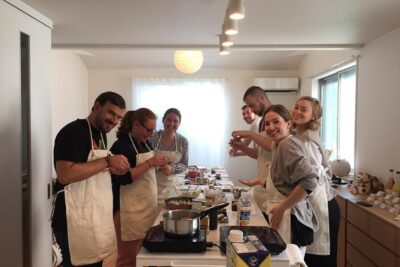
Ramen & Gyoza Cooking Class in Tokyo with Local Supermarket Visit
Read our review →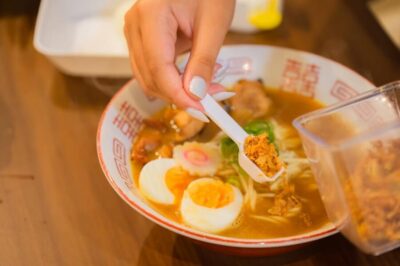
Ramen Cooking Class at a Ramen Factory with Souvenir
Read our review →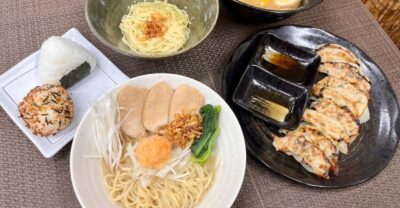
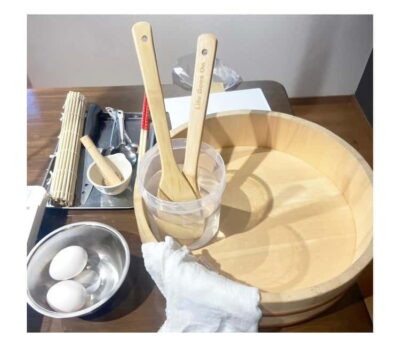
Japanese Washoku Bento Small Group Cooking Class
Read our review →
Sumo Stage Show with Bento or Snack + Fight & Photo
Read our review →
Ramen and Sushi Cooking Class with Sake Pairing Set in Tokyo
Read our review →Browse the lists this tour appears in