
Reviewed · COOKING CLASSES
Kyoto: Morning Japanese Bento Cooking Class
A bento cooking class gives you more than lunch. You learn how several familiar Japanese dishes fit together in one neat box, from sushi and tempura to teriyaki chicken and miso soup. The class also explains why bento became such a lasting part of Japanese food culture.
I like the hands-on format and the small classes, which make it easier to ask questions and get help. I also like that you receive recipes and learn practical tips for finding ingredients at home. The main drawback is that the ingredients are already prepared, so this is not the best choice if you want a full knife-skills lesson.
Key points
- Six or seven dishes in about three hours: You prepare a generous range of classic Japanese foods, then eat them for lunch.
- Small, friendly classes: Groups can be as small as four, with reported class sizes of up to about eight or ten people.
- Clear English instruction: Instructors including Mei, Tomoko, Yukari, Coco, and Ikari explain each step in English.
- Useful for families: Children around age 10 and teenagers can take part with guidance.
- Dietary needs can be discussed: Vegetarian and no-shellfish versions have been provided, but you should give notice when booking.
- A practical Kyoto souvenir: You leave with recipes and techniques you can try again at home.
Why a bento class works so well in Kyoto
Kyoto is full of famous sights, but food gives you another way to understand the city and the country. In this morning class, you do not simply watch a chef prepare a meal. You help assemble a complete Japanese lunch and learn how separate dishes work together.
The bento box has a long history in Japan, with roots reaching back to the late Kamakura Period, from 1185 to 1333. It began as a practical way to carry food, but it developed into a careful style of presentation. A bento is meant to be useful, attractive, varied, and easy to eat.
That balance is the real lesson here. You work with different colors, textures, cooking methods, and flavors. Rice, vegetables, fried food, seasoned meat, soup, and sushi each have their place. By the end, you see why a bento is more than a plastic box filled with leftovers.
The class takes place at Cooking Sun on Funayacho in Kyoto’s Shimogyo Ward. Hotel pickup is not included, so you need to make your own way there. One older booking noted that finding the location was not easy, so allow time to get your bearings rather than arriving at the last minute.
Other cooking classes in Kyoto people book:
- Ramen Cooking Class at Ramen Factory in Kyoto
★ 5.0 · 1,937 reviews - Kyoto: Ramen Cooking Class at a Ramen Factory with Souvenir
★ 4.9 · 532 reviews - Kyoto: Ramen, Gyoza, and Onigiri Cooking Class
★ 5.0 · 445 reviews
Starting with ingredients, aprons, and a clear plan
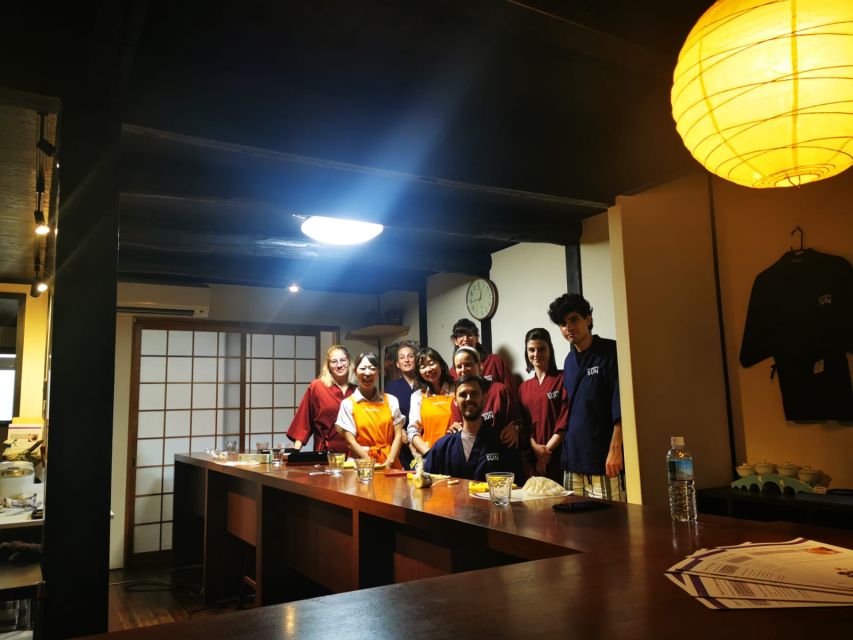
The class lasts about three hours, usually in the morning. You collect your ingredients, apron, and utensils, then follow the instructor through a series of demonstrations and cooking tasks.
The structure suits beginners. You watch a step, try it yourself, and receive help before moving on. Instructors such as Mei, Tomoko, Yukari, Coco, and Ikari have been praised for clear English explanations and patient guidance. The exact teacher depends on the session, but the teaching style is practical rather than formal.
You should know one important detail before booking: the ingredients are already prepared. This means the class can cover many dishes within a short time, but it also means you will not spend the morning chopping every vegetable from scratch. If you want to sharpen your knife technique, this class may feel limited. If you want to learn how to season, cook, shape, and assemble Japanese dishes, the preparation makes good sense.
The pace appears carefully managed. One session covered seven dishes and still left time to eat lunch. Another included six traditional dishes. You get a lot for a three-hour class, but you should expect a busy morning with several tasks rather than one slow, detailed lesson on a single recipe.
Making sushi, tempura, and teriyaki chicken
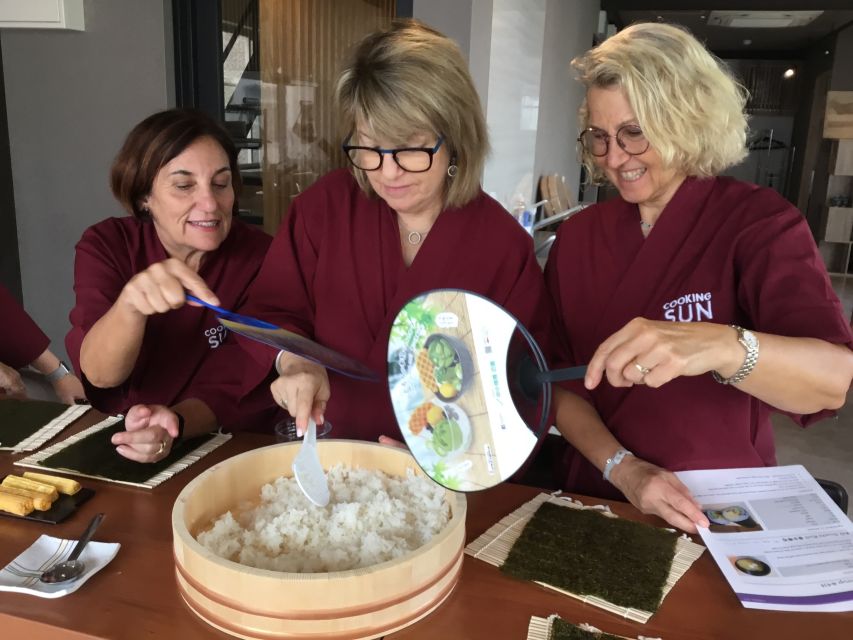
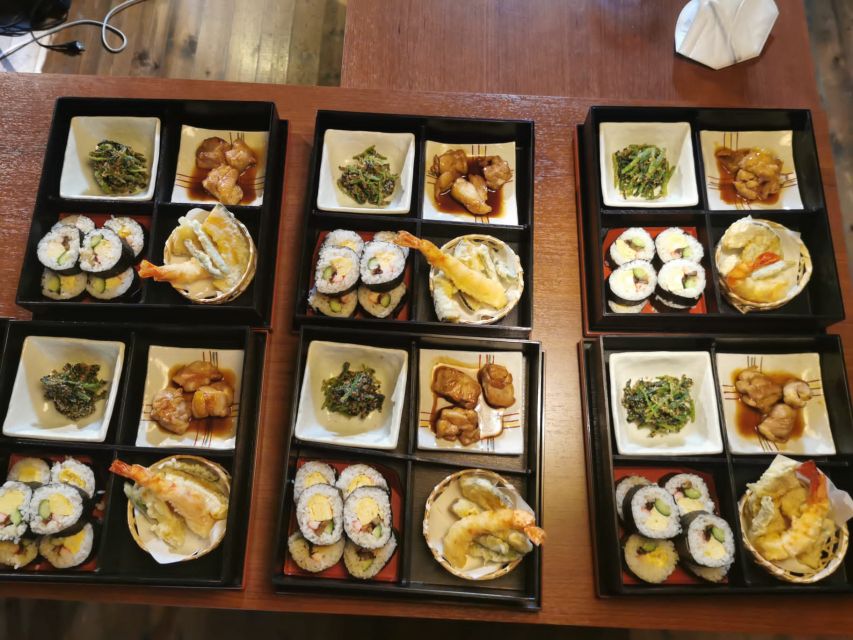
The main appeal is the range of dishes. Sushi gives you practice with rice and shaping. Tempura introduces a different cooking method and the care needed to produce a light coating. Teriyaki chicken shows how a familiar Japanese sauce can turn a simple ingredient into a polished bento item.
You also prepare miso soup, one of Japan’s most recognizable everyday foods. It is a useful dish to learn because it is simple enough to repeat at home, yet small choices in seasoning and ingredients affect the final taste.
The menu can include several additional bento dishes. The exact number and combination may vary, but the class is designed around variety. You are not just preparing a main course and one side. You are building a complete box with several small portions.
That variety is valuable because it teaches the basic logic of Japanese home cooking. A bento often combines contrasting flavors rather than relying on one heavy centerpiece. You may be working with sweet, salty, savory, crisp, soft, fried, and fresh elements in the same meal.
The instructors also explain cultural details as they work. This keeps the class from becoming a recipe assembly line. You learn what the bento means in daily Japanese life and why presentation matters, while still spending most of the time with your hands on the food.
The small class size makes a real difference
Class size can shape a cooking lesson more than the menu does. Sessions have ranged from only four people to around eight or ten, with multiple instructors helping the group. That is a useful setup for beginners, families, and anyone who feels unsure in a new kitchen.
You can ask for clarification without stopping a large lecture. Instructors have also helped individual participants who needed extra guidance, including a teenager who required more support during the cooking. That patience matters when the group includes different ages and cooking backgrounds.
One participant with substantial experience making Japanese food still found new tips to take home. That tells you the class is not only for complete beginners. At the same time, the material is described as easy enough to repeat, so you do not need advanced cooking skills before arriving.
The one less positive point is that cooking equipment may be shared. One class participant would have preferred more individual interaction instead of sharing apparatus. This is a reasonable tradeoff in a small group, but it means you should not expect a private lesson with your own full set of tools.
The instructors have also taken photos and videos during class for participants. That can be helpful when your hands are busy and you cannot document each step yourself, though you should confirm current photo arrangements if this matters to you.
More cooking in Kyoto:
- Kyoto: Japanese Washoku Bento Small Group Cooking Class
★ 5.0 · 380 reviews - Kyoto Ramen and Gyoza Cooking Class with Professional Chefs
★ 5.0 · 282 reviews - Kyoto: Afternoon Japanese Izakaya Cooking Class
★ 4.9 · 241 reviews - Izakaya Style Cooking Class
★ 5.0 · 219 reviews
A good choice for families and mixed-age groups
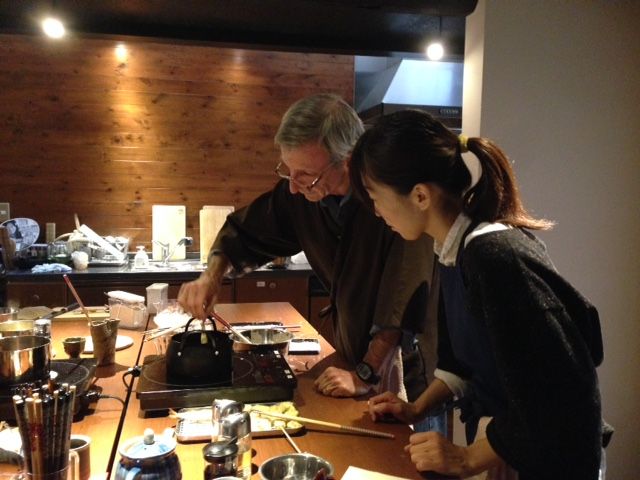
This activity suits families particularly well. Two 10-year-old children were able to take part and enjoyed both the cooking and the food. Teenagers can also join in, especially when an instructor is available to offer extra help.
Cooking gives children a job to do rather than asking them to listen quietly for several hours. Shaping sushi, arranging food, and watching tempura come together can make the lesson feel more like a shared project than a standard class.
It also works well for couples, friends, and solo participants. The small setting makes it easy to meet people from different countries without turning the class into a loud social event. You have a common task, and the meal at the end gives everyone a natural chance to talk.
If you already spend much of your trip in restaurants, this class adds something different. You learn how the food is made and why it is served in a certain way. That kind of meal can stay with you longer than another restaurant reservation.
Dietary needs require advance notice
You should advise the provider of dietary requirements when booking. This matters because the menu includes ingredients that may not suit everyone, and the dishes are prepared as a coordinated meal.
A no-shellfish version has been provided before, and vegetarian participants have also been accommodated. Still, do not assume that every request can be handled automatically or on the day. Give clear information early, especially if you avoid several ingredients.
The provided details do not promise a separate menu for every allergy or dietary restriction. If your needs are strict, contact Cooking Sun before paying so you can confirm exactly what can be changed.
The finished bento is the best part of the morning
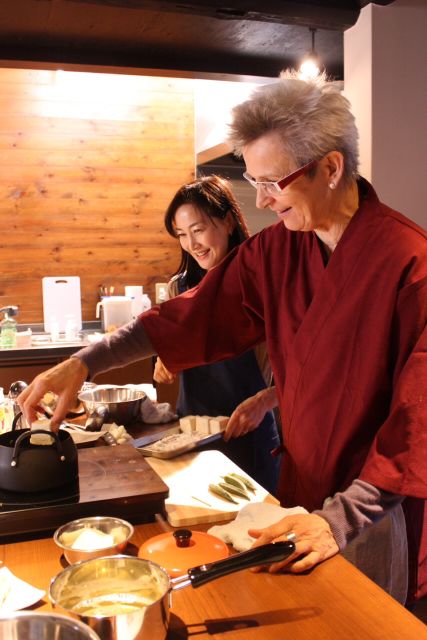
After the cooking, you arrange the dishes in your bento box and sit down to eat. This is not a demonstration where the food disappears into the kitchen. The lunch is the result of your own work.
The meal also lets you judge the techniques immediately. You can taste the balance of the teriyaki chicken, the texture of the tempura, the seasoning in the soup, and the way the smaller dishes work beside the rice and sushi.
Presentation matters here. A bento is meant to look appealing before you eat it, so arranging the food is part of the lesson. You may find that the final box looks more polished than expected, even if you began with little experience.
The portion is also a practical reward for the time spent cooking. Several participants described the lunch as delicious and filling, and one family enjoyed every dish prepared. I would schedule the class before any major afternoon meal, since the finished bento is intended to be your lunch.
Recipes and shopping tips extend the value
The class provides written recipes, which is one of its strongest practical features. Many cooking classes are enjoyable in the moment but hard to repeat once you return home. Written instructions give you a better chance of making the dishes again.
Instructors have also explained where to find ingredients outside Japan. That is useful because Japanese food often depends on sauces, seasonings, and rice varieties that may not be familiar in your local shops.
Several participants were keen to recreate the meals at home, and some even bought cooking equipment after the class. You should not feel pressured to buy anything, but the lesson is clearly designed to be repeatable rather than purely decorative.
The recipes also make the $67 price easier to assess. You are paying for a three-hour class, ingredients, an apron, utensils, instruction, and lunch. You are not paying for transport, but the meal and the take-home material add value beyond a single restaurant sitting.
Is $67 a fair price?
At $67 per person, this is not the cheapest lunch in Kyoto. You can certainly eat Japanese food for less. But the price includes a full morning activity, teaching, ingredients, equipment, and the meal you prepare.
I consider it fair for anyone who wants more than a quick cooking demonstration. You are learning several dishes, practicing them yourself, and getting recipes to use later. The small class format also gives the price more weight than a large group lesson would.
The value is weaker if you only want to eat. In that case, a restaurant will be faster and probably cheaper. It is also less suitable if you want advanced knife skills, professional chef training, or a private kitchen experience.
For families, couples, and food-focused visitors, the cost covers both an activity and lunch. That makes it easier to fit into a sightseeing day without treating the class as an extra expense on top of a separate meal.
Timing, access, and practical planning
The duration is listed as three hours, with some descriptions placing it between two and a half and three hours. Starting times vary, so you need to check availability for your chosen date.
The instruction is in English. Several instructors have been praised for speaking clearly, and one earlier class also included multilingual support. You should still treat English as the reliable language for the experience.
The venue is wheelchair accessible. Hotel pickup and drop-off are not included, so plan your own transport to Cooking Sun, Funayacho, Shimogyo Ward, Kyoto, 600-8466.
Cancellation is free up to 24 hours before the start time, and you can reserve now and pay later. That gives you some flexibility while arranging a Kyoto schedule, though you should still check the final booking terms for your date.
Who should book this Kyoto cooking class?
I would recommend it to you if you enjoy food, want a hands-on cultural activity, or like bringing home skills rather than souvenirs. It is especially suitable for first-time cooks, families with older children, couples, and people who want a gentle introduction to everyday Japanese dishes.
It is also a good fit for experienced home cooks. You may already know how to make sushi or teriyaki, but the class can still give you new ideas about seasoning, presentation, and bento planning.
I would pause before booking if your main goal is knife training, a private lesson, or a slow study of one dish. The class covers a lot in a short time, and shared equipment may limit individual work.
For most food-minded visitors, I would book it. You get a friendly morning, a substantial lunch, clear instruction, and recipes you can use after Kyoto. Just give advance notice about dietary needs and leave enough time to find the kitchen.
FAQ
How long does the Kyoto bento cooking class last?
The class lasts about three hours, with some information describing the session as two and a half to three hours.
What dishes will I learn to make?
The class includes sushi, tempura, teriyaki chicken, and miso soup. You may also prepare several additional bento dishes, with some sessions covering six or seven dishes in total.
Is lunch included?
Yes. You eat the bento lunch you prepare during the class.
Are ingredients included?
Yes. The cooking class includes the ingredients needed for the meal.
Are an apron and utensils provided?
Yes. An apron and utensils are included.
Is the class taught in English?
Yes. The instructor language is English. Instructors including Mei, Tomoko, and Yukari have taught these sessions, and other named instructors have included Coco and Ikari.
Where does the class take place?
The class takes place at Cooking Sun, Funayacho, Shimogyo Ward, Kyoto, Kyoto 600-8466.
Is hotel pickup included?
No. You need to make your own way to the meeting point.
Can dietary requirements be accommodated?
You should advise the provider of dietary requirements when booking. Vegetarian and no-shellfish versions have been provided previously, but you should confirm your specific needs in advance.
Is the class wheelchair accessible?
Yes. The activity is listed as wheelchair accessible.
Can I cancel for a refund?
You can cancel up to 24 hours in advance for a full refund, according to the supplied booking information.
Can I reserve now and pay later?
Yes. The activity allows you to reserve your place and pay later.
Just added in Kyoto
- Private Cooking Class Udon in Kyoto Japan★ 5.0 · 23 reviews
- Your Private Vacation Photography Session In Kyoto★ 5.0 · 110 reviews
- Kyoto: Zen Meditation at a Private Temple with a Monk★ 5.0 · 25 reviews
- Private Pewter Sake Cup Experience with a Kyoto Artisan★ 5.0 · 31 reviews
- Kyoto Wagashi(Japanese sweets) Cooking Class near Fushimiinari★ 5.0 · 60 reviews
- Private Guided Traditional Buddhist Cooking in Japan★ 5.0 · 16 reviews
- Kyoto: Gion Geisha District & Sake-in-Hand Walking Tour★ 5.0 · 37 reviews
- Kyoto:Family-Friendly Kimono & Yukata Experience at WARGO★ 5.0 · 147 reviews
Cooking Classes, compared.
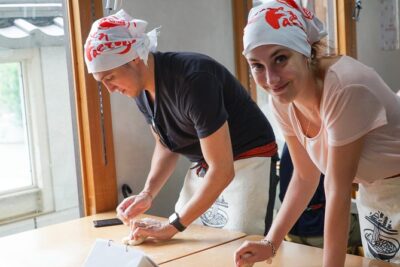
Ramen Cooking Class at Ramen Factory in Kyoto
Read our review →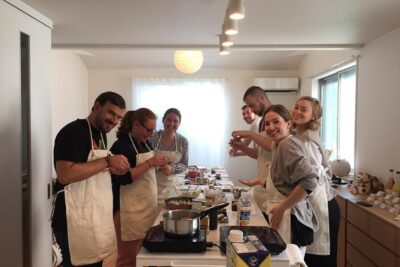
Ramen & Gyoza Cooking Class in Tokyo with Local Supermarket Visit
Read our review →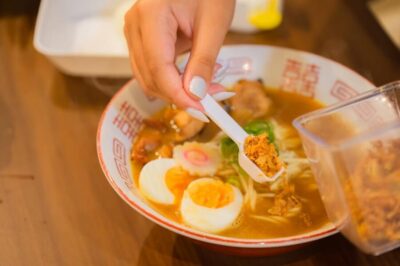
Ramen Cooking Class at a Ramen Factory with Souvenir
Read our review →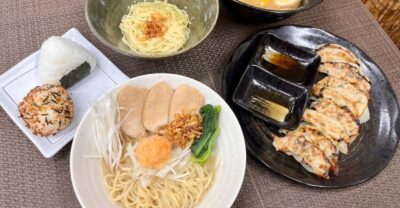
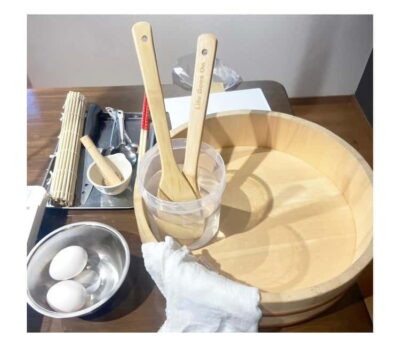
Japanese Washoku Bento Small Group Cooking Class
Read our review →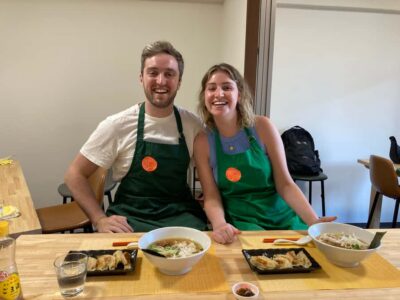
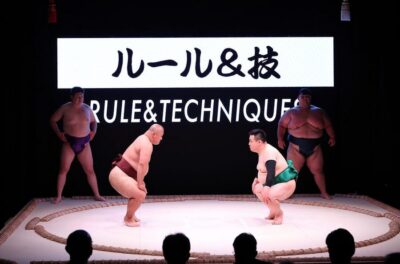
Sumo Stage Show with Bento or Snack + Fight & Photo
Read our review →
Ramen and Sushi Cooking Class with Sake Pairing Set in Tokyo
Read our review →Browse the lists this tour appears in