
Reviewed · TEA CEREMONY EXPERIENCES
Matcha Grinding Experience and Walking Tour in Uji Kyoto
Uji’s best souvenir is not something you buy. It is the cup of matcha you grind yourself, stone mill turning slowly as tea leaves become a fine green powder. This four-hour tour pairs that hands-on workshop with Byodo-in Temple, the famous temple pictured on Japan’s 10-yen coin.
I like the small group, capped at six, and the chance to explore Uji with a guide such as Vincent, who explains the temples, shrines, and local tea culture in clear, friendly terms. I also like that the price includes temple admission, the matcha class, and a Japanese snack or matcha ice cream. The main drawback is the fixed meeting point at Kyoto Station, since there is no hotel pickup, and the workshop requires a mask.
Key points at a glance
- Grind your own matcha: Use a traditional stone mill, then drink the tea you made.
- See Byodo-in Temple: Visit the UNESCO World Heritage Site shown on the 10-yen coin.
- Walk through Uji: Add Uji Shrine and a stop at Fukujuen Ujicha Kobo.
- Small group setting: The tour accepts a maximum of six people.
- Good local guide support: Vincent has been singled out for his friendly explanations and easygoing approach.
- Know the meeting plan: Start at 9:30 a.m. at Shinshindo beside JR Kyoto Station and finish there.
Why Uji is the right place for a matcha lesson
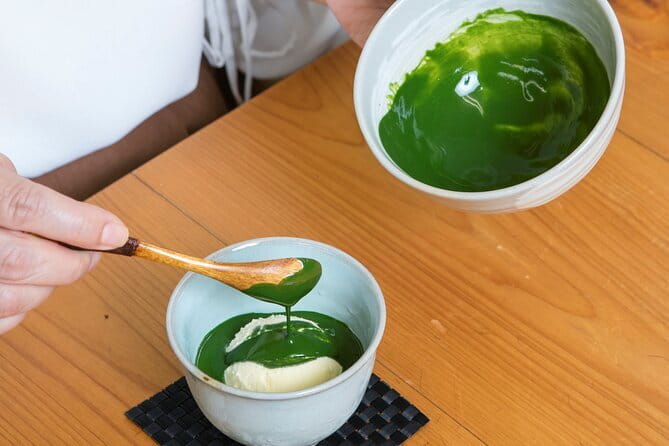
Uji is one of Japan’s best-known tea areas, and this tour gives you more than a drink in a pretty cup. You learn why the town is linked with high-quality green tea, then handle the process yourself.
The key moment comes at the matcha workshop. You grind tea leaves into powder with a traditional stone mill, then prepare and drink the fresh matcha. That simple act makes the tea feel less like a café order and more like a small piece of local craft.
I like this format because it gives you context before or around the tasting. Matcha can look simple, but the workshop shows the work behind it. You also get a choice of Japanese snacks or matcha ice cream, which makes the experience easier for people who find straight matcha too strong.
The class is not just for serious tea fans. If you are curious about Japanese food traditions, it gives you something to do with your hands instead of only listening to a guide talk. Families, couples, and first-time visitors to Uji should find the activity approachable.
Other tea ceremonies in Kyoto people book:
- Kyoto: Tea Ceremony in a Traditional Tea House in Kiyomizu
★ 4.9 · 3,519 reviews - Kyoto: Tea Ceremony Ju-An at Jotokuji Temple
★ 4.9 · 3,207 reviews - Kyoto: 45-Minute Tea Ceremony Lesson Experience
★ 4.3 · 2,378 reviews
Byodo-in Temple and the famous 10-yen coin view
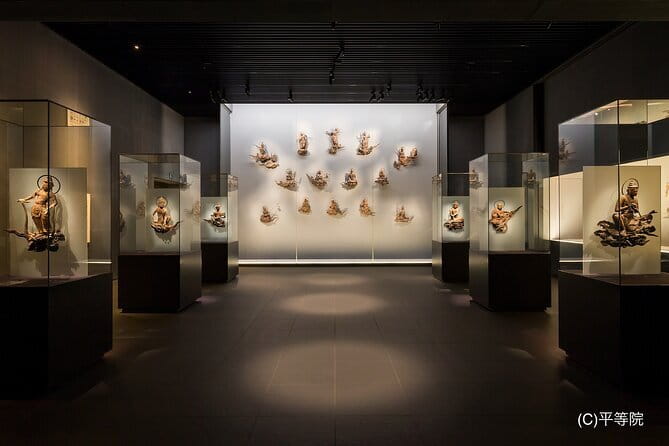
The tour’s first main stop is Byodo-in Temple, Uji’s star sight. Admission is included, so you do not need to budget an extra entrance fee during the morning.
You may already recognize the temple from the back of Japan’s 10-yen coin. Seeing the real building gives that familiar coin image a useful sense of scale and place. The temple’s architecture and setting are the reason it draws so much attention, and its UNESCO World Heritage status adds cultural weight to the visit.
A guide can make this stop more useful by pointing out what you are seeing and explaining its place in Uji’s past. Vincent has been praised for explaining the sights rather than simply walking from one stop to the next. That matters at a temple, where a few details can turn a quick photo stop into a more meaningful visit.
Byodo-in is also likely to be the most visually important stop of the morning. If temple architecture is your main reason for coming to Uji, you will appreciate having admission included and a guide at hand.
The tradeoff is time. The full experience lasts about four hours, so this is an introduction to Byodo-in and Uji, not an all-day temple study. You will see the major stops, take part in the tea class, and return to Kyoto Station within the planned morning schedule.
Uji Shrine adds a quieter religious stop
After Byodo-in, the walk includes Uji Shrine. This gives the tour a second religious site with a different feel from the grander temple.
I like the pairing because it prevents the morning from becoming a single-sight visit. Byodo-in provides the famous architecture, while Uji Shrine lets you see another part of the area’s religious character. Your guide can connect the places to the wider story of Uji and explain what makes each site distinct.
The available details do not specify how long the group stays at Uji Shrine or the exact route between stops. Expect walking to be a real part of the experience, since the tour is built around exploring Uji on foot. Wear comfortable shoes and keep your morning flexible rather than treating it as a quick transport-based excursion.
The tour is a good fit if you prefer a guide who can adjust the pace a little. One group became a private tour because of the small booking size, allowing more freedom to go with the flow. That will not be guaranteed for every departure, but the six-person limit keeps the group from becoming unwieldy.
Fukujuen Ujicha Kobo connects tea with place
Fukujuen Ujicha Kobo is the stop that ties the temples and the workshop together. Here, the focus returns to Uji tea and the town’s reputation for fine green tea.
This stop matters because it places the matcha lesson in a local setting. You are not simply grinding powder as an isolated activity. You are doing it in the town associated with the tea itself, after seeing some of Uji’s major cultural sights.
The tour description does not promise a shopping session or a specific product purchase, so you should think of Fukujuen Ujicha Kobo as part of the cultural walk rather than a guaranteed retail stop. The value is in learning how Uji tea fits into the area’s identity.
A guide such as Vincent can also help connect the facts to what you taste. The strongest part of this tour is the combination of explanation and action: you hear about Uji tea, see the town, grind the leaves, and drink the result.
Other walking tours in Kyoto people book:
- Kyoto Geisha Walking Tour: Gion District & Hidden Gems
★ 4.7 · 3,273 reviews - Kyoto: Gion Magical Night Walking Tour with Geisha Trivia
★ 4.9 · 2,393 reviews - Kyoto: Gion Geisha District Walking Tour – Stories of Geisha
★ 4.7 · 2,187 reviews - Kyoto Gion Geisha District Walking Tour – The Stories of Geisha
★ 5.0 · 1,441 reviews
The stone mill is the morning’s hands-on highlight
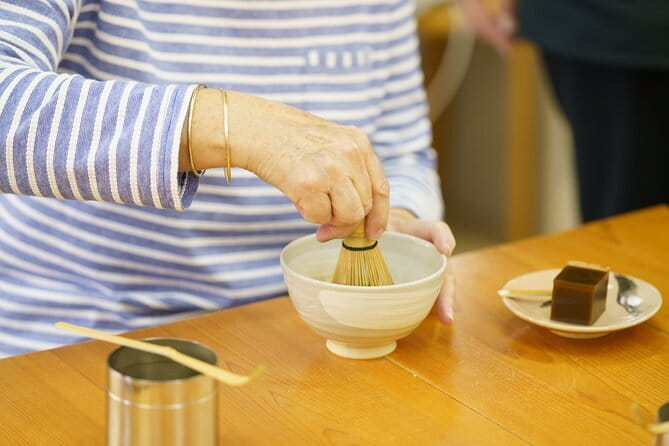
The matcha class is the most distinctive part of the experience. You use a traditional stone mill to turn tea leaves into matcha powder, then enjoy the tea you have made.
That process is slow and physical, which is exactly why it works well as a travel activity. You are not rushing through a demonstration or watching someone else do all the work. The workshop gives you a direct role.
You can choose Japanese snacks or matcha ice cream with the tea. This small choice makes the class more welcoming to mixed groups. A dedicated matcha fan can focus on the drink, while someone less keen on strong green tea has a sweet option alongside it.
You must wear a mask during the matcha-making workshop. Also, make sure WhatsApp is available before the tour, since the guide uses it for communication. These are easy points to miss, but they can affect the morning if you are not prepared.
The supplied information does not say how much matcha you take home, so do not book this expecting a packaged tea souvenir. The clear promise is the making and drinking experience itself.
What the four-hour schedule means for your day
The tour starts at 9:30 a.m. at Shinshindo, inside the bus ticket center near the central exit of JR Kyoto Station. The address is in Higashishiokoji, Shimogyo Ward, Kyoto.
Meeting at Kyoto Station makes the start easy to locate if you are already in central Kyoto or arriving by train. It also means you need to reach the station on your own. Hotel pickup is not included.
The activity ends back at the same meeting point. That is useful if you have afternoon plans in Kyoto, need to collect luggage, or want to continue sightseeing from the station.
Four hours is a sensible length for this combination. You have enough time for three named stops and the tea workshop, but the morning does not take over your entire day. I would leave extra room around the booking in case the walking pace or temple visit takes longer than expected.
Because the tour is capped at six people, questions should be easier to ask than on a large bus tour. A smaller group also helps when the guide is explaining a tea process or moving through temple grounds.
Is $130.46 a fair price?
At $130.46 per person, this is not the cheapest way to see Uji. The price makes more sense if you want the matcha workshop and a guide, not simply transportation to Byodo-in.
Your fee includes Byodo-in admission, the matcha-making class, and Japanese snacks or ice cream. It also covers an English guided walk through Byodo-in, Uji Shrine, and Fukujuen Ujicha Kobo.
If you visited Uji independently, you could likely spend less on transport and admission. But you would need to plan the route, arrange the tea activity, and find your own explanation of Uji’s tea traditions. For a first visit, the convenience and small group may justify the higher cost.
The value improves for people who care about food culture or want a guided introduction rather than a checklist of sights. It is less compelling for independent visitors who already know Uji well or only want a quick look at Byodo-in.
The experience has a 5.0 rating from 26 reviews and a 100 percent recommendation figure. That points to a consistently positive response, especially around the guide, local explanations, and tea workshop. Still, the practical details matter more than the score: the price excludes hotel pickup, the meeting point is in Kyoto, and cancellation is free only until 24 hours before the start time.
Who will enjoy this Uji experience most
I would choose this tour for you if you want three things in one morning: a major temple, a short cultural walk, and a hands-on tea activity.
It suits:
- Matcha fans who want to grind and drink their own tea.
- First-time Uji visitors who want help connecting the sights.
- Small groups and couples who prefer a calmer outing.
- Families with older children who enjoy doing something practical.
- Food and culture-focused visitors who want more than photographs.
- Kyoto visitors with a free morning and easy access to JR Kyoto Station.
I would think twice if you dislike walking, cannot wear a mask during the workshop, or want a hotel pickup. It may also feel expensive if your only goal is to see the temple shown on the 10-yen coin.
The guide can make a major difference. Vincent has been praised for being friendly, explaining local history, and showing several temples and shrines. The tour’s best quality is likely its personal feel, especially when the group is small enough to ask questions and adjust the pace.
Booking details worth knowing
Confirmation arrives within 48 hours of booking, subject to availability. The tour requires a minimum number of participants, so a departure can be canceled if that minimum is not reached. In that case, you receive another date or experience, or a full refund.
You can cancel for a full refund up to 24 hours before the local start time. Cancellations or changes made inside that 24-hour window are not refunded or accepted.
Bring a phone with WhatsApp available for contact with the guide. Wear a mask for the workshop, and use comfortable footwear for the walking sections.
Should you book it?
Book this tour if the idea of making your own matcha in Uji appeals to you as much as seeing Byodo-in. The combination is well chosen: a famous temple, a local shrine, a tea-focused stop, and a practical workshop in about four hours.
I would skip it if you want a low-cost independent visit, hotel pickup, or a long, detailed exploration of every temple in Uji. For everyone else, the small group, included admission, friendly guide support, and fresh matcha tasting make the price easier to defend.
FAQ
Where does the tour start?
It starts at 9:30 a.m. at Shinshindo, inside the bus ticket center near the central exit of JR Kyoto Station in Kyoto.
Where does the tour end?
The activity ends back at the same meeting point at Kyoto Station.
How long does the experience last?
The tour lasts approximately four hours.
Is hotel pickup included?
No. Hotel pickup is not included, so you must reach the Kyoto Station meeting point yourself.
What places are visited?
The tour visits Byodo-in Temple, Uji Shrine, and Fukujuen Ujicha Kobo.
Is admission to Byodo-in included?
Yes. The Byodo-in admission fee is included in the price.
What happens during the matcha class?
You grind tea leaves into matcha powder with a traditional stone mill, then drink the matcha you made.
Is food included?
Yes. The experience includes Japanese snacks or matcha ice cream.
How large is the group?
The tour has a maximum of six people.
Do I need WhatsApp and a mask?
You should have WhatsApp available because the guide uses it for communication. You must wear a mask during the matcha-making workshop.
More walking tours elsewhere in Japan
- Nishiki Market Brunch Walking Tour (7 Tastings + Brunch)
★ 5.0 · 1,355 reviews - Kyoto Arashiyama Walking Tour: Bamboo, Monkeys, Gardens & Secrets
★ 5.0 · 1,216 reviews - Kyoto Gion: 2-Hour Geisha Culture & History Walking Tour
★ 5.0 · 1,186 reviews - Kyoto: Izakaya Bars Guided Walking Tour
★ 4.9 · 815 reviews
More tea ceremonies elsewhere in Japan
- Kyoto: Table-Style Tea Ceremony at a Kyo-Machiya
★ 4.9 · 1,211 reviews - Kimono Tea Ceremony at Kyoto Maikoya, NISHIKI
★ 5.0 · 911 reviews - Kyoto: Arashiyama Bamboo Forest, Monkeys, Matcha & Temple Tour
★ 5.0 · 759 reviews - Kyoto: Tea Museum Tickets and Matcha Grinding Experience
★ 4.9 · 739 reviews
Just added in Kyoto
- Private Cooking Class Udon in Kyoto Japan★ 5.0 · 23 reviews
- Your Private Vacation Photography Session In Kyoto★ 5.0 · 110 reviews
- Kyoto: Zen Meditation at a Private Temple with a Monk★ 5.0 · 25 reviews
- Private Pewter Sake Cup Experience with a Kyoto Artisan★ 5.0 · 31 reviews
- Kyoto Wagashi(Japanese sweets) Cooking Class near Fushimiinari★ 5.0 · 60 reviews
- Kyoto:Family-Friendly Kimono & Yukata Experience at WARGO★ 5.0 · 147 reviews
- Private Guided Traditional Buddhist Cooking in Japan★ 5.0 · 16 reviews
- Kyoto: Gion Geisha District & Sake-in-Hand Walking Tour★ 5.0 · 37 reviews
Tea Ceremony Experiences, compared.

Tea Ceremony in a Traditional Tea House in Kiyomizu
Read our review →

World Heritage Kyoto & Nara Uji Authentic Matcha Experience
Read our review →
Arashiyama Bamboo Forest, Monkeys, Matcha & Temple Tour
Read our review →Browse the lists this tour appears in