
Reviewed · COOKING CLASSES
Sushi – Authentic Japanese Cooking Class – the best souvenir from Kyoto!
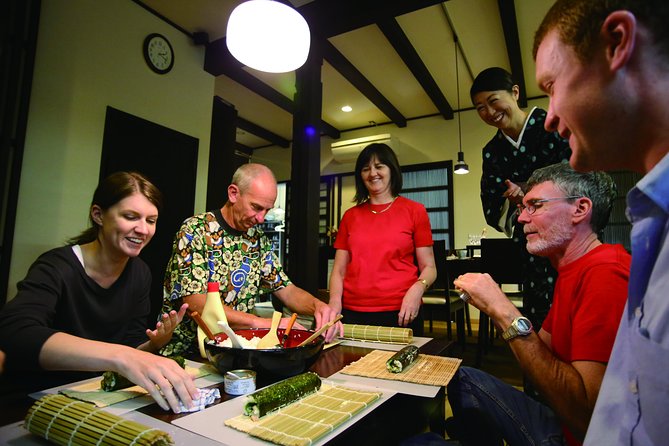
Sushi is easy to eat and surprisingly tricky to make well. In Kaori’s Kyoto kitchen, you learn to prepare sushi rice, several kinds of sushi, dashi soup, and pickled ginger, then sit down to enjoy what you made. I especially like the hands-on format and the practical four-page guide covering recipes, food customs, and table manners.
I also like the small, friendly setting, where Kaori can explain why you fan sushi rice, how umami works, and what makes Japanese chopsticks different. The main caution is finding the address: Kyoto streets can confuse taxi and rideshare drivers, so use the provided map pin carefully and allow extra time.
Key points to know before you book
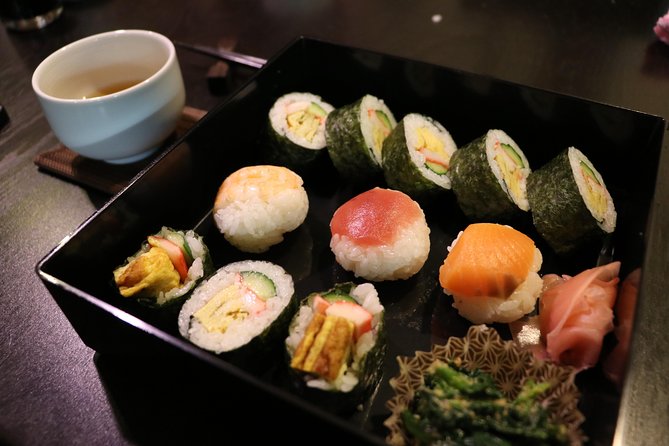
- You make and eat several dishes: Sushi is the star, but dashi soup, pickled ginger, and sushi rice are part of the lesson.
- Kaori teaches in English: Her explanations cover both cooking technique and the customs behind Japanese food.
- The class lasts about two hours: It is long enough for real practice without taking up an entire sightseeing day.
- The meal is included: Ingredients, the food you prepare, recipes, an aperitif, and Japanese green tea are included.
- It is held at Roujiya in central Kyoto: The class begins and ends at 22-58 Nishinokyo Ikenouchicho, Nakagyo Ward.
- Check the group size at booking: The experience is presented as a small-group class, but the supplied capacity details range from eight to 12 participants.
Making sushi in Kaori’s Kyoto kitchen
The best part of this experience is that you do not simply watch a chef assemble attractive plates. You prepare food yourself, receive corrections as you work, and then eat the results. That difference matters. A video can show you how to roll sushi, but it cannot tell you why your rice feels wrong or whether you have used too much filling.
Kaori hosts the class at Japanese Cooking Class Roujiya, in a home-style kitchen setting. The tone is welcoming rather than formal, and the lesson is conducted in English. You are invited to treat the setting much as you would a visit to someone’s home, while still getting clear, step-by-step instruction.
The experience lasts about two hours and starts at 11:30 a.m. That timing works well with a morning sightseeing plan. You can visit a Kyoto attraction early, take a short break, then spend the middle of the day cooking and eating. Since the class ends back at the meeting point, you are free to continue exploring afterward.
Other cooking classes in Kyoto people book:
- Ramen Cooking Class at Ramen Factory in Kyoto
★ 5.0 · 1,937 reviews - Kyoto: Ramen Cooking Class at a Ramen Factory with Souvenir
★ 4.9 · 532 reviews - Kyoto: Ramen, Gyoza, and Onigiri Cooking Class
★ 5.0 · 445 reviews
From umami to dashi, the lesson begins with flavor
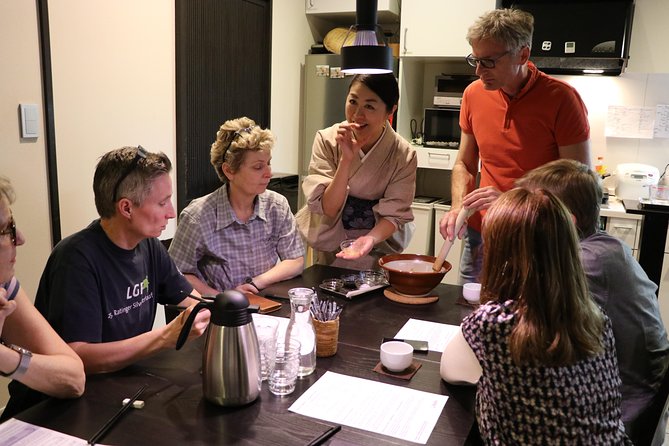
This is not only a sushi assembly workshop. One useful part of the class is the introduction to umami, the savory taste that gives many Japanese dishes their depth. You also learn about dashi, a basic Japanese broth made with ingredients such as seaweed and bonito flakes.
That small lesson gives you a better way to understand Japanese cooking. Dashi is not just soup stock. It is one of the building blocks behind the flavor of many Japanese dishes, and learning how it is made helps explain why a simple soup can taste so full.
The class also covers sushi rice. The rice is the foundation of the meal, and the process is more exact than simply mixing cooked rice with vinegar. You may learn why the rice is fanned, how it is seasoned, and how its texture affects the finished sushi.
These details are useful because they can be repeated at home. You do not need to return to Japan to make the recipes again. The supplied recipes cover sushi rice, soup, and pickled ginger, giving you a workable starting point after your holiday.
Several kinds of sushi, not just one roll
The cooking portion gives you the satisfaction of making your own sushi rather than watching someone else do it. The exact selection of sushi can vary, but the class teaches several types and explains how the ingredients are handled.
Expect to work through the stages in a sensible order. You learn about the ingredients, prepare the rice and other components, and then put the sushi together with guidance. Kaori explains each step and checks that you are carrying it out correctly, which is particularly helpful if you have never made sushi before.
That support also makes the class suitable for mixed-experience groups. A sushi enthusiast can pick up finer points, while a complete beginner can follow along without needing prior cooking skills. Families have also found the format manageable, with younger participants able to take part in the preparation.
You should still expect a real activity, not a passive demonstration. There is cutting, shaping, arranging, and careful attention to texture. If your idea of a cooking class is mainly sitting back with a cup of tea, this may feel more active than expected. If you like learning by doing, that is exactly the point.
Pickled ginger and soup make the meal more useful
Sushi gets most of the attention, but the side dishes are part of what makes this class good value. You learn to prepare pickled ginger and Japanese soup as well as the sushi itself.
Pickled ginger is a small item, but it is closely tied to the way sushi is eaten. Making it yourself helps connect the ingredients on the plate with the customs of the meal. The soup adds another basic Japanese technique that you can use beyond this one lunch.
You also finish with a meal made from the ingredients provided. That means the class is not just a lesson followed by a small taste. You should arrive ready to eat, since the finished food forms a substantial part of the experience.
An aperitif and Japanese green tea are included. Tea helps round out the meal, while the aperitif adds a relaxed touch at the beginning or end of the session. One important detail is that an available review also mentions tea, sake, and beer being offered after the cooking for an extra charge. The included Japanese green tea and aperitif should not be confused with any optional alcoholic drinks.
More cooking in Kyoto:
- Kyoto: Japanese Washoku Bento Small Group Cooking Class
★ 5.0 · 380 reviews - Kyoto Ramen and Gyoza Cooking Class with Professional Chefs
★ 5.0 · 282 reviews - Kyoto: Afternoon Japanese Izakaya Cooking Class
★ 4.9 · 241 reviews - Izakaya Style Cooking Class
★ 5.0 · 219 reviews
Japanese etiquette is part of the real lesson
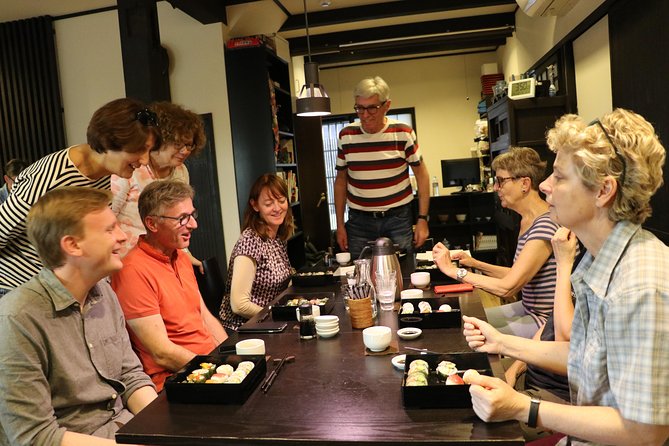
A strong feature here is the attention to table manners. You learn how to approach sushi dining, not just how to assemble food. That can help you feel more at ease in a Japanese restaurant later in your trip.
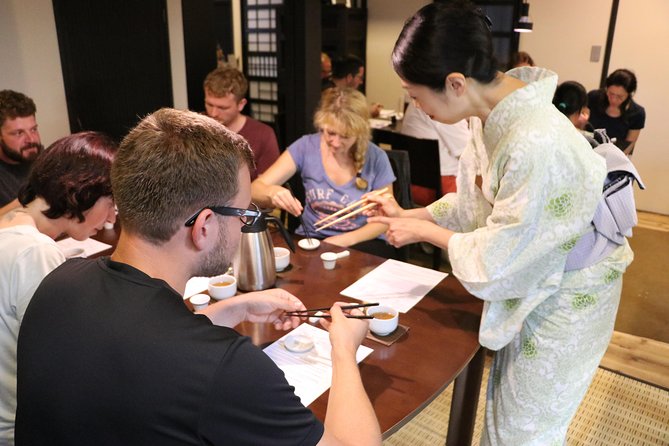
The class discusses customs linked to food, chopsticks, and the way a meal is served. One lesson detail concerns the shorter length of Japanese chopsticks compared with Chinese chopsticks. Another explains how food traditions connect with the dishes you are preparing.
These points may sound minor, but they give the cooking a cultural setting. You begin to understand that sushi is not simply a convenient meal made from rice and fish. It is part of a wider food culture with its own habits and expectations.
I like this approach because it avoids treating Japanese cuisine as a list of recipes. The etiquette material is practical, and it can prevent awkward moments when you eat at a sushi counter or a traditional restaurant later.
A relaxed class with clear English instruction
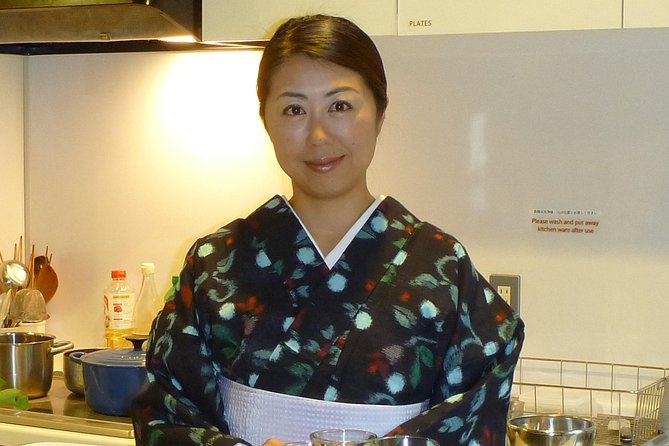
Kaori’s English is described as excellent, and the lesson is designed for English-speaking participants. Her teaching style is patient and careful. She explains why each step matters, rather than giving instructions without context.
That is important in a short class. Two hours is not enough time for a full culinary education, so the instructor needs to keep the pace moving while making room for questions and practice. The class appears to balance demonstration with participation rather than spending the entire session on either one.
The home setting adds warmth, though it also means you should not expect the scale or equipment of a professional cooking school. The kitchen is described as clean and well arranged, with a test-kitchen feel that makes it easy to follow the work.
The group-size information needs a little care. The experience is promoted as a small-group class capped at eight people, but the additional booking information gives a maximum of 13 people per booking and a maximum of 12 participants. Ask for the current group limit if a very small class is important to you.
What the $72.67 price includes
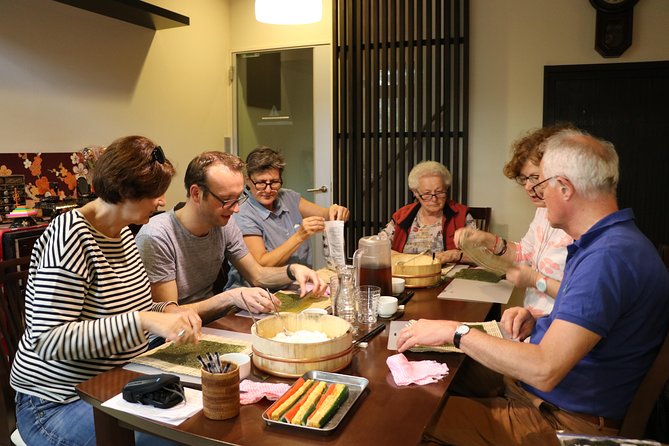
At $72.67 per person, the price is reasonable if you value both the meal and the instruction. You are not paying only for a plate of sushi. The fee covers the ingredients, the cooking lesson, the food you prepare, recipes to take home, an English-speaking instructor, an aperitif, and Japanese green tea.
The recipes add lasting value. A restaurant meal disappears quickly, but the ability to make sushi rice, soup, and pickled ginger can continue to be useful after you return home. That is why this works particularly well as a souvenir. You take away a skill rather than another object for your luggage.
The price is less compelling if you mainly want to eat premium sushi or watch a chef work. This is a participatory lesson, and the finished food is part of the reward. You are paying for guidance, cultural context, and the chance to practice.
Alcoholic drinks may cost extra, so budget for that if you want sake or beer after the cooking. Hotel pickup and drop-off are not included, but the meeting point is near public transportation.
Getting to Roujiya without a stressful start
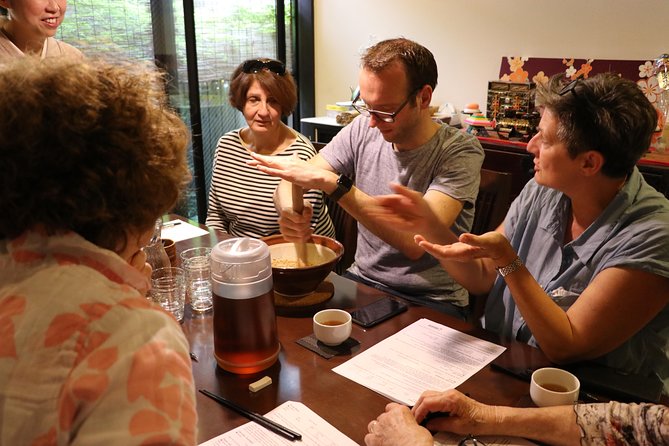
The class begins and ends at Japanese Cooking Class Roujiya, 22-58 Nishinokyo Ikenouchicho, Nakagyo Ward, Kyoto, 604-8375, Japan. The start time is 11:30 a.m.
Kyoto addresses can be difficult to interpret, especially for drivers unfamiliar with the smaller lanes and local address system. One serious complaint about the experience involved a rideshare driver being unable to locate the address and a delayed response to messages.
That problem may not reflect the cooking itself, but it is useful planning information. Use the Google Maps location link supplied after booking rather than relying only on the written address. I would also avoid arriving at the last possible minute. Give yourself enough time to find the building, particularly if you are using a taxi or rideshare.
The activity does not provide hotel transportation. You are responsible for reaching the meeting point and returning from it. Since it is near public transportation, check your route in advance and keep the confirmation details available on your phone. The ticket is mobile, which makes that part simple.
Who will enjoy this cooking class most
I would choose this class for several kinds of visitors:
- Sushi lovers who want to understand the process: You will gain more from your next sushi meal once you know how the rice, broth, and accompaniments are made.
- First-time cooks: The instructions are designed to take beginners through each stage.
- Families: Children can take part, and the lesson gives younger participants a practical introduction to Japanese food culture.
- Couples and friends: The shared preparation gives you something to do together, with a meal at the end.
- People seeking a useful souvenir: The recipes and techniques are more memorable than another small purchase.
It is less suitable if you need hotel pickup, dislike group activities, or want an advanced professional cooking course. The class is introductory and friendly, not a specialist sushi apprenticeship.
You should also mention dietary needs when booking. The information specifically asks you to advise the provider of any dietary requirements. Do not assume every request can be handled on the day without advance notice.
Booking timing and cancellation details
This experience is often booked around 40 days in advance, so I would not leave it until the last day of your Kyoto stay. Booking confirmation is sent within 48 hours, subject to availability.
Free cancellation is available if you cancel at least 24 hours before the local start time. Cancellations made less than 24 hours before the experience are not refunded, and changes inside that window are not accepted.
The practical lesson is simple: book once your Kyoto schedule is fairly firm, then check the meeting instructions as soon as confirmation arrives. That gives you time to resolve any map or dietary questions before class day.
Should you book the Roujiya sushi class?
I would book it if you want more than a restaurant meal and like the idea of bringing a Japanese cooking skill home. Kaori’s class combines sushi preparation with dashi, pickled ginger, umami, table manners, and food culture, all within a manageable two-hour session.
The strongest reasons to go are the hands-on teaching, the clear English instruction, the welcoming kitchen setting, and the recipes you can use later. The main drawbacks are the lack of hotel pickup, the possible confusion over the exact group size, and the need to navigate Kyoto’s address system carefully.
For a first visit to Kyoto, this is a good midday activity for couples, families, and friends. Use the map pin, allow extra time, disclose dietary requirements, and confirm the group size if that matters to you. If you do, the class offers something many food experiences do not: a meal you make yourself and the know-how to repeat it at home.
FAQ
How long does the sushi cooking class last?
The class lasts approximately two hours and begins at 11:30 a.m.
Where does the class take place?
It takes place at Japanese Cooking Class Roujiya, 22-58 Nishinokyo Ikenouchicho, Nakagyo Ward, Kyoto, 604-8375, Japan. The activity ends back at the same meeting point.
Is the class taught in English?
Yes. An English-speaking cooking instructor leads the class, and the lesson covers the cooking steps, Japanese table manners, and food culture in English.
What food and drinks are included?
The price includes the meal you prepare, all cooking ingredients, recipes, an aperitif, and Japanese green tea. Sake and beer may be available for an additional charge.
Is hotel transportation included?
No. Hotel pickup and drop-off are not included. The meeting point is near public transportation, and you receive a mobile ticket.
Can I cancel for a refund?
Yes. You can receive a full refund if you cancel at least 24 hours before the local start time. Cancellations and changes made less than 24 hours before the experience are not accepted for a refund.
Just added in Kyoto
- Private Cooking Class Udon in Kyoto Japan★ 5.0 · 23 reviews
- Your Private Vacation Photography Session In Kyoto★ 5.0 · 110 reviews
- Kyoto: Zen Meditation at a Private Temple with a Monk★ 5.0 · 25 reviews
- Private Pewter Sake Cup Experience with a Kyoto Artisan★ 5.0 · 31 reviews
- Kyoto Wagashi(Japanese sweets) Cooking Class near Fushimiinari★ 5.0 · 60 reviews
- Kyoto:Family-Friendly Kimono & Yukata Experience at WARGO★ 5.0 · 147 reviews
- Private Guided Traditional Buddhist Cooking in Japan★ 5.0 · 16 reviews
- Kyoto: Gion Geisha District & Sake-in-Hand Walking Tour★ 5.0 · 37 reviews
Cooking Classes, compared.
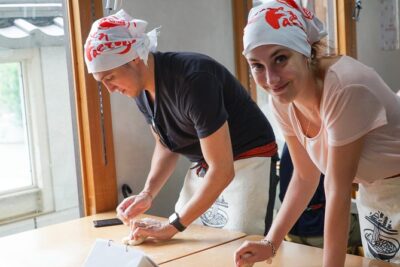
Ramen Cooking Class at Ramen Factory in Kyoto
Read our review →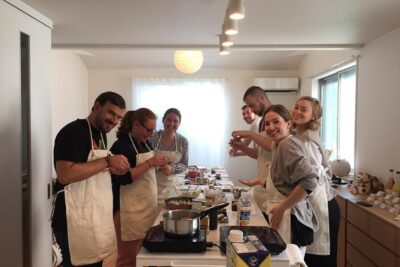
Ramen & Gyoza Cooking Class in Tokyo with Local Supermarket Visit
Read our review →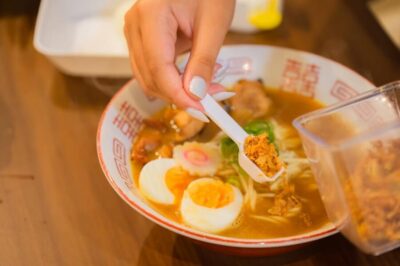
Ramen Cooking Class at a Ramen Factory with Souvenir
Read our review →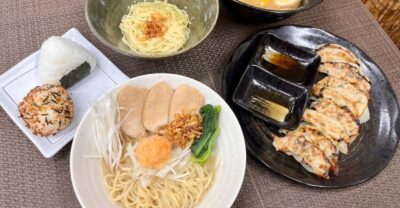
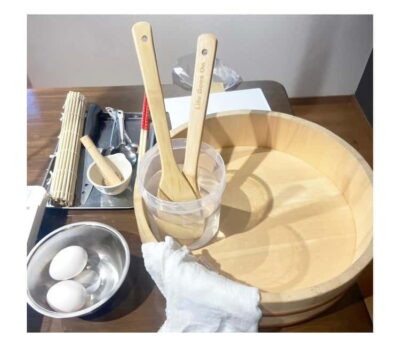
Japanese Washoku Bento Small Group Cooking Class
Read our review →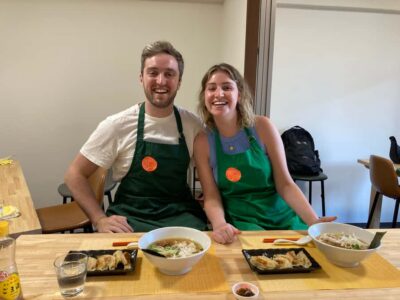
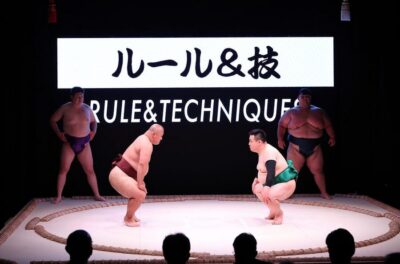
Sumo Stage Show with Bento or Snack + Fight & Photo
Read our review →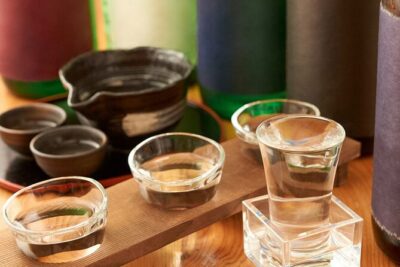
Ramen and Sushi Cooking Class with Sake Pairing Set in Tokyo
Read our review →Browse the lists this tour appears in