
Reviewed · TEA CEREMONY EXPERIENCES
Tea ceremony experience in Japanese-style room 60min
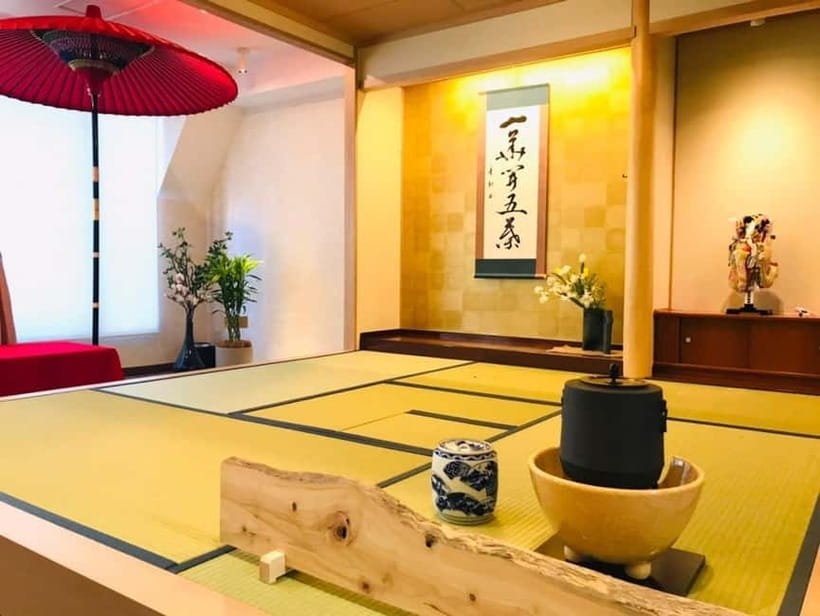
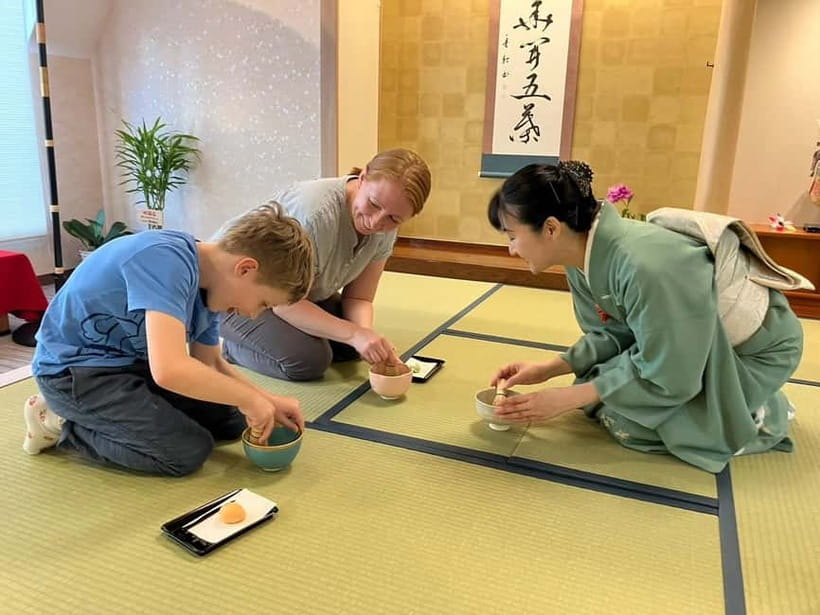
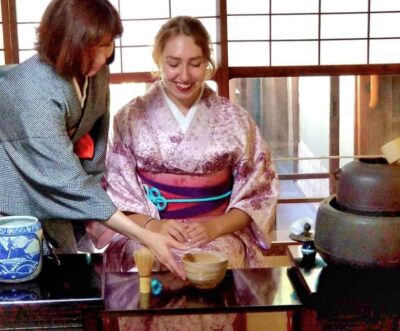
The best part of this experience is that you do not simply watch a tea ceremony. You choose your own bowl and sweet, then make matcha yourself, with tea master Ryouko explaining the movements, tools, and customs along the way. The setting is a traditional Japanese room inside Charyo-Ichimatsu, a building recognized as a registered tangible cultural property.
I like the small group size, which is capped at seven, and the personal attention from Ryouko and her assistant Akiko. I also like the generous photo opportunities, including help taking pictures during the ceremony. The main consideration is that the session may feel short for the price if your group finishes in about 40 to 45 minutes and you want a long, lecture-style explanation.
Key points to know before booking
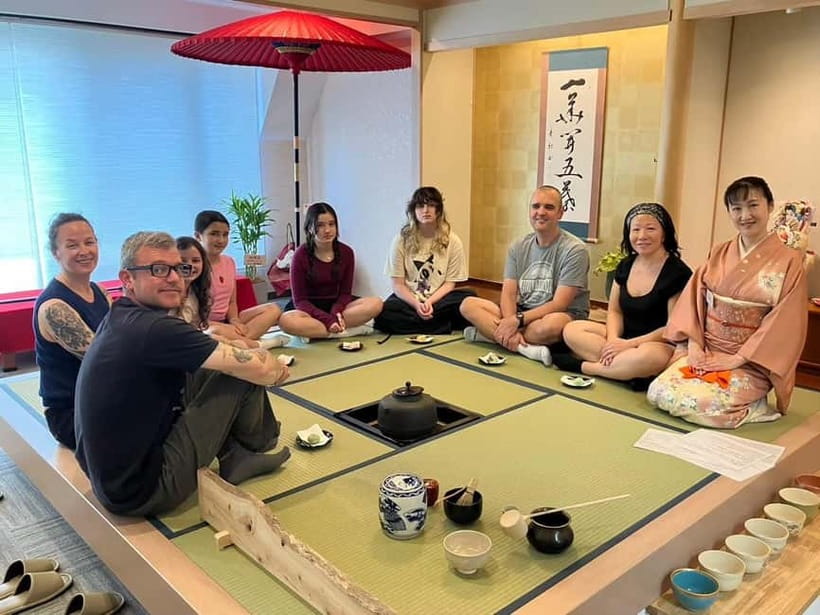
- Choose your own tea bowl and sweet: Each matcha bowl has a different design, and its character is explained before you use it.
- Make your own matcha: After watching the demonstration, you whisk tea yourself with guidance.
- Expect a calm, traditional setting: The ceremony takes place in a Japanese-style room inside Charyo-Ichimatsu.
- Photos are part of the experience: You may take pictures and videos, and staff can help photograph you during the ceremony.
- Small groups work well here: The limit is seven people, with instruction available in English and Japanese.
- Bring socks: Shoes are not allowed indoors, and socks are required if you step onto the tatami. Socks can be bought for 500 yen if needed.
Entering the Japanese room at Charyo-Ichimatsu
This tea ceremony takes place in Wasako, a Japanese-style room inside the Charyo-Ichimatsu restaurant. The building is a registered tangible cultural property in Japan, so the setting gives you more than a place to drink tea. The architecture, furnishings, hanging scrolls, and carefully arranged utensils all help explain why the ceremony is treated as an art.
You reach the venue in about five minutes from Tawaramachi Station, Exit 3, on the Tokyo Metro Ginza Line. From Asakusa Station, Exit A4, on the Toei Asakusa Line, allow about 10 minutes on foot.
The directions deserve a little care. Look for green signs marked for the tea ceremony experience. One useful description places the room on the fifth floor, two doors to the right of a kimono rental location, near an incense shop doorway. Since the meeting point can be easy to miss, arriving early gives you time to ask for help rather than rushing in at the start.
Before entering, you remove your shoes. You should bring socks from the start. The experience specifically says that socks are needed if you go onto the tatami, and indoor shoes are not allowed. If you arrive without socks, they can be purchased for 500 yen.
Other tea rooms and ceremonies in Tokyo:
- Matcha Making Class in Tokyo with Authentic Japanese Sweets Set
★ 5.0 · 744 reviews - Tokyo: Traditional Tea Ceremony with a Tea Master
★ 5.0 · 528 reviews - Tokyo: Matcha Making Experience with Mochi Sweets in Asakusa
★ 4.9 · 388 reviews
Choosing your bowl and Japanese sweet
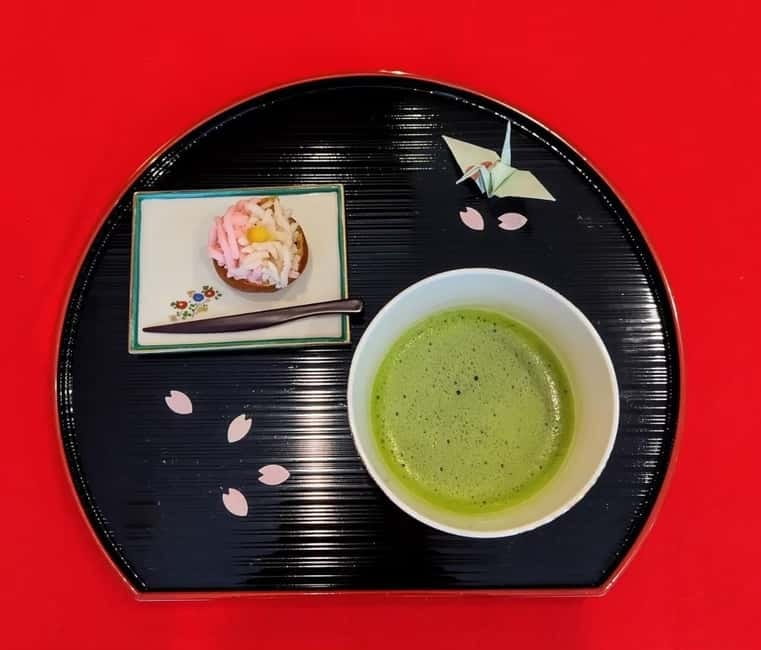
The session begins with a small but meaningful choice. You select the matcha bowl that will be used for your tea, along with a Japanese sweet to enjoy during the ceremony.
The bowls are not treated as identical serving dishes. Each has its own design, and Ryouko explains the individual character of the bowl you choose. This gives you a simple way to notice the Japanese appreciation for shape, color, texture, and seasonal feeling without needing prior knowledge.
The sweet is served with the tea because its sugar balances matcha’s strong, grassy bitterness. That pairing is part of the ceremony rather than a separate snack break. Take your time with it. The experience is built around small gestures, and rushing through the sweet misses some of the point.
This choice also makes the session feel personal. You are not simply handed a bowl and told where to sit. You take part in setting up your own experience, then learn how the bowl and utensils are handled with care.
Watching Ryouko prepare the matcha
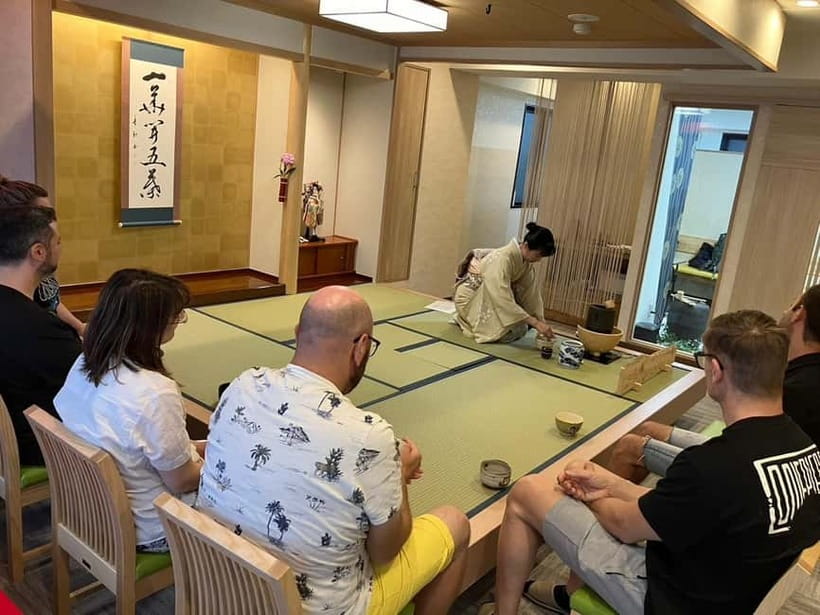
The demonstration is the quiet center of the experience. Ryouko prepares the tea while explaining what she is doing, and you can watch the order of the movements closely.
The value here is not just seeing green tea made. You learn how the tools are used, why the steps are done in a particular order, and how the ceremony creates a calm exchange between the person preparing the tea and the person receiving it. Explanations may also cover the hanging scrolls, furnishings, and background of the tea ceremony.
Ryouko has been praised for her patience, warmth, and care with beginners. That matters because the formal gestures can seem intimidating at first. You are not expected to know how to hold every utensil or respond perfectly. The instruction is designed to let you watch first, ask questions, and then try the process yourself.
English and Japanese are offered. The amount of explanation can depend on the pace of the group. If you want more detail about the history or symbolism, ask questions as you go. The format is friendly and practical, but it may not satisfy someone seeking a long academic talk on tea schools and ritual traditions.
Making your own matcha
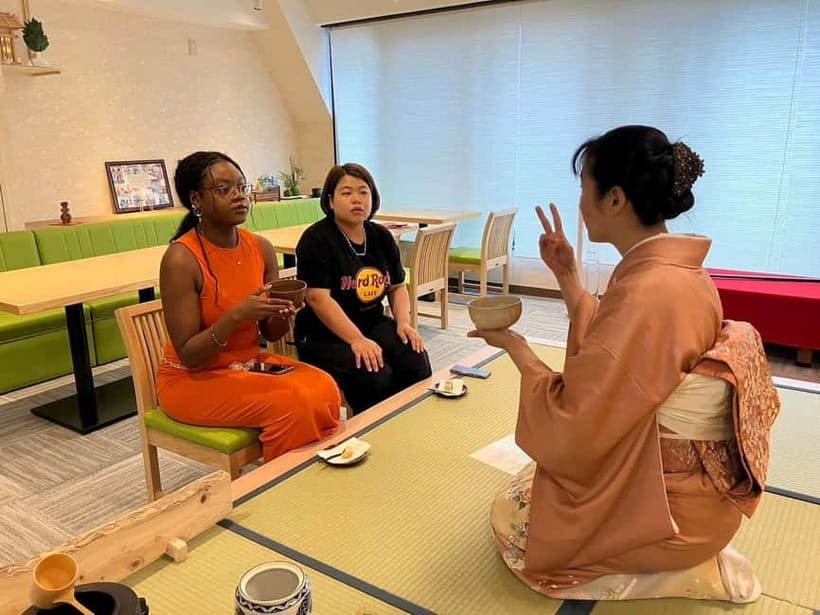
The most useful part of the session comes after the demonstration, when you prepare your own matcha. You get to handle the utensils, add the tea, and whisk it under guidance.
This changes the experience from a performance into a lesson. You notice how much control is involved in making a smooth bowl of matcha, and you get a clearer sense of the care behind the host’s movements. Even if your first bowl is not perfect, the attempt helps you remember the process far better than watching from a distance.
For many people, this is the right level of participation. You receive an introduction to a formal tradition without needing to commit to a long class. Families with older children and adult children can take part together, although children under six are not accepted.
The group limit of seven is useful here. A larger class could make it harder to see the demonstration or receive help with the whisking. With a small group, you have a better chance to ask about a bowl, utensil, or movement that catches your attention.
Same base, a different sort of day:
- Mt Fuji and Hakone 1-Day Bus Tour Return by Bullet Train
★ 5.0 · 26,383 reviews - 1-Day Tokyo Bus Tour
★ 5.0 · 14,250 reviews - Tokyo: TOKYO SKYTREE® Admission ticket
★ 4.5 · 11,192 reviews - Tokyo: teamLab Planets TOKYO Digital Art Museum Entry Ticket
★ 4.6 · 9,779 reviews
A peaceful setting with room for photos
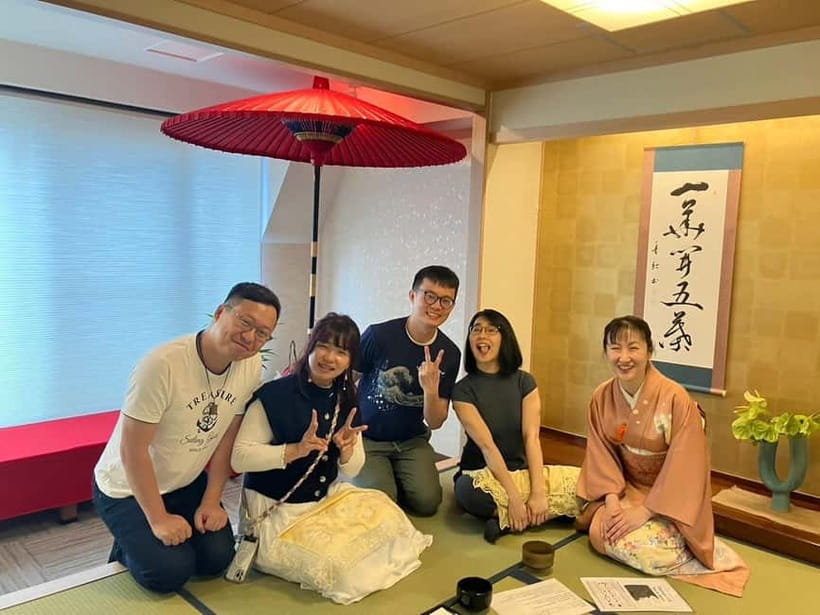
The room and building are a major part of the appeal. Reviews of the experience repeatedly praise the peaceful atmosphere, traditional design, and attention to small details. You can take pictures and videos during the session, and the staff can also take photographs for you.
That last point is especially helpful if you are traveling alone or want pictures of the actual ceremony rather than only a souvenir snapshot afterward. Ryouko and Akiko have helped participants photograph the tea preparation, the room, and the formal clothing.
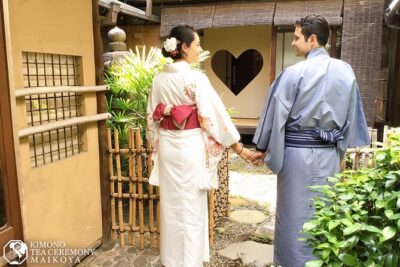
The building offers several photo-worthy spots. You may also be able to add kimono dressing, an option that has been especially popular with people who want a fuller cultural photo experience. In that arrangement, staff dress you in the kimono, which can involve several layers and take extra time. The supplied experience information does not include kimono rental in the $45 price, so check the current booking choices before assuming it is included.
Photography should support the ceremony rather than take it over. You can record the demonstration, but keep your phone quiet and avoid missing the explanations while framing every shot. The strongest memories usually come from taking a few pictures, then paying attention to the movements and atmosphere.
How long the visit really takes
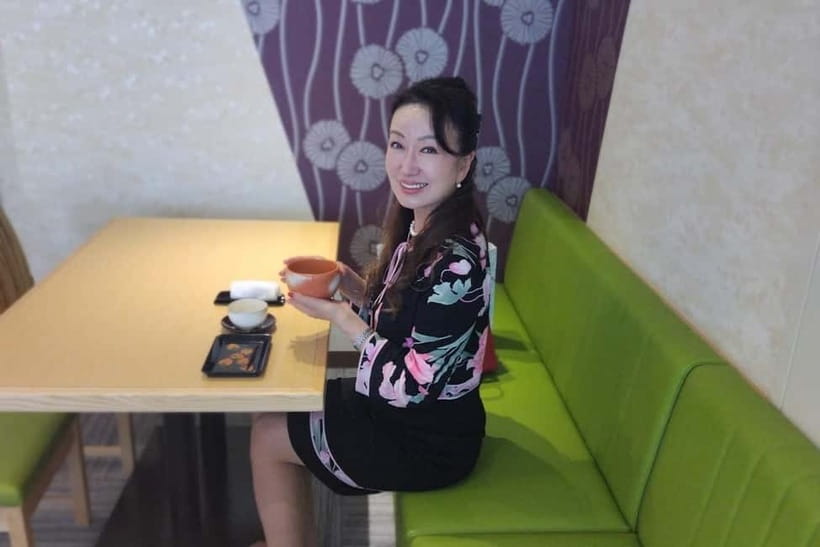
The experience is labeled as a 60-minute tea ceremony, while the practical information gives a duration range of 45 minutes to four hours depending on availability. The listed start times are 10:00, 11:30, 13:30, and 15:00.
For planning purposes, expect the core tea ceremony to take about 45 to 60 minutes unless you add another option such as kimono dressing. One group reported finishing in roughly 40 minutes, including early arrival. That shorter timing was a drawback for them, especially when measured against the cost.
I would leave a little space around the appointment rather than connecting it tightly to a train, museum entry, or restaurant reservation. You may want time for photographs, questions, and finding the room. The four start times make it easy to fit into a day in Asakusa, but the gap between sessions means you should select carefully if you have a fixed afternoon plan.
Is $45 a fair price?
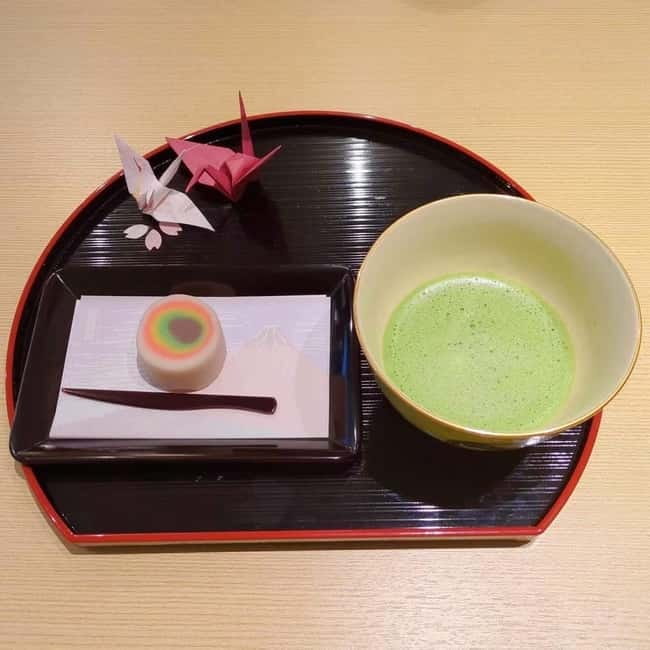
At $45 per person, this is not the cheapest way to drink matcha in Tokyo. You can find tea and sweets at many shops for far less. The price here pays for the setting, the demonstration, instruction, small group format, cultural explanation, and the chance to prepare your own bowl.
I think the value is strongest if you want a guided introduction rather than a quick cup of tea. You also receive a more memorable setting than a standard café, and the staff make an effort to photograph the experience. For a first visit to Japan, that personal help can be worth as much as the tea itself.
The value is weaker if you expect a long formal ceremony, extensive historical teaching, or a full traditional program lasting several hours. The session can finish quickly, and the exact depth of explanation depends on the pace and questions of your group.
For me, the price makes sense for someone who cares about Japanese culture, wants to participate, and values the room and photographs. It is less convincing for someone mainly seeking a drink or a highly technical study of tea ceremony practice.
Who will enjoy this most?
This experience suits first-time visitors who want a gentle way into Japanese tea culture. You do not need previous knowledge, and the hands-on portion keeps the lesson from becoming too formal or passive.
It also works well for couples, families with older children, and small groups of friends. Teenagers and adults can participate together, and the photo element gives the group something tangible to remember. Solo visitors may appreciate the staff’s help with photographs, especially if they choose a kimono option.
You should think twice if you use a wheelchair, since the experience is not suitable for wheelchair users. Children under six are also not accepted. Anyone uncomfortable sitting or moving around a traditional Japanese room should check the arrangement before booking.
The experience is less suited to someone who wants a grand, lengthy ceremony with no participation. Here, you watch, learn, choose, whisk, photograph, and ask questions. That makes it approachable, but not necessarily lengthy or highly formal from start to finish.
Practical booking advice for Asakusa
Choose one of the four listed start times, 10:00, 11:30, 13:30, or 15:00, and allow enough time to walk from the station. Tawaramachi is the shorter walk, while Asakusa gives you a convenient route if you are already sightseeing near the Kaminarimon area.
Wear clothing that lets you sit comfortably. Bring socks, since shoes are removed indoors and socks are required for the tatami. If you plan to take pictures, a phone is enough, but ask before moving around the room or recording a particular step.
The activity has free cancellation up to 24 hours in advance for a full refund. The stated policy charges 50 percent for cancellation the day before and 100 percent on the day of the event, so do not wait until the last minute if your plans change. You can reserve now and pay later, which helps when arranging a busy Tokyo schedule.
Should you book this tea ceremony?
Book it if you want a short, friendly, hands-on introduction to matcha in a traditional room. Ryouko’s calm instruction, the choice of bowl and sweet, the small group size, and the chance to make your own tea give the experience real substance.
I would especially recommend it if you value photographs, want to add kimono dressing, or have never attended a tea ceremony before. Go in expecting about 45 to 60 minutes, not a long scholarly program, and bring socks. If that balance suits your plans, this is a pleasant cultural stop near Asakusa with enough participation to make it more than a staged demonstration.
FAQ
Where does the tea ceremony take place?
It takes place in the Japanese-style Wasako room inside the Charyo-Ichimatsu restaurant in Honshu, Japan.
How far is the venue from the train stations?
It is about five minutes on foot from Tawaramachi Station, Exit 3, on the Tokyo Metro Ginza Line. It is about 10 minutes from Asakusa Station, Exit A4, on the Toei Asakusa Line.
What start times are available?
The listed start times are 10:00, 11:30, 13:30, and 15:00.
How long does the experience last?
The tea ceremony is described as 60 minutes, with practical duration information ranging from 45 minutes to four hours depending on availability. The main ceremony generally fits into about 45 to 60 minutes.
What is included in the price?
The $45 price includes tea sweets, matcha green tea, the demonstration, instruction for making your own matcha, and opportunities to take pictures.
Can I choose the bowl used for my tea?
Yes. You can choose your matcha bowl, and the design of each bowl is explained individually.
Can I make my own matcha?
Yes. You first watch the demonstration, then learn how to prepare and whisk your own matcha.
Is instruction available in English?
Yes. Instruction is available in English and Japanese.
Do I need to bring socks?
Yes. Bring socks because shoes are not allowed indoors and socks are required if you go onto the tatami. Socks can be purchased for 500 yen if you do not have them.
Is the activity suitable for young children or wheelchair users?
Children under six are not accepted, and the activity is not suitable for wheelchair users.
Just added in Tokyo
- The 10 Tastings of Tokyo With Locals: Private Street Food Tour★ 5.0 · 48 reviews
- Small Town in the Big City: Tasting Tokyo’s Kichijoji★ 5.0 · 195 reviews
- Small Town in the Big City: Tasting Tokyo’s Kichijoji★ 5.0 · 16 reviews
- EXCLUSIVE Tokyo Secret: Kichijoji Small-Group Food & Bar Hopping★ 5.0 · 29 reviews
- Explore Kichijoji: Walk Through One of Tokyo’s Beloved Districts★ 5.0 · 21 reviews
- :Tokyo,Shibuya/ Pro Photography in Kimono / English-Friendly★ 5.0 · 26 reviews
- 【R34】Tokyo:Private Daikoku tour in Modified R34★ 4.9 · 92 reviews
- Tokyo:Calligraphy &Make your original folding fan in Asakusa★ 5.0 · 62 reviews
Tea Ceremony Experiences, compared.

Tea Ceremony in a Traditional Tea House in Kiyomizu
Read our review →

World Heritage Kyoto & Nara Uji Authentic Matcha Experience
Read our review →
Arashiyama Bamboo Forest, Monkeys, Matcha & Temple Tour
Read our review →Browse the lists this tour appears in