
Reviewed · TEA CEREMONY EXPERIENCES
Tokyo: Tea Ceremony Experience in Asakusa
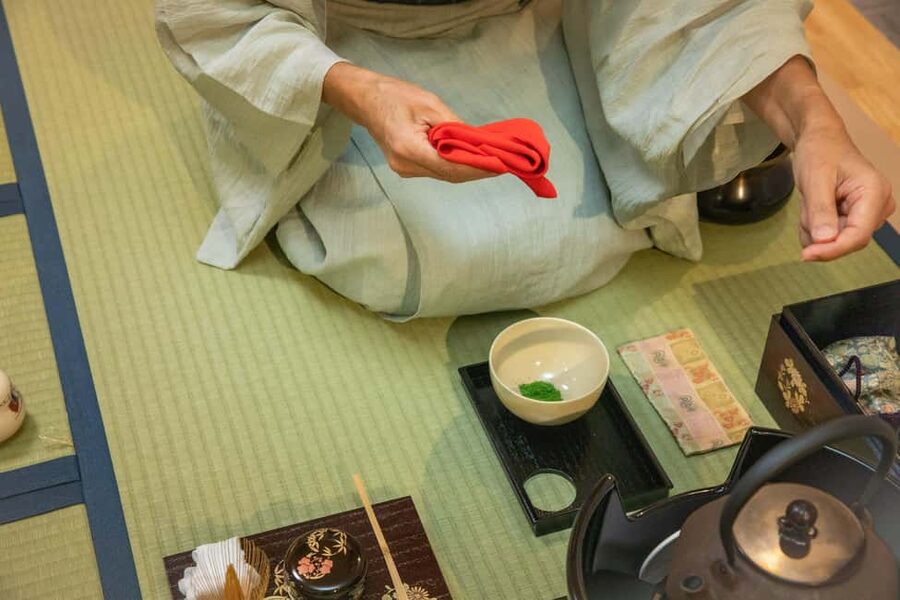
Matcha preparation is the heart of this one-hour Asakusa tea ceremony, but the real treat is learning what the movements mean. Your English-speaking guide explains the ideas behind pouring, whisking, serving, and receiving tea, then lets you prepare your own bowl.
I like two things right away: the small group of no more than eight keeps the class personal, and the relaxed format makes it easy to ask questions or take photos. I also like that the $25 price includes traditional Japanese sweets and hands-on matcha practice, not just a demonstration.
The main consideration is that this is a beginner-friendly introduction, not a long, formal ceremony in rented kimono. Kimono rental is not included, and anyone seeking a highly formal ritual may find the casual approach too simple.
Key points to know before booking
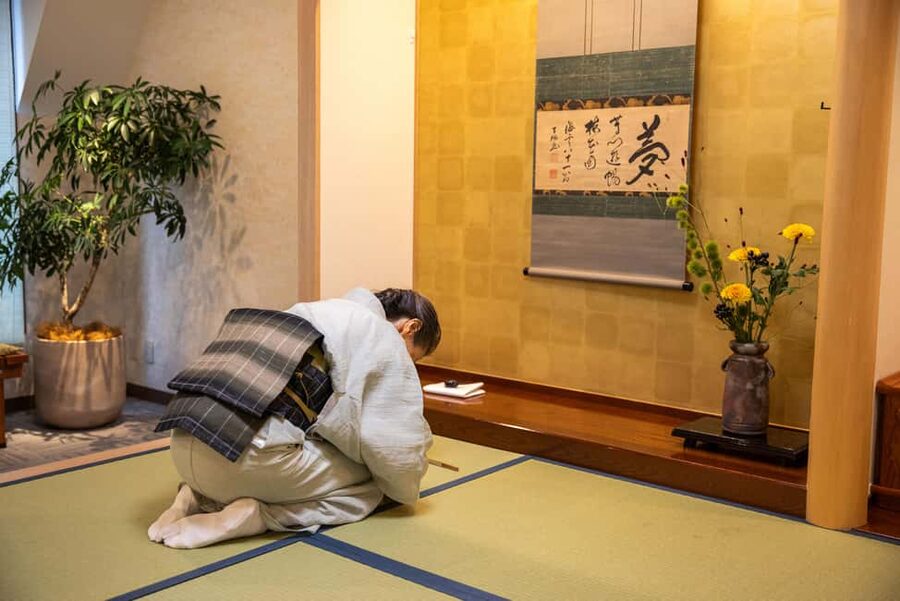
- You make your own bowl of matcha: After watching the guide, you whisk and prepare tea yourself.
- The setting is relaxed: Ask questions, take photos, and sit comfortably during the session.
- English guidance is included: Guides such as Midori and Kaz explain each action and its place in Japanese culture.
- Traditional sweets come with the tea: The sweets give you the customary small bite to enjoy with matcha.
- The group is limited to eight: This gives you a better chance to receive clear instruction.
- The price is $25 per person: For an hour of cultural explanation and practical instruction, that is a fair Tokyo activity price.
Why Asakusa is a good place for a tea lesson
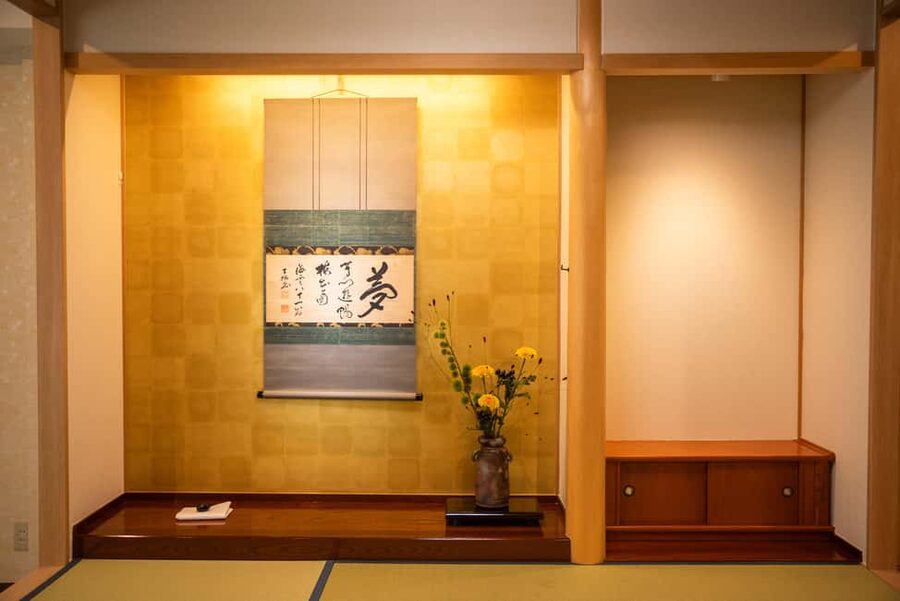
Asakusa is one of Tokyo’s best areas for connecting a short cultural activity with the rest of your day. The meeting point is Tokyo Tourist Lounge Asakusa, on the fifth floor of its building, at 35.7103757, 139.796744.
You should use Google Maps and search for the exact name of the lounge. The activity does not begin at a famous temple courtyard or a traditional countryside teahouse, so set your expectations correctly. This is an indoor teaching session in central Tokyo, chosen for ease and comfort rather than theatrical scenery.
That practical setting has advantages. You are not expected to know how to kneel perfectly, dress in special clothing, or follow a long ceremony without explanation. You can focus on the tea, the gestures, and the ideas behind them.
The activity is wheelchair accessible, which also makes the indoor setting useful for people who need easier physical access. The supplied details do not describe the exact route from the street to the fifth floor, so contact the provider if you need specific access information before booking.
Other tea rooms and ceremonies in Tokyo:
- Matcha Making Class in Tokyo with Authentic Japanese Sweets Set
★ 5.0 · 744 reviews - Tokyo: Traditional Tea Ceremony with a Tea Master
★ 5.0 · 528 reviews - Tokyo: Matcha Making Experience with Mochi Sweets in Asakusa
★ 4.9 · 388 reviews
What happens during the first few minutes
The session begins with an introduction to Japanese tea ceremony customs and matcha. Your guide sets the scene in clear English, explaining where matcha comes from, why it matters in Japanese society, and how tea connects with Japanese ideas of harmony and hospitality.
That background matters. Without it, whisking green powder into hot water can feel like a simple food demonstration. With it, you begin to see the ceremony as a sequence of thoughtful actions, each one showing care for the person receiving the tea.
Guides including Midori and Kaz have been praised for being kind, clear, and encouraging. You can expect the tone to be friendly rather than stern, with explanations designed for someone encountering the ceremony for the first time.
The hour is short, so the introduction will not cover every school, rule, or historical detail connected with tea ceremony. That is a fair trade for a class that stays accessible and leaves time for you to practice.
Learning the meaning behind each movement
The guide walks you through the basic actions involved in preparing and presenting matcha. You learn about pouring the water, whisking the powder, and presenting the finished tea.
The value here is not just knowing the order of the steps. You also learn why the gestures are done with care. The ceremony presents tea as an act of welcome, where attention is given to the host, the guest, the bowl, and the moment itself.
I like this part because it gives the activity a cultural frame without turning it into a lecture. You are free to stop and ask questions, which helps if you want to understand table manners, the purpose of the sweets, or the way matcha fits into everyday Japanese culture.
You should also be ready to watch closely. Some movements are small, and the meaning can be easy to miss if you treat the session as only a tasting. The guides appear to explain each action in detail, so this is a good time to slow down and pay attention.
Traditional sweets and the taste of matcha
The tea comes with traditional Japanese sweets. They are an important part of the experience because their sweetness balances the sharper, grassy flavor of matcha.
Matcha is not like a mild cup of green tea. It is powdered tea whisked into water, so you drink the tea leaves rather than straining them out. The taste can be earthy and slightly bitter, especially if you are new to it.
The sweets help make the tea more approachable. You can enjoy the small treat as part of the ceremony, then taste the matcha with a better sense of how the two work together.
The information provided does not name the exact sweets or explain their ingredients. If you have allergies or dietary restrictions, ask the guide before eating. The activity includes traditional sweets, but it does not promise substitutions.
Same base, a different sort of day:
- Mt Fuji and Hakone 1-Day Bus Tour Return by Bullet Train
★ 5.0 · 26,383 reviews - 1-Day Tokyo Bus Tour
★ 5.0 · 14,250 reviews - Tokyo: TOKYO SKYTREE® Admission ticket
★ 4.5 · 11,192 reviews - Tokyo: teamLab Planets TOKYO Digital Art Museum Entry Ticket
★ 4.6 · 9,779 reviews
Your turn to whisk matcha
The hands-on part is the strongest reason to choose this activity over a simple cultural demonstration. After watching the guide, you prepare your own bowl of matcha.
You learn how to handle the powder and water, then use the whisk to create the tea. This gives you a practical memory to take home. You may forget a few facts about tea production, but you are more likely to remember the sound and motion of whisking your own bowl.
Do not worry about producing a perfect foam on the first attempt. This is designed for beginners, and the point is to understand the process and enjoy the act of making tea. Your guide can show you what to do and help you correct your technique.
Once your bowl is ready, you can savor it at your own pace. That slower moment is useful. Tokyo can be noisy and fast, while this activity asks you to focus on one bowl, one taste, and one set of movements.
A friendly class rather than a strict formal ceremony
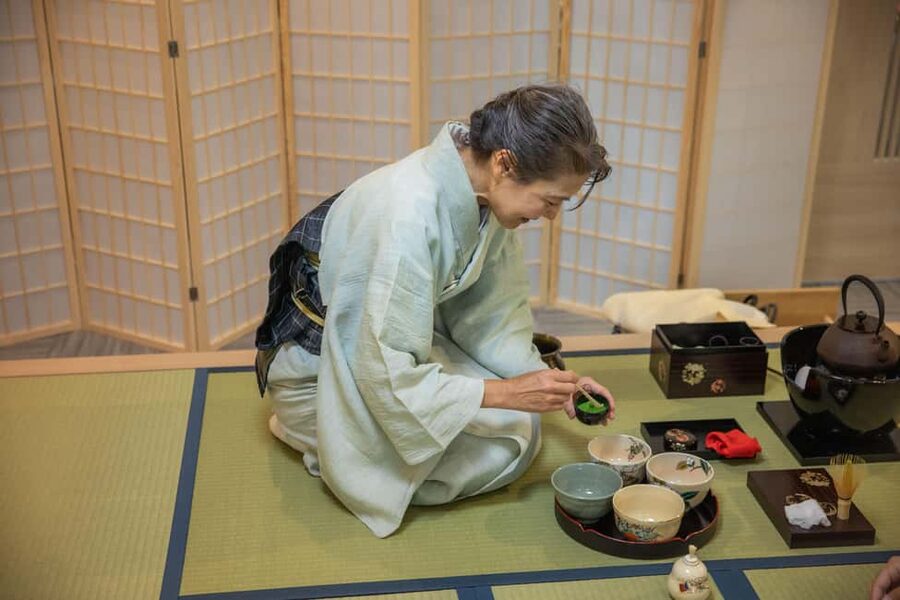
The session is presented as a relaxed version of a Japanese tea ceremony. You can ask questions and take photos during the experience, which makes it well suited to curious visitors who want cultural context without heavy rules.
That approach is especially helpful if you have never attended a tea ceremony. You do not need to arrive with specialist knowledge, and the English instruction lets you follow the explanations as they happen.
At the same time, a relaxed class has limits. If you are hoping for a full formal ceremony with strict silence, elaborate seasonal equipment, or kimono, this will not provide all of that. Kimono rental is specifically not included.
I see the casual format as a strength for most short Tokyo visits. You get to take part rather than sit quietly through a performance. The tradeoff is that the experience offers an introduction, not a complete study of tea ceremony schools and traditions.
What the small group changes
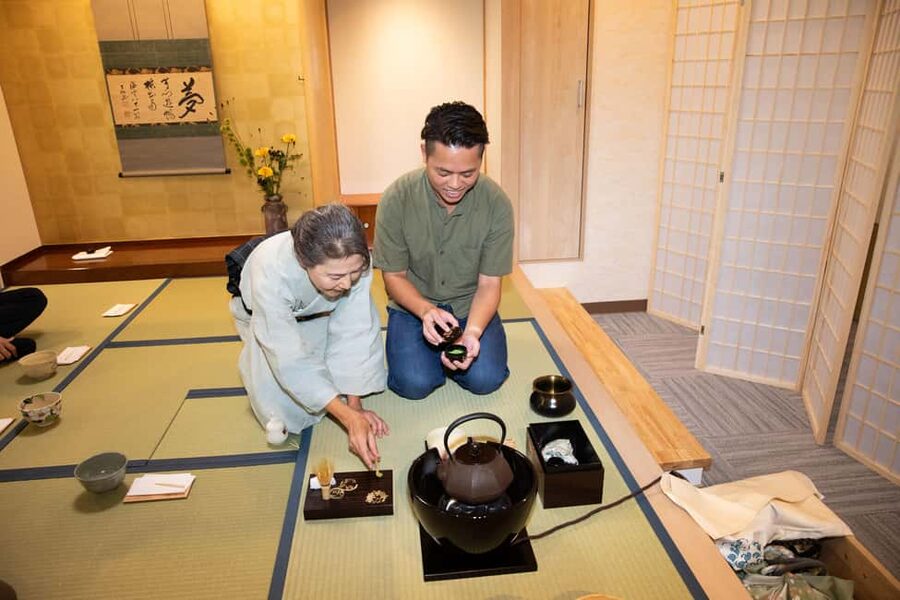
With a maximum of eight participants, the class is small enough for personal instruction. You have a reasonable chance to see the demonstration clearly, ask a question, and prepare your own tea without feeling lost in a crowd.
Small groups also help with photographs. Since photos are allowed, you can record the whisking and presentation, while still keeping your attention on the guide.
The group size can affect the mood. With other people present, this is not a private lesson, and you may need to share the guide’s attention. Still, eight people is a useful limit for an activity built around hands-on practice.
If you want a completely private ceremony or a very quiet setting, check the booking details before paying. The listed experience is a small group activity, not a private booking.
The guides make the difference
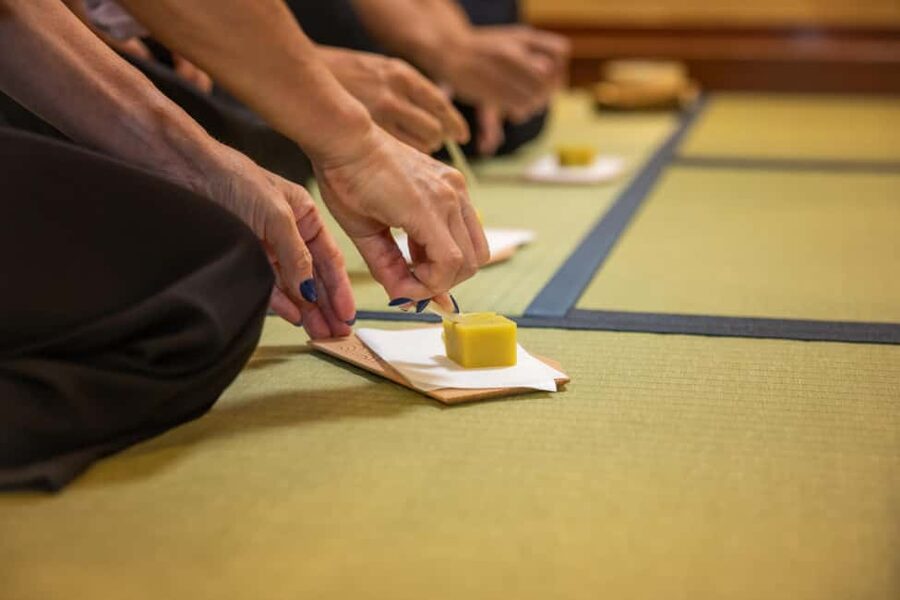
A good tea lesson depends on explanation as much as equipment. Midori is described as a kind and engaging guide who gives a brief history of matcha, discusses its importance in Japanese culture, and explains the purpose of each action.
Kaz is also noted as a strong instructor who gives participants a chance to make matcha. The available guide names may vary by session, so you should not book on the assumption that one particular person will lead your time slot.
What you can expect from the instruction is a clear path through the ceremony: watch the guide, learn the meaning, prepare your own tea, then drink it. The teaching style appears warm and approachable rather than overly formal.
That is good news for families, first-time visitors, and anyone who worries about making a mistake. The class is built to help you participate, not test you.
Is $25 good value in Tokyo?
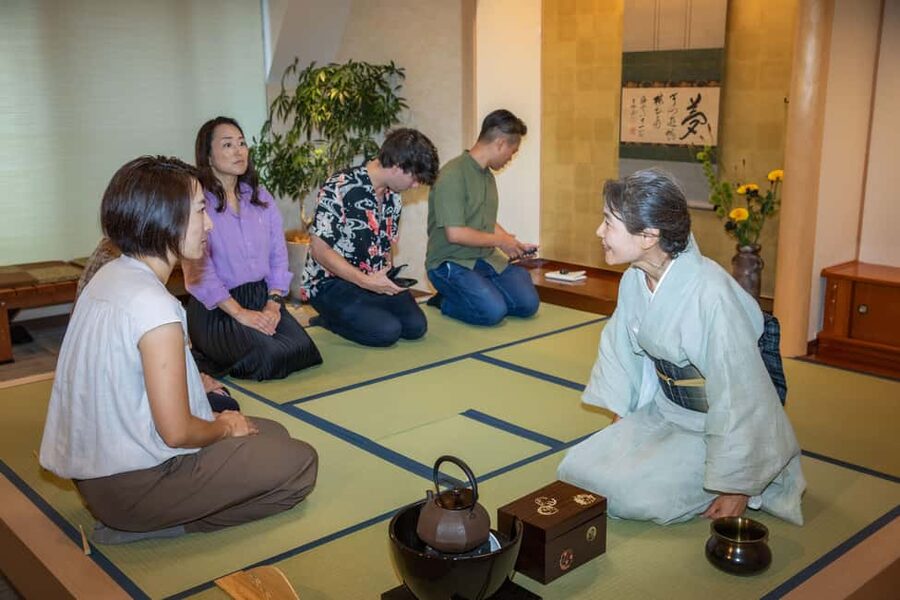
At $25 per person, this is a reasonably priced cultural activity. You receive a guided tea ceremony, an explanation in English, a matcha preparation lesson, traditional sweets, and the chance to drink tea you prepared yourself.
The value is strongest if you want participation. A short demonstration may cost less, but it would not give you the same practical lesson. On the other hand, a more elaborate ceremony with formal clothing, a specialist venue, or a longer lesson would likely offer more atmosphere and depth, but the price would also be higher.
The one-hour length works well in a Tokyo schedule. You can fit it between sightseeing stops without giving up half a day. The downside is that the class cannot cover every part of tea culture in such a short time.
I would treat this as a compact cultural stop, not the main event of your Japan trip. For $25, it gives you a thoughtful activity and a skill you can try again if you buy matcha or a whisk later.
Who should book this experience
This class suits first-time visitors who want a clear introduction to Japanese customs. It also works for repeat visitors who have seen Tokyo’s major sights and want an activity with a slower rhythm.
Families and mixed-age groups may like the hands-on format because making tea gives everyone something to do. The relaxed rules also help people who feel unsure about formal etiquette.
It is a good choice for anyone curious about matcha, Japanese hospitality, or the meaning behind everyday gestures. The English instruction is important if you want cultural explanation rather than a silent demonstration.
You may want something else if your main goal is dressing in kimono, attending a highly formal ceremony, or spending several hours studying tea schools. Those elements are not part of this experience.
Practical planning for your Asakusa visit
Allow time to find Tokyo Tourist Lounge Asakusa. The meeting point is on the fifth floor, so do not simply search for a general tea house in the surrounding streets. Use the exact name in Google Maps or enter the coordinates provided with your booking.
The class lasts one hour, but you should allow a little extra time to arrive and locate the building. Starting times vary, so check availability for the date you want.
You can cancel up to 24 hours in advance for a full refund. The reserve now and pay later option is useful if your Tokyo schedule is still changing, since you can hold a place without paying at once.
The activity is taught in English. If you want to ask detailed questions, prepare a few in advance, such as how matcha differs from ordinary green tea or why sweets are served with it.
Final verdict: a gentle first step into tea ceremony
I recommend this Asakusa tea ceremony if you want an affordable, friendly, hands-on introduction to Japanese culture. The combination of explanation, sweets, and making your own matcha gives the hour real substance.
Book it for the personal instruction, the small group, and the chance to ask questions. Choose another experience if you want kimono rental or a highly formal ritual.
For $25, this is an easy activity to add to a Tokyo day. You leave with more than a taste of matcha. You also gain a better sense of how hospitality, patience, and careful movement shape the ceremony.
FAQ
How long does the Tokyo tea ceremony experience last?
The experience lasts one hour.
Where is the meeting point?
Meet at Tokyo Tourist Lounge Asakusa, located on the fifth floor of the building. Use Google Maps and search for Tokyo Tourist Lounge Asakusa. The coordinates are 35.7103757, 139.796744.
Is the activity taught in English?
Yes. The instructor language is English.
Do I prepare my own matcha?
Yes. The guide demonstrates matcha preparation, then you make your own bowl and drink it at your own pace.
Are Japanese sweets included?
Yes. Traditional Japanese sweets are included with the tea ceremony.
Is kimono rental included?
No. Kimono rental is not included.
How many people are in the group?
The activity is limited to eight participants.
Is the experience wheelchair accessible?
Yes. The activity is listed as wheelchair accessible.
Can I cancel for a full refund?
Yes. You can cancel up to 24 hours in advance for a full refund.
Can I reserve now and pay later?
Yes. The reserve now and pay later option lets you keep your plans flexible and pay nothing at the time of booking.
Just added in Tokyo
- The 10 Tastings of Tokyo With Locals: Private Street Food Tour★ 5.0 · 48 reviews
- Small Town in the Big City: Tasting Tokyo’s Kichijoji★ 5.0 · 195 reviews
- Small Town in the Big City: Tasting Tokyo’s Kichijoji★ 5.0 · 16 reviews
- EXCLUSIVE Tokyo Secret: Kichijoji Small-Group Food & Bar Hopping★ 5.0 · 29 reviews
- Explore Kichijoji: Walk Through One of Tokyo’s Beloved Districts★ 5.0 · 21 reviews
- :Tokyo,Shibuya/ Pro Photography in Kimono / English-Friendly★ 5.0 · 26 reviews
- 【R34】Tokyo:Private Daikoku tour in Modified R34★ 4.9 · 92 reviews
- Tokyo:Calligraphy &Make your original folding fan in Asakusa★ 5.0 · 62 reviews
Tea Ceremony Experiences, compared.
Tea Ceremony in a Traditional Tea House in Kiyomizu
Read our review →
World Heritage Kyoto & Nara Uji Authentic Matcha Experience
Read our review →
Arashiyama Bamboo Forest, Monkeys, Matcha & Temple Tour
Read our review →Browse the lists this tour appears in