
Reviewed · TEA CEREMONY EXPERIENCES
Tokyo: Two Types of Japanese Sweets Making and Tea Ceremony
Tokyo’s AN TOKYO experience gives you three small lessons in Japanese food culture for $28: Wasanbon ohigashi, two seasonal nerikiri, and a casual matcha session. I like the clear progression from easy molded sweets to more delicate bean-paste work. I also like that the matcha is single-origin and that the program includes making your own tea, not just watching a ceremony.
The main thing to consider is language. The instructor is Japanese, with English translation provided as much as possible, so some explanations may be less exact than the hands-on steps. Nerikiri also demands a little finger control, and the event cannot wait for late arrivals.
Key points at a glance
- Three Japanese traditions in 125 minutes: Make ohigashi, two seasonal nerikiri, and your own matcha.
- Kyoto bean paste: The white and red bean paste comes from long-established shops in Kyoto.
- Wasanbon sugar: The dried sweets use a traditional Japanese sugar prized for its fine texture.
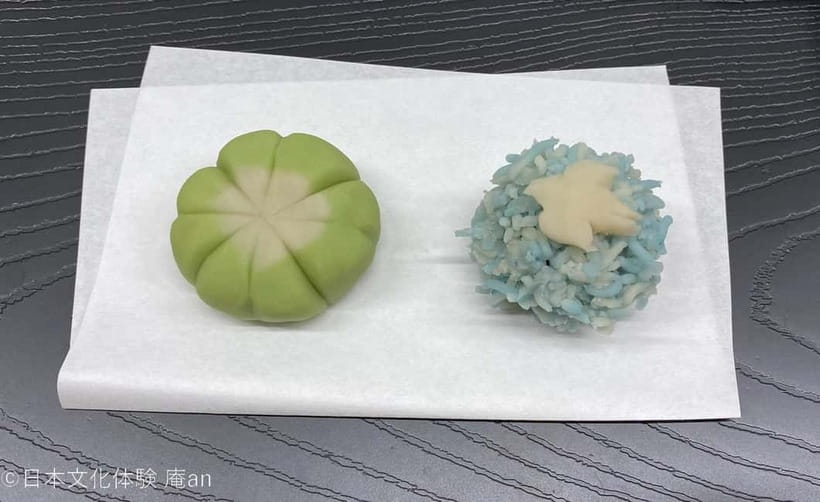
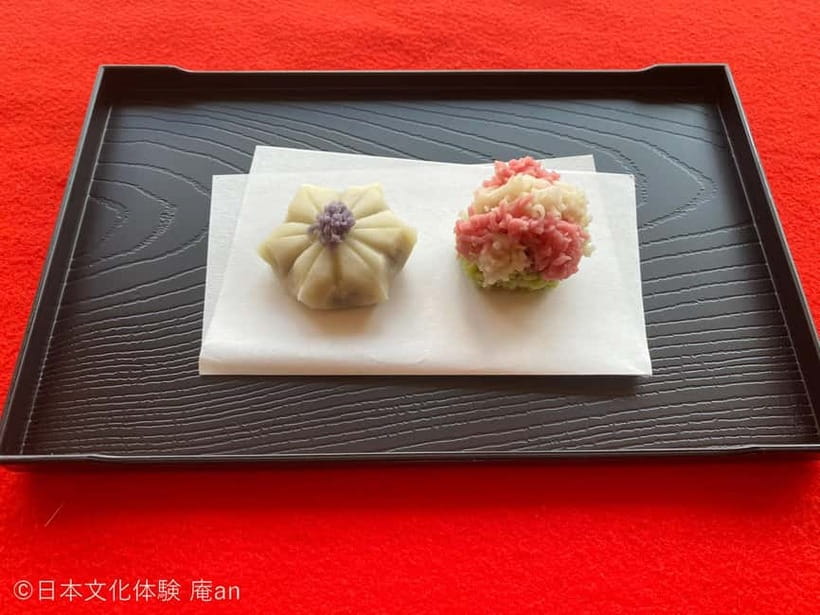
- Seasonal designs: Your nerikiri includes a flower shape and a kinton style that reflect the season.
- A gentle first tea experience: You get a matcha grinding demonstration, tea-making practice, and a casual ceremony.
- Good value at $28: The price covers three connected activities, with only small optional charges for extras.
Three Japanese sweets and one bowl of matcha
This is not a formal ceremony where you sit quietly while someone else performs every step. You work with the ingredients yourself. That makes the experience a good fit if you want a practical introduction to Japanese culture rather than a short photo stop.
The session takes place at AN TOKYO Japanese Culture Experience in Tokyo, on Honshu. It lasts 125 minutes, long enough to give each part some attention without turning into a full-day class. The schedule also includes short breaks, which helps because molding small sweets takes more concentration than you might expect.
The program is built around three experiences:
- Making dried Japanese sweets called ohigashi.
- Making two seasonal nerikiri sweets.
- Preparing and drinking matcha in a casual tea ceremony.
You eat and drink during the session, but a take-out box costs an extra 100 JPY. Adding color costs 200 JPY, and a completion certificate costs 300 JPY. These are minor charges, but it is useful to know that the advertised price covers the core class, not every optional extra.
Other tea rooms and ceremonies in Tokyo:
- Matcha Making Class in Tokyo with Authentic Japanese Sweets Set
★ 5.0 · 744 reviews - Tokyo: Traditional Tea Ceremony with a Tea Master
★ 5.0 · 528 reviews - Tokyo: Matcha Making Experience with Mochi Sweets in Asakusa
★ 4.9 · 388 reviews
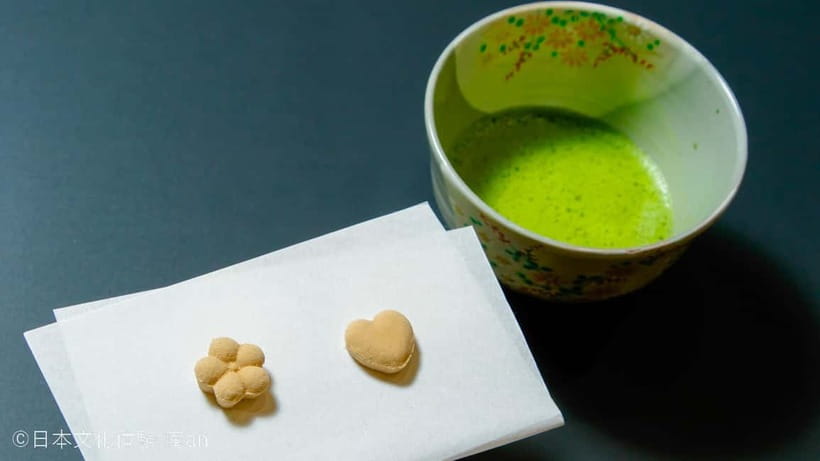
Ohigashi with traditional Wasanbon sugar
The first practical task is ohigashi, a dry Japanese sweet made with Wasanbon. You receive an explanation of traditional Japanese sweets, then begin shaping the mixture. This opening section is the most approachable part of the class, and it gives you a quick win before the finer nerikiri work begins.
Wasanbon is a traditional Japanese sugar with a fine texture. Here, the sugar is not just a sweetener in the background. It is the main character of the first activity, so you get a direct sense of how Japanese confectionery can be delicate without being elaborate.
The schedule places ohigashi making at the start, followed by a short break around the 20-minute mark. That is a sensible order. You can learn the basic feel of the materials while your hands are fresh, then pause before working with bean paste.
This part should suit families and first-time participants especially well. The method is described as easy, and there are no complicated tea movements yet. If you want the most relaxed section of the class, ohigashi is likely it.
Two seasonal nerikiri, one flower and one kinton
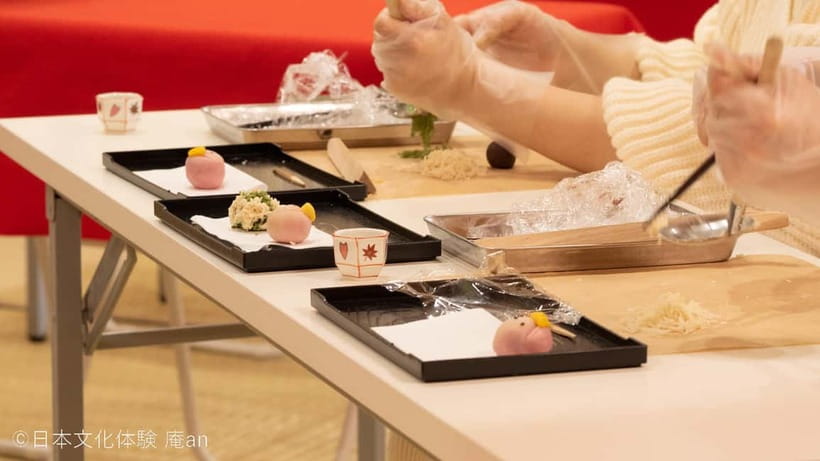
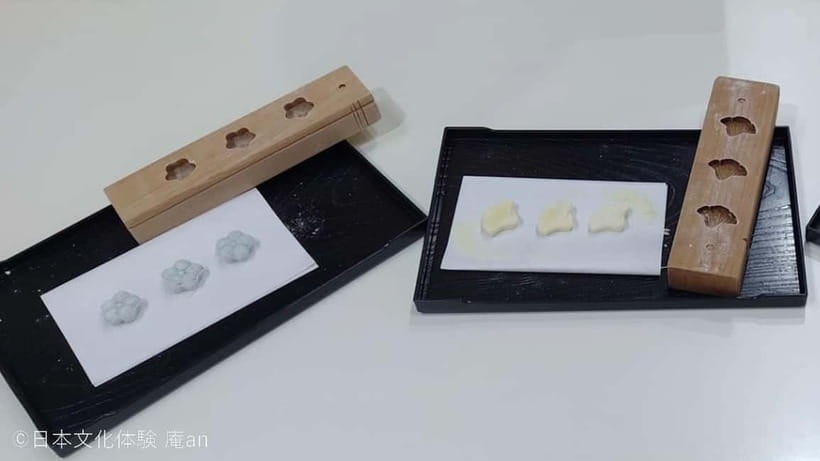
After the break, you make two nerikiri. These are soft Japanese sweets made from white or red bean paste, with shapes and colors linked to the season. The ingredients used here come from long-established Kyoto shops, which gives the activity a useful connection to Japanese confectionery traditions beyond Tokyo.
The first design is flower-shaped. The second is a kinton nerikiri. Kinton is known for its fine, threadlike appearance, so this is the point where the work becomes more exact. You are not simply rolling two balls of paste and calling it done. Small changes in pressure and handling affect the shape.
This is also where you should slow down. One participant described the ohigashi as easy, while the nerikiri required more delicacy. That matches the structure of the class: the second sweet asks more from your fingers and gives you a better feel for the craft.
I like this pairing because the two sweets let you compare styles. The flower shape gives you a clear visual goal. The kinton design asks for a lighter touch. You can see how Japanese sweets use form, texture, and seasonal suggestion instead of heavy decoration.
The experience provides two seasonal sweets, but the exact designs can vary with the time of year. That is part of the appeal, though it means you should not book expecting one fixed set of shapes. The program promises seasonal nerikiri rather than a specific permanent menu.
Matcha after the grinding demonstration
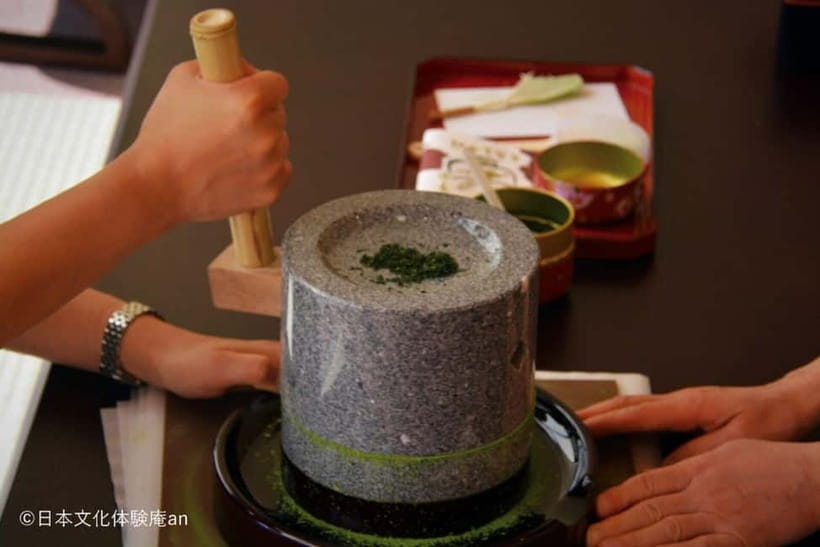
The tea section begins with an explanation of tea, followed by a matcha grinding demonstration. You then prepare your own matcha and take part in a casual tea ceremony. The instructor also explains differences between green tea and matcha, along with background about Japanese sweets and tea varieties.
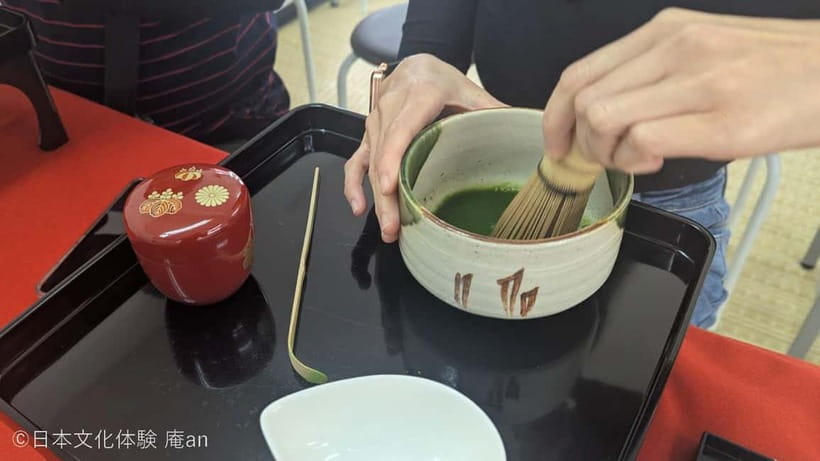
You should not expect the full formality of a traditional tea school. This is a welcoming introduction, designed so you can try the movements without needing prior knowledge. The practical task is whisking the tea into a smooth foam, and that part is described as simple once you are shown what to do.
The use of single-origin matcha is a nice detail. It gives the tea portion more substance than a generic green powder served at the end of a sweets class. You get to see the powder made through the grinding demonstration, then use matcha in the setting of the ceremony.
The schedule leaves roughly 30 minutes for nerikiri work, then a break around 85 minutes. Tea explanations begin at about 95 minutes. There is time for the ceremony and photographs before the formal experience ends around 115 minutes, followed by eating and drinking until departure at 125 minutes.
That final eating time matters. You can taste the sweets you made instead of rushing straight out after the photographs. The sweets are not merely craft projects. Their flavor is part of the lesson, and the bean-paste work gives you a reason to notice texture and sweetness more closely.
A few more things to do in Tokyo worth a look
- Japanese Traditional Sweets making and Tea Ceremony
★ 4.7 · 50 reviews - Tokyo: Tea Ceremony & Japanese Traditional Sweets
★ 4.9 · 21 reviews - Japanese Traditional Sweets making
★ 4.1 · 19 reviews - Tokyo: Hama-rikyu Gardens tour with Japanese Tea & Sweets
★ 4.7 · 14 reviews
What the English support is really like
The instructor is Japanese, and English translation is provided as much as possible. That means you should be able to follow the physical activities, especially because the instructor demonstrates the steps. Explanations about history, ingredients, and tea differences may be shorter or less detailed in English.
This is not necessarily a problem. The class is hands-on, so watching carefully is almost as important as listening. Still, if you want a long, technical lecture delivered in fluent English, this may not be the right choice.
The strongest point here is the instructor’s effort to explain the background as well as the procedure. The tea portion includes the difference between green tea and matcha, and the sweets section covers different kinds of Japanese confectionery. You get cultural context, not just a recipe.
Bring patience and pay attention to demonstrations. If you are unsure about a shaping step, ask for help right away rather than waiting until the paste has lost its form. The class cannot hold the event for late arrivals, so arriving on time is especially important when instructions are translated as the session proceeds.
Is $28 good value in Tokyo?
At $28 per person, this is a fair price for a 125-minute activity that includes three connected parts. A short tea demonstration alone can feel thin. Here, you also make three sweets in total, use Kyoto-sourced bean paste, work with Wasanbon, and prepare matcha.
The value depends on what you want. If your goal is simply to eat Japanese sweets, you can do that more cheaply at a shop. If you want a polished, formal tea ceremony with a long traditional presentation, this casual class may feel too light.
For a first cultural activity in Tokyo, the mix works well. You get something to make with your hands, something to taste, an explanation of ingredients, and a tea ritual that is easy enough for beginners. The class also fills a useful middle ground: more involved than a demonstration, but less demanding than a specialist workshop.
The optional charges are small. A 100 JPY take-out box is useful if you want to save your sweets. Adding color costs 200 JPY, while a certificate costs 300 JPY. You can skip all three and still receive the main experience.
Who should book this activity?
I would recommend it to you if you want a compact introduction to Japanese sweets and tea, especially if you prefer doing over watching. It is also a sensible choice for a rainy or very hot Tokyo day, since the main work takes place indoors at a set location.
Families can benefit from the variety, though the fine nerikiri work may be easier for older children. Children under two who sit on a parent’s lap are free. Anyone who does not take part in the experience cannot enter, so do not plan to use the venue as a waiting spot for a nonparticipant.
This should also suit couples, friends, and solo visitors who like food crafts. The three stages keep the pace moving. If you find one activity less interesting, the next one arrives soon enough.
You may want to skip it if you dislike sweet bean paste, because red and white bean paste are central to the nerikiri. You may also want another option if you need fully fluent English instruction or if you are likely to arrive late.
Practical timing and small things to know
The operation hours are 10:00 to 17:00. Reservations received after 17:00 are processed the next day. Check the available start times when booking, since the 125-minute length can affect how neatly the class fits with lunch, dinner, or another timed attraction.
Do not cut your arrival too close. The event will not be held for delays, and the provider does not compensate for travel costs if you miss it. That policy is worth taking seriously in Tokyo, where a small navigation mistake can turn into a long detour.
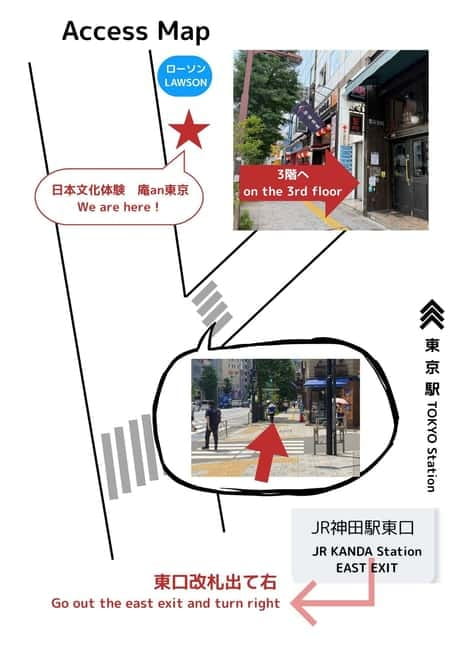
The meeting point is AN TOKYO Japanese Culture Experience. The supplied information does not give a detailed transport guide, so check the exact location and route before leaving your hotel. Keep the confirmation handy, especially if you are using a translation app.
Cancellation is flexible up to 24 hours in advance for a full refund, and you can reserve now and pay later. Those terms help if your Tokyo schedule is still shifting, but they do not remove the need to arrive on time once you have booked.
The experience in a simple timeline
The first 20 minutes cover the introduction and ohigashi making. You learn what the sweets are, work with Wasanbon, and shape the dried confectionery.
A break follows, then the main nerikiri section runs from about 30 minutes into the class to roughly 85 minutes. You make a flower-shaped sweet and a kinton sweet, both based on seasonal designs.
After another short pause, tea explanations begin at about 95 minutes. You watch a matcha grinding demonstration, prepare your own tea, join the casual ceremony, and have time for photographs.
The formal experience ends at around 115 minutes. The last 10 minutes are set aside for eating and drinking before you leave at the 125-minute mark. That final window is short, so do not expect a long unstructured tea gathering.
My take: book it for hands-on culture, not ceremony alone
Book this experience if you want to make Japanese sweets, taste Kyoto-style bean paste, and try matcha in one compact Tokyo session. The combination is the strongest reason to go. You get variety, seasonal detail, and enough instruction to leave with a better sense of how Japanese confectionery and tea fit together.
Go in expecting a friendly workshop rather than a grand formal ceremony. English help is available as much as possible, but the instructor’s demonstrations will carry much of the class. Arrive early, take your time with the nerikiri, and consider the small take-out box charge if you want to keep your creations.
At $28, it is a solid pick for first-time visitors, food-minded families, and anyone who wants a cultural activity with something to eat at the end.
FAQ
How long does the Japanese sweets and tea experience last?
The experience lasts 125 minutes, or just over two hours. The schedule includes sweets making, short breaks, matcha instruction, a casual tea ceremony, photographs, and final eating and drinking time.
What sweets will I make?
You will make ohigashi using Wasanbon, plus two seasonal nerikiri. The nerikiri include a flower-shaped design and a kinton design.
What ingredients are used for the nerikiri?
The white and red bean paste comes from long-established shops in Kyoto. The exact seasonal designs may vary.
Is the tea ceremony formal?
It is presented as a casual tea ceremony and is designed so you can take part easily. The experience includes a matcha grinding demonstration and instructions for making your own matcha.
Is English available?
The instructor is Japanese, and English translation is provided as much as possible. Demonstrations are also part of the instruction.
What does the $28 price include?
The price includes the set experience of making two types of Japanese sweets and taking part in the tea ceremony. A take-out box costs 100 JPY, adding color costs 200 JPY, and a completion certificate costs 300 JPY.
Can I cancel or pay later?
You can cancel up to 24 hours in advance for a full refund. You can also reserve now and pay later, subject to the booking terms.
Just added in Tokyo
- The 10 Tastings of Tokyo With Locals: Private Street Food Tour★ 5.0 · 48 reviews
- Small Town in the Big City: Tasting Tokyo’s Kichijoji★ 5.0 · 195 reviews
- Small Town in the Big City: Tasting Tokyo’s Kichijoji★ 5.0 · 16 reviews
- EXCLUSIVE Tokyo Secret: Kichijoji Small-Group Food & Bar Hopping★ 5.0 · 29 reviews
- Explore Kichijoji: Walk Through One of Tokyo’s Beloved Districts★ 5.0 · 21 reviews
- :Tokyo,Shibuya/ Pro Photography in Kimono / English-Friendly★ 5.0 · 26 reviews
- 【R34】Tokyo:Private Daikoku tour in Modified R34★ 4.9 · 92 reviews
- Tokyo:Calligraphy &Make your original folding fan in Asakusa★ 5.0 · 62 reviews
Tea Ceremony Experiences, compared.

Tea Ceremony in a Traditional Tea House in Kiyomizu
Read our review →

World Heritage Kyoto & Nara Uji Authentic Matcha Experience
Read our review →

Arashiyama Bamboo Forest, Monkeys, Matcha & Temple Tour
Read our review →Browse the lists this tour appears in