
Reviewed · TEA CEREMONY EXPERIENCES
Japanese Traditional Sweets making and Tea Ceremony
The best part of this 95-minute class is that you do not just watch Japanese food culture. You shape two seasonal nerikiri sweets yourself, starting with colored white bean paste and finishing with flower and kinton designs. The paste comes from long-established Kyoto shops, so this is more than a craft project with ordinary supermarket ingredients.
I like the clear food pairing: sweet bean paste with bitter Uji matcha. I also like the hands-on rhythm, which gives you something to do before the quiet tea ceremony begins. The main caution is communication. The instructor is Japanese, English translation is provided as much as possible, and a crowded session may make it hard to hear every explanation.
Key points to know before booking
- Two seasonal sweets: Make a flower-shaped nerikiri and a kinton nerikiri, with the exact seasonal design varying by the time of year.
- Kyoto ingredients: Use white and red bean paste produced by long-established Kyoto shops.
- Tea ceremony included: Prepare and enjoy Uji matcha after a demonstration of the tea-making process.
- Short, good-value format: The full experience takes 95 minutes and costs $18 per person.
- Demonstration matters: The instructor’s hands-on examples help bridge the language gap, though a full English explanation is not guaranteed.
- Optional extras: A take-out box costs 100 JPY, and a completion certificate costs 300 JPY.
Making Kyoto-style nerikiri from bean paste
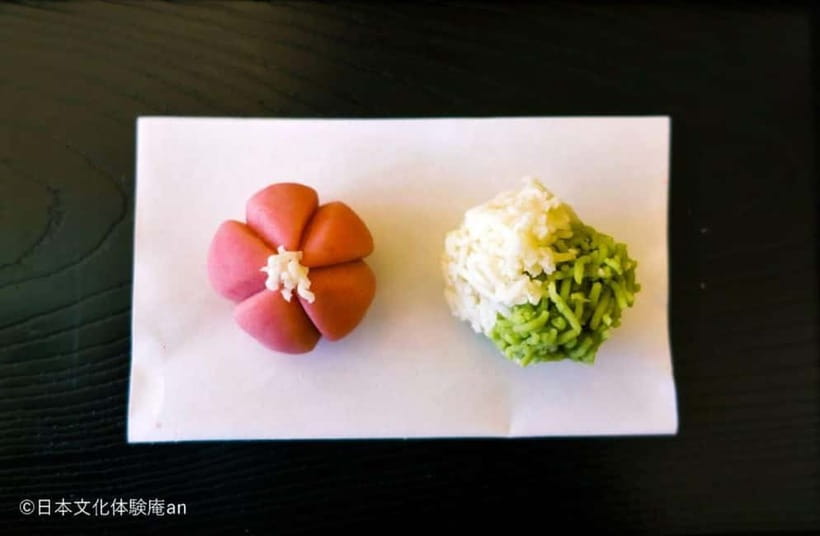
Japanese wagashi are traditional sweets served with tea, and nerikiri is one of the more refined types. It uses colored white bean paste shaped into flowers, fruits, and other seasonal forms. The look is delicate, but the process is practical enough for beginners to follow with patient instruction.
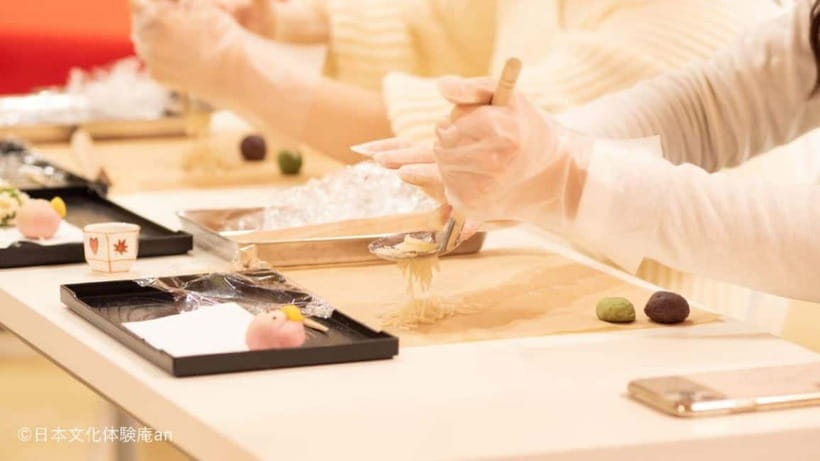
You begin with an explanation of Japanese traditional sweets. Then you color the white bean paste and use it to form a flower-shaped nerikiri. This first sweet gives you a chance to learn the basic handling of the paste without rushing straight into the more detailed design work.
The second sweet is a kinton nerikiri. Kinton usually has a fine, thread-like appearance, so it looks different from the smooth flower shape. Together, the two sweets show how one basic ingredient can produce very different finishes.
I like this pairing because you are not making the same object twice. The first design helps you understand the material. The second asks you to pay closer attention to texture and presentation. You also get a small lesson in seasonal Japanese taste, where appearance matters nearly as much as flavor.
The designs change with the season, according to the class description. That means your sweets may reflect flowers or fruit associated with the time of year, though you should not book expecting one exact design. The activity gives you a better sense of why wagashi are often treated as small works of edible art.
Do not expect a pastry class with ovens, complicated equipment, or a long recipe. The work centers on coloring, shaping, and refining bean paste. That makes the class suitable for a short stop in your day, but it also means the experience is focused on form and tradition rather than cooking technique.
Other tea rooms and ceremonies in Tokyo:
- Matcha Making Class in Tokyo with Authentic Japanese Sweets Set
★ 5.0 · 744 reviews - Tokyo: Traditional Tea Ceremony with a Tea Master
★ 5.0 · 528 reviews - Tokyo: Matcha Making Experience with Mochi Sweets in Asakusa
★ 4.9 · 388 reviews
Why the Kyoto bean paste matters
The class uses white and red bean paste produced by long-established Kyoto shops. That detail matters because nerikiri depends heavily on the quality and texture of the paste. If it is too dry, too loose, or too sweet, shaping becomes harder and the final balance with matcha suffers.
White bean paste provides the pale base used for coloring. Red bean paste brings a deeper bean flavor and a different sweetness. You will work with the ingredients as part of the making process, rather than simply receiving finished sweets on a plate.
The sweetness is intentional. Matcha has a firm, slightly bitter taste, and traditional sweets are meant to soften that edge. After you prepare the tea, the bean paste should make the matcha taste more balanced rather than simply adding dessert after dessert.
At $18, the use of Kyoto-sourced paste adds value to a short activity. You are paying for instruction, ingredients, and the tea ceremony, not only for a snack. If you already have a long list of food stops, this class still makes sense because it gives you a skill and cultural context in less than two hours.
The 55-minute mark: a useful pause
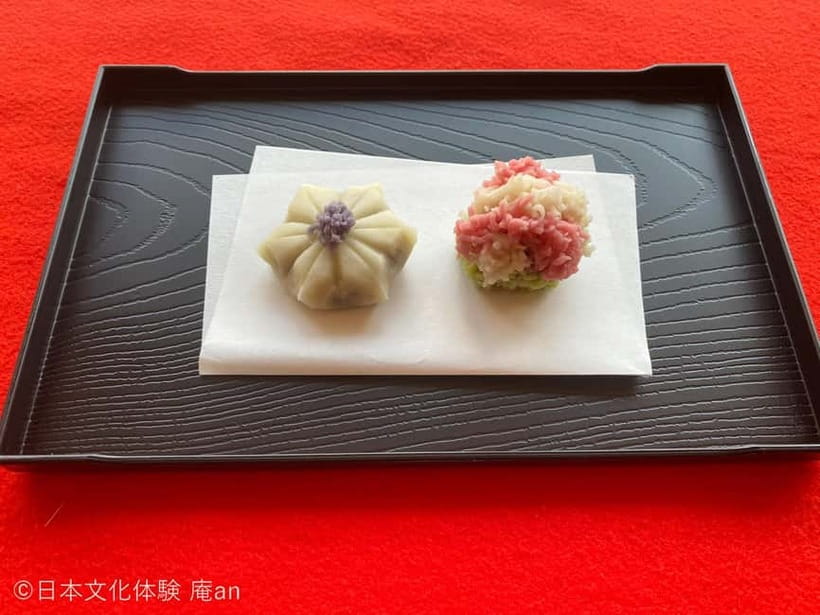
The scheduled program places a break at about 55 minutes, after the two sweets are finished. This gives you a natural pause before the tea portion begins.
That break is useful because the first part involves careful handwork. You can look at the two finished sweets, take photos, and reset before moving to the more formal pace of the tea ceremony. The schedule does not describe a separate meal, so do not arrive expecting a large serving of food.
If you want to take your sweets away, bring an extra 100 JPY for a take-out box. Without that add-on, plan to enjoy them during the session. The box is a small cost, but it is worth deciding in advance if you want to save one for later or protect the shapes on your way out.
Grinding matcha and learning the tea ritual
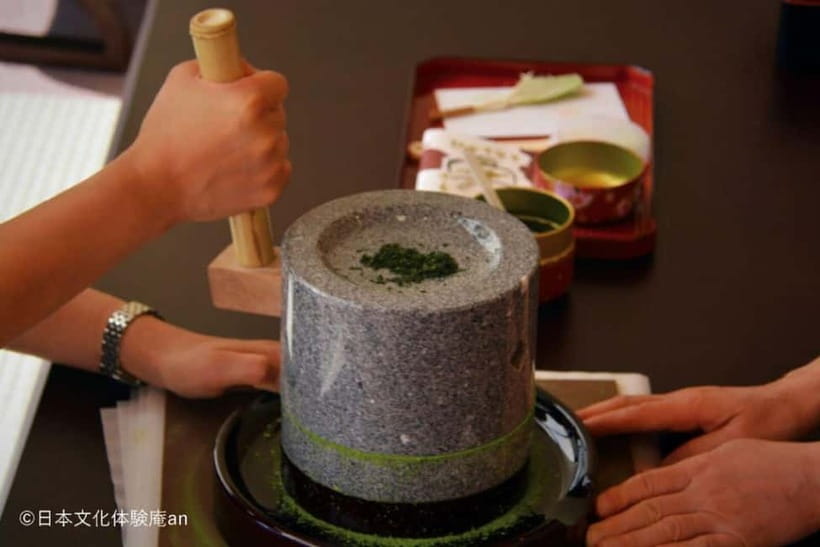
At about 65 minutes, the focus shifts from sweets to tea. You receive an explanation of the tea ceremony and watch a demonstration of matcha grinding before preparing your own tea.
The matcha is described as single-origin Uji matcha. Uji, in Kyoto Prefecture, is closely associated with Japanese tea production, so this is a fitting partner for sweets made with Kyoto bean paste. The class gives you two linked tastes from Kyoto food culture: fine bean paste and powdered green tea.
The tea ceremony portion is not presented as a long formal performance. Instead, you take part in the process. You prepare the matcha and then drink it with the sweets you made earlier. That hands-on element keeps the session from becoming a lecture.
I like this order. You first handle the sweet, then make the drink that traditionally accompanies it. The pairing gives you a practical reason for the ceremony steps. You can taste how the sweetness of the nerikiri changes the sharpness of the matcha.
A matcha-grinding demonstration also helps explain what makes powdered tea different from a standard cup of green tea. The information provided does not promise that each participant will grind all the tea by hand, so treat this as a demonstration followed by your own matcha preparation.
A few more things to do in Tokyo worth a look
- Tokyo: Two Types of Japanese Sweets Making and Tea Ceremony
★ 4.6 · 26 reviews - Tokyo: Tea Ceremony & Japanese Traditional Sweets
★ 4.9 · 21 reviews - Japanese Traditional Sweets making
★ 4.1 · 19 reviews - Tokyo: Hama-rikyu Gardens tour with Japanese Tea & Sweets
★ 4.7 · 14 reviews
English support and the instructor
The instructor is Japanese, and the listed language is Japanese. English translation is provided as much as possible if you contact the organizer, but you should not assume a fully English-led class.
That is the main practical issue for English-speaking visitors. The technique is visual, and the class includes demonstrations, so you can follow the hand movements even when every spoken detail is not clear. One highly positive account specifically noted that the instructor had difficulty with English but still communicated the techniques effectively through demonstration.
The instructor Marie was praised for presenting the subject well. If Marie is leading your session, you can expect a patient, demonstration-based approach. Since instructor assignments can change, it is better to regard her as a possible guide rather than a guarantee.
A crowded class may be harder. One poor experience focused on too many people, difficulty hearing the instructor, and the activity continuing without waiting. You can reduce the risk by arriving on time and contacting AN TOKYO in advance to ask about English support and the expected session conditions.
This is not the right pick if you need every cultural detail translated in real time. It is a better fit if you are comfortable watching closely, copying the demonstrated movements, and asking for clarification when needed.
Photos, certificates, and the final tasting
After the tea ceremony, the schedule includes picture time at about 85 minutes. This is a good moment to photograph both sweets before you eat them. Nerikiri is made to look seasonal and precise, so the visual part is worth recording.
The scheduled experience ends around 85 minutes, followed by eating and drinking time. Room departure is set for 95 minutes. Keep that timing in mind if you have a train, reservation, or another timed activity immediately afterward.
A completion certificate is available for 300 JPY. You can request a nominative certificate by providing names in advance. Otherwise, the name space will be left blank. This is an optional souvenir, not part of the $18 base price.
The more useful extra for many people is the take-out box. At 100 JPY, it is inexpensive, especially if you want to preserve one sweet for a later photo or share it with someone who could not join. The activity price does not include that box.
Value at $18 for 95 minutes
The price is one of the strongest features here. At $18 per person, you receive instruction in two sweets, Kyoto bean paste, Uji matcha, a tea ceremony experience, and time to eat what you made.
That is good value for a cultural activity, especially because the class is not only a demonstration. You take part in the coloring and shaping, then prepare your own matcha. The experience gives you a small skill to remember rather than only a set of facts.
The value depends on what you want from a food activity. If you want a generous meal, this will not replace lunch. If you want a long, detailed study of tea history, 95 minutes will feel brief. But if you want an affordable introduction to wagashi and matcha that fits between sightseeing plans, the format works well.
The price also makes this a sensible choice for families and mixed-age groups, with one special rule: children under two who sit on a parent’s lap are free. Everyone else who participates needs a booking. People who do not take part cannot enter the experience area.
Timing, meeting point, and cancellation details
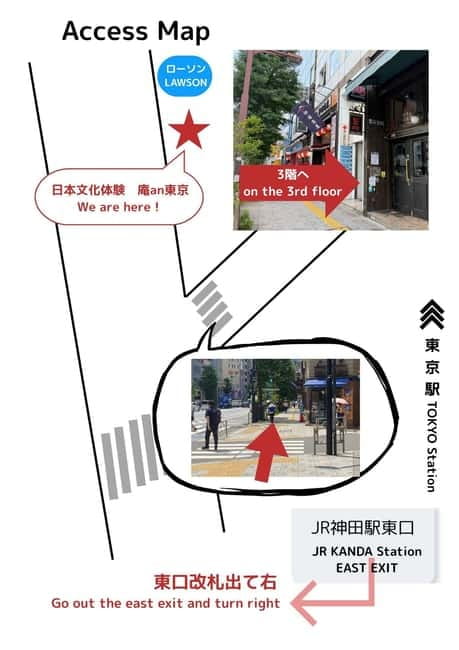
The meeting point is AN TOKYO Japanese Culture Experience at coordinates 35.6916541, 139.7715022. Check your route carefully and allow enough time to find the room. The organizers will not hold the event for late arrivals, whatever the reason.
Operating hours are 10:00 to 17:00. Reservations received after 17:00 are processed the next day. The activity lasts 95 minutes, and starting times depend on availability.
Free cancellation is available up to 24 hours in advance for a full refund. After that point, cancellation fees apply. Changing the date or time after a fee has been incurred can also create a specified charge, so confirm your plans before the deadline.
The cancellation terms do not cover travel expenses to the venue. That makes punctual planning important, particularly if you are coming from another part of Honshu or connecting this class with a timed train or tour.
Who will like this activity most
I would recommend this class to you if you want a compact introduction to two well-known parts of Japanese food culture. It is especially suitable for:
- First-time visitors who want to make something rather than only watch a ceremony
- Food lovers interested in wagashi, bean paste, and matcha
- Families with children old enough to follow shaping and coloring instructions
- Couples or friends looking for a quiet, creative activity
- Visitors who have 95 minutes free and want a low-cost cultural stop
You should think twice if you need a fully English-speaking instructor or dislike activities where careful observation is part of the learning. The class can work without perfect language comprehension, but the experience will be easier if you are willing to follow demonstrations.
It is also not ideal for anyone expecting a large dessert tasting. You make two sweets, and the main pleasure comes from creating them and pairing them with tea.
Should you book the nerikiri and tea ceremony class?
Book it if you want an affordable, hands-on experience with a clear beginning, middle, and end. You make two seasonal nerikiri, prepare Uji matcha, and eat your own work. The Kyoto ingredients and the link between sweet and tea give the class more substance than a simple souvenir workshop.
The class has a strong 4.7 rating from 50 reviews, with particular praise for the fun, patient instruction and the way demonstrations make the techniques understandable. Keep the language limits and possible crowding in mind, and contact AN TOKYO about English support before you reserve.
For $18, this is an easy yes for a short cultural activity, provided you arrive on time and do not need a fully translated lecture. Add 100 JPY if you want a take-out box, or 300 JPY for a named completion certificate.
FAQ
Where does the Japanese sweets and tea ceremony experience take place?
It takes place at AN TOKYO Japanese Culture Experience. The listed coordinates are 35.6916541, 139.7715022.
How long does the experience last?
The full experience lasts 95 minutes. The scheduled program ends around 85 minutes, followed by eating and drinking time before room departure at 95 minutes.
How much does the activity cost?
The price is $18 per person.
What sweets will I make?
You will make two seasonal Japanese sweets called nerikiri. The scheduled designs are a flower-shaped nerikiri and a kinton nerikiri.
What ingredients are used?
The activity uses white and red bean paste produced by long-established shops in Kyoto. The tea is single-origin Uji matcha.
Is the tea ceremony included?
Yes. The experience includes an explanation of the tea ceremony, a matcha-grinding demonstration, tea preparation, and time to enjoy your matcha with the sweets you made.
Is English available?
The listed activity language is Japanese. English translation is provided as much as possible, and you can contact the organizer to request additional English support.
Can I take the sweets home?
A sweets take-out box is available for 100 JPY. The box is not included in the base price.
Can I receive a completion certificate?
Yes. A completion certificate costs 300 JPY. For a certificate with your name, provide the names in advance. Otherwise, the name space will be left blank.
What is the cancellation policy?
You can cancel up to 24 hours in advance for a full refund. Cancellation fees apply after that point, and changes made after a fee has been incurred may also carry a specified charge.
Just added in Tokyo
- The 10 Tastings of Tokyo With Locals: Private Street Food Tour★ 5.0 · 48 reviews
- Small Town in the Big City: Tasting Tokyo’s Kichijoji★ 5.0 · 195 reviews
- Small Town in the Big City: Tasting Tokyo’s Kichijoji★ 5.0 · 16 reviews
- EXCLUSIVE Tokyo Secret: Kichijoji Small-Group Food & Bar Hopping★ 5.0 · 29 reviews
- Explore Kichijoji: Walk Through One of Tokyo’s Beloved Districts★ 5.0 · 21 reviews
- :Tokyo,Shibuya/ Pro Photography in Kimono / English-Friendly★ 5.0 · 26 reviews
- 【R34】Tokyo:Private Daikoku tour in Modified R34★ 4.9 · 92 reviews
- Tokyo:Calligraphy &Make your original folding fan in Asakusa★ 5.0 · 62 reviews
Tea Ceremony Experiences, compared.
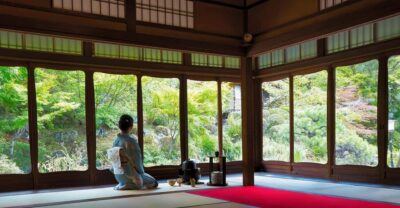
Tea Ceremony in a Traditional Tea House in Kiyomizu
Read our review →
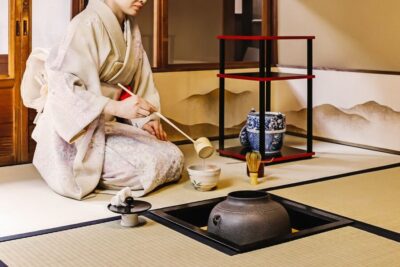
World Heritage Kyoto & Nara Uji Authentic Matcha Experience
Read our review →
Arashiyama Bamboo Forest, Monkeys, Matcha & Temple Tour
Read our review →Browse the lists this tour appears in