
Reviewed · TEMPLE & SHRINE TOURS
Tokyo: Asakusa Walking Tour with Sensoji Temple Visit
Asakusa gives you Tokyo at its most traditional, and this two-hour walking tour puts the district’s big sights into a clear, easy route. You begin beneath the giant Thunder Gate, follow Nakamise Street to Senso-ji, then continue through a Shinto shrine and local shopping lanes before finishing near the Sumida River.
I like the way the tour explains customs as you see them, from incense at Senso-ji to the difference between a Buddhist temple and a Shinto shrine. I also like the practical food and restaurant advice that guides such as Aya, Keiko, and Glenda have given at the end. The main drawback is time: two hours is enough for an introduction, but not enough for a leisurely look inside every shop or a long meal.
Key points at a glance
- Start under Kaminarimon: Meet your guide on the left side of the Thunder Gate, near Tokiwado Kaminari-okoshi Honpo.
- See Tokyo’s oldest Buddhist sanctuary: Senso-ji brings together grand gates, ritual customs, detailed decoration, and one of the city’s best-known temple settings.
- Walk two historic shopping streets: Nakamise and Shin-Nakamise offer souvenirs, crafts, snacks, and useful places to return to later.
- Compare Buddhist and Shinto traditions: The route includes both Senso-ji and Asakusa Shrine, with time for questions and photographs.
- Finish near lunch options: Hoppy Street and the surrounding lanes make it easy to continue eating and exploring after the tour.
- Pay $22 for a guided introduction: The price is reasonable if you want context, orientation, and local suggestions rather than a simple self-guided walk.
Why Asakusa makes a smart first Tokyo walk
Tokyo can feel like several cities stitched together. Glass towers, quiet shrines, department stores, narrow food alleys, and old wooden shopfronts all share the same train map. Asakusa is one of the easiest places to understand that mix.
The district grew around Senso-ji, a Buddhist temple that remains the main draw. At the same time, its streets are full of shops, restaurants, modern signs, and daily city life. You do not have to spend a full day here to get a useful sense of old Tokyo, but a guide helps you notice more than the famous gate and red temple buildings.
I see this tour as an orientation walk rather than a full cultural course. It gives you the basic religious customs, local stories, and street layout you need to explore again on your own. Several guides, including Aya, Keiko, Hiroko, Polina, Loc, Glenda, and Miyu, have been praised for clear English, humor, patience, and practical advice. Your exact guide is not guaranteed, but the experience is built around live English explanation rather than an audio recording.
Other temples and shrines in Tokyo people book:
- Tokyo: Meiji Shrine, Asakusa, Skytree Bus Tour and Cruise
★ 4.7 · 1,986 reviews - Nikko: Kegon Falls, Lake Chuzenji & Toshogu Temple
★ 4.6 · 1,577 reviews - Tokyo: Nikko Toshogu Shrine and Kegon Waterfall Tour
★ 4.5 · 1,266 reviews
Meeting beneath the Kaminarimon
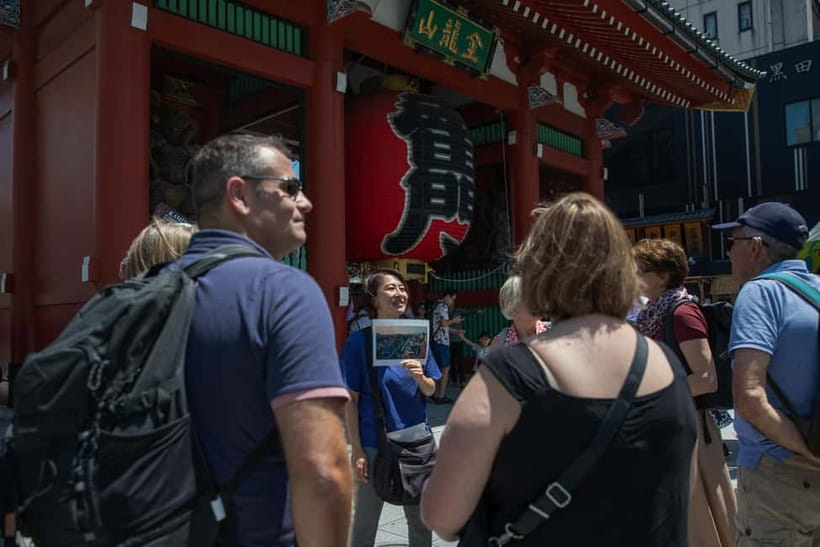
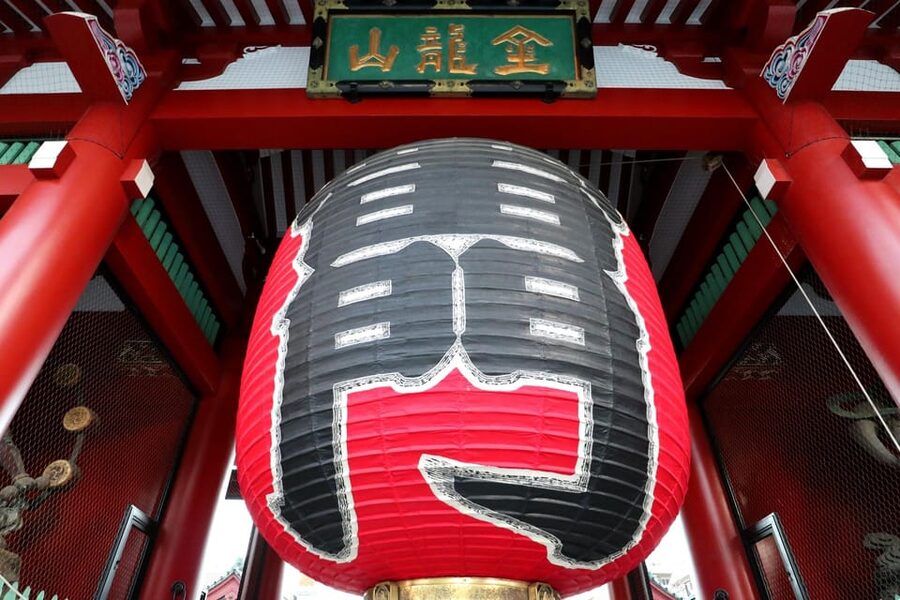
The meeting point is the Kaminarimon, or Thunder Gate, the large entrance to Senso-ji. Your guide waits on the left side of the gate, close to Tokiwado Kaminari-okoshi Honpo, holding a tour sign.
This is a sensible place to begin because the gate gives you an immediate visual anchor. Its huge red lantern and bold guardian statues announce that you have reached the temple district. It is also a busy meeting area, so arrive early enough to find the left side without rushing.
The tour asks you not to be late. The guide cannot hold the group for long, which matters in a busy place where people can be hard to spot. I would save the serious photographs for later and focus first on finding the sign and joining the group.
Kaminarimon: a dramatic entrance with useful context
The opening explanation lasts about ten minutes. That may sound brief, but it is enough to turn the gate from a photo stop into a meaningful introduction.
Your guide explains what the Thunder Gate represents and points out details that are easy to miss when you are trying to photograph the lantern. You also get a sense of how the gate functions as the threshold to Senso-ji and the shopping street beyond.
This is where a live guide earns the $22 price. You can take a picture of Kaminarimon alone, but you may not know what you are looking at or how it fits into the temple grounds. The guide can also answer immediate questions and help you adjust to local customs before you enter.
Nakamise Street and the art of browsing
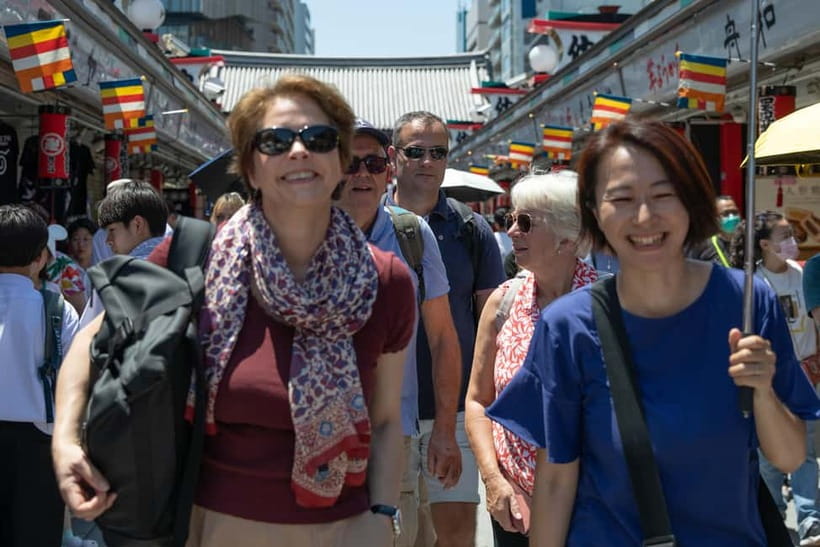
From the gate, you walk along Nakamise Shopping Street, one of Japan’s oldest shopping centers. The planned route allows about fifteen minutes here, so expect a quick introduction rather than a dedicated shopping session.
Nakamise is lined with small shops selling traditional crafts, souvenirs, sweets, and other local treats. It is a good place to notice how commerce and worship have shared the same approach to Senso-ji for generations.
The short stop is both a strength and a limit. You get an organized explanation and a look at the main products, but you will not have time to compare every shop. I would note the stores that interest you and return after the tour, when you can browse without trying to keep up with the group.
The street can be crowded, especially around the main temple approach. Keep your belongings close, stay aware of the group, and expect the guide to pause at the side rather than stop in the middle of the flow.
Other walking tours in Tokyo people book:
- Tokyo Tsukiji Fish Market Food and Culture Walking Tour
★ 5.0 · 3,184 reviews - Tokyo: Imperial Palace and Shogun Historical Walking Tour
★ 5.0 · 2,251 reviews - Tokyo: Shinjuku Local Bar and Izakaya Guided Walking Tour
★ 4.9 · 1,794 reviews - Tokyo: Tsukiji Fish Market Food and Walking tour
★ 5.0 · 1,724 reviews
Senso-ji, Tokyo’s main temple visit
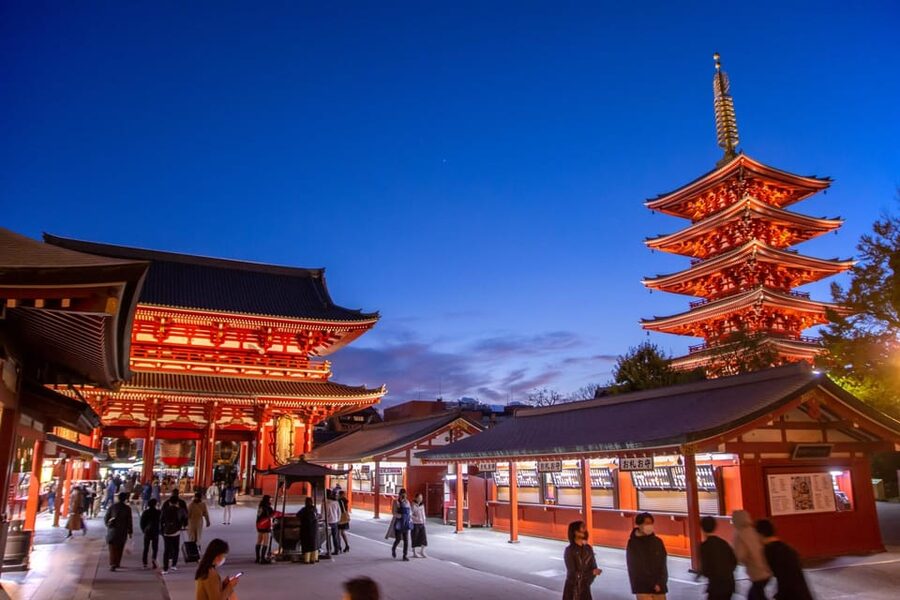
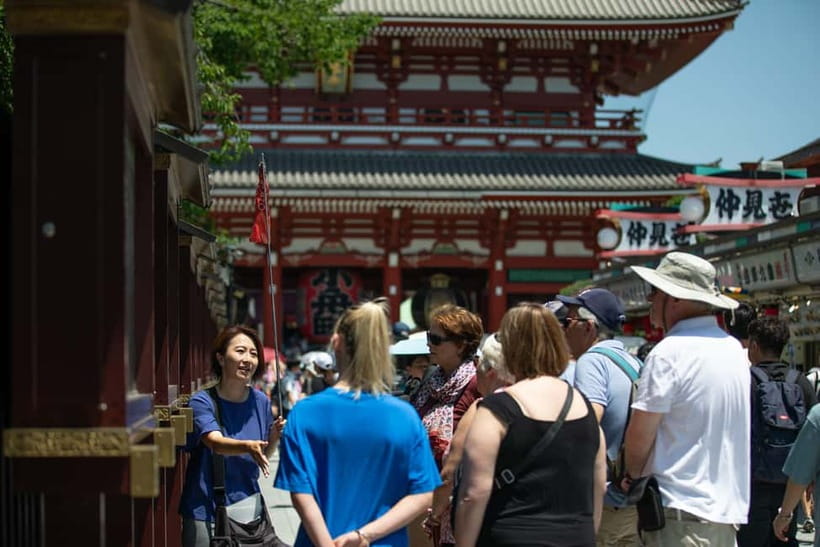
Senso-ji, also called Asakusa Kannon, receives the longest stop, about thirty minutes. You have time for a guided visit, photographs, and some free time to look around.
This is the center of the walk. The temple is described as Tokyo’s oldest Buddhist sanctuary, and its buildings, gates, incense, and rituals give you the strongest sense of Asakusa’s religious importance. Your guide explains the architectural details and the stories connected with the site, then shows you how to take part in the incense-burning ritual.
That guidance matters. Religious customs can feel confusing if you are seeing them for the first time, and a good explanation helps you take part respectfully rather than simply copy the nearest person. You can ask about the meaning of the ritual, the temple’s traditions, and the visual details on the buildings.
Thirty minutes is enough to understand the setting and take photographs. It is not enough for a slow study of every hall and ornament. If Senso-ji is your main interest, plan to return later in the day, perhaps after you have learned what to look for.
Some people enjoy seeing the temple in daylight, while others prefer the atmosphere after dark. One October tour included a small group that saw the temple lit at night. Starting time varies, so check the available departure before booking if evening views matter to you.
Asakusa Shrine and two kinds of worship
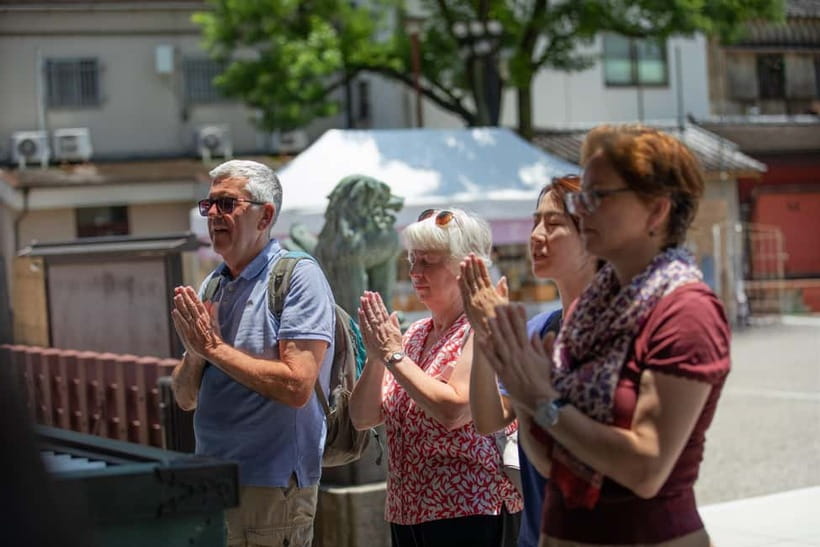
The walk continues to Asakusa Shrine for about twenty minutes. This is one of the most useful parts of the route because it places Buddhist and Shinto traditions side by side.
Senso-ji is Buddhist, while Asakusa Shrine is Shinto. Seeing both during one guided visit gives you a clearer picture of Japan’s religious life than visiting either site alone. Your guide can explain the difference in a simple, practical way and answer questions about customs, buildings, and local tradition.
The stop includes photographs, a visit, and guided explanation. It also creates a quieter change of pace after the main temple approach. I would use this time to listen closely rather than rush for more pictures. The value lies in the comparison and the context.
Guides have been praised for making this part accessible to families and teenagers. One guide, Keiko, was especially attentive to different ages and made sure everyone could hear and follow the pace. That kind of care can make a difference in a mixed group.
Hoppy Street: a look at local eating culture
The next stop is Hoppy Street, with about ten minutes of guided exploration. The name points to a local drinking and dining area, and this part of Asakusa shows a more everyday side of the district than the temple grounds.
You should not expect a full food tour or included tastings. The walk simply introduces the street and its role in the neighborhood. That is useful because many visitors leave Senso-ji without seeing the nearby places where people go to eat and socialize.
Several guides have offered restaurant and food suggestions for after the tour. This is one of the practical benefits of finishing near lunchtime. Instead of wandering around hungry and choosing at random, you can use the guide’s recommendations to plan your next stop.
Food advice will naturally depend on your guide and your interests. Ask directly if you want suggestions for a particular style of meal or a family-friendly place. The tour does not include lunch, so budget separately for anything you eat afterward.
Shin-Nakamise and the finish at Azuma Bridge
The final shopping stop is Shin-Nakamise Shopping Street, also written as 浅草新仲見世商店街. The guided visit lasts about ten minutes and gives you another look at Asakusa’s commercial side.
Compared with the temple approach, this part helps you see how the neighborhood functions beyond its main attraction. You may find shops, snacks, and everyday retail among the more traditional offerings. Again, the timing is enough for orientation, not a long shopping spree.
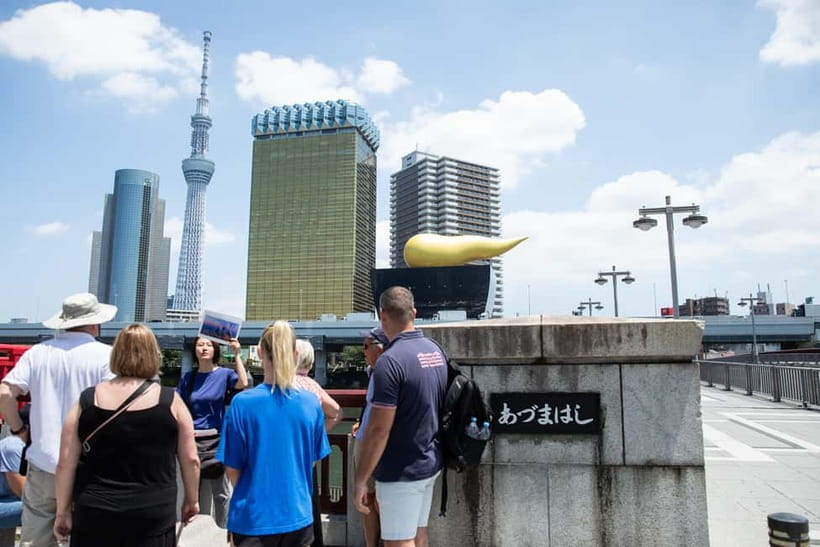
The tour finishes at Azuma Bridge. That ending is practical because you are no longer at the temple entrance, so you can continue in a different direction after the walk. The provided details do not promise a formal bridge sightseeing stop, so think of it as the endpoint rather than an additional guided attraction.
At two hours, the route has a good rhythm. You get the major temple sights, two shopping areas, a shrine, and a food street without spending the whole day on your feet. The tradeoff is that each stop stays fairly short.
What $22 gets you
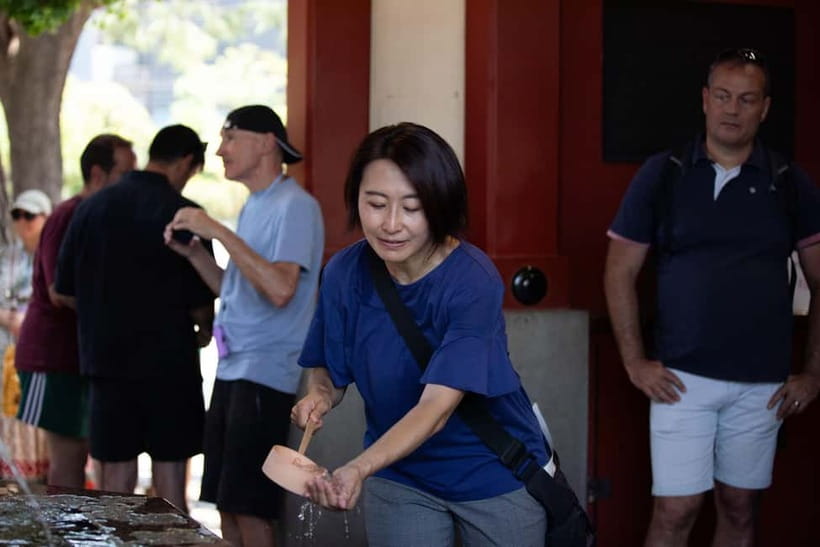
At $22 per person, this is inexpensive for a guided city walk in central Tokyo. You are paying for a live English-speaking guide, not admissions, meals, or transportation. The value depends on how much you want interpretation.
If you already know Japanese temple and shrine customs, you may prefer to walk independently and spend the money on food. But if Asakusa is new to you, the fee buys useful orientation, cultural explanation, and answers to questions that signs alone cannot provide.
The strongest value comes from the human details. Guides have used humor, visual charts, historical stories, and local food tips to make the area easier to understand. An experienced guide can also adjust the pace, make sure everyone hears, and help families stay engaged.
The activity has a 4.8 rating from 1,583 ratings, which points to consistently strong satisfaction. I would still keep expectations realistic: guide quality can vary from person to person, and the route is an overview rather than a private tour.
Practical details before you book
The tour lasts two hours and is conducted in English. It is listed as wheelchair accessible, though the route moves through busy shopping streets and temple areas, so you may want to confirm the exact conditions if you need specific assistance.
Wear comfortable shoes. You are walking continuously, stopping on busy streets, and moving through several public areas. Tokyo weather can also change your comfort quickly, so bring what you need for the day.
The guide meets you at Kaminarimon, not at a hotel or train station. Give yourself time to reach the gate and locate the sign on the left side. The group cannot wait long for late arrivals.
Free cancellation is available up to 24 hours before the start for a full refund. You can also reserve now and pay later, which helps if your Tokyo plans are still shifting. Starting times vary, so check availability before you choose a date.
Who will get the most from this walk
I would recommend this tour to first-time visitors who want a simple introduction to Asakusa without spending half a day on a formal cultural program. It also suits families, since the route is short and guides have made an effort to engage children and teenagers.
It is a good choice if you want to understand what you are seeing at Senso-ji. The explanations of incense, temple details, shrine customs, and local stories add meaning to places that can otherwise blur together.
Food-minded visitors should also find it useful, especially if you plan to eat in Asakusa afterward. The tour ends with access to many eateries, and guides have shared suggestions for lunch and later stops.
I would be less likely to book it if you want a private, slow-paced photography walk or a serious food tour. The group moves through crowded areas, the shopping stops are short, and no food is included.
Should you book the Asakusa walk?
Book it if you want a low-cost cultural introduction with a clear route and an English-speaking guide. Senso-ji, Asakusa Shrine, Nakamise, Hoppy Street, and Shin-Nakamise fit together well in two hours, and the guide’s explanations make the district easier to understand.
Skip it if you already know Asakusa well or prefer to set your own pace. Otherwise, $22 is a fair price for getting your bearings, learning the basic customs, and leaving with ideas for where to eat and what to revisit. I would schedule it early in your Tokyo stay, then return to Senso-ji and the shopping streets later when you have more time.
FAQ
How long does the Asakusa walking tour last?
The tour lasts two hours.
Where does the tour meet?
The meeting point is in front of Kaminarimon Gate. Your guide waits on the left side, near Tokiwado Kaminari-okoshi Honpo, holding a sign.
Where does the tour finish?
The walk finishes at Azuma Bridge.
Is the tour conducted in English?
Yes. The activity includes a live English-speaking guide.
What sights are included?
The route includes Kaminarimon, Nakamise Shopping Street, Senso-ji Temple, Asakusa Shrine, Hoppy Street, and Shin-Nakamise Shopping Street.
Is the tour wheelchair accessible?
Yes, the activity is listed as wheelchair accessible.
More walking tours elsewhere in Japan
- Tokyo: Tsukiji Fish Market Guided Walking Tour
★ 4.9 · 1,397 reviews - Tokyo Castle & Imperial PalaceーShogun Walking Tour
★ 4.7 · 1,068 reviews - Tokyo: Imperial Palace Japanese History Walking Tour
★ 4.9 · 987 reviews - Tokyo: Imperial Palace and Shogun Walking Tour
★ 4.9 · 935 reviews
More temples and shrines elsewhere in Japan
- Tokyo Panoramic 1 Day: Meiji Shrine, Asakusa, Odaiba and SKYTREE®
★ 4.5 · 1,222 reviews - Tokyo: Zen Meditation at a Private Temple with a Monk
★ 5.0 · 510 reviews - Mt. Fuji Heritage Tour: Traditional Villages, Lakes & Shrine
★ 4.5 · 509 reviews - Tokyo: Samurai Entertainment Night Show in Kanda Shrine
★ 4.6 · 417 reviews
Just added in Tokyo
- Nikko: Edo Wonderland Edomura Cultural Theme Park Ticket★ 4.3 · 205 reviews
- 《MEMBERS-ONLY-BAR-HOPPING》Discover Your Special Whiskey in Tokyo!★ 5.0 · 29 reviews
- Japanese Whisky Hunting《HIGH-QUALITY-ONLY》Rare Tasting Class★ 5.0 · 20 reviews
- Luxury Tokyo Sake, Cocktail, Whisky and Pairing Tour★ 5.0 · 18 reviews
- Wagyu & Sake Pairing in Shinjuku – Steak, Shabu-Shabu & More★ 5.0 · 112 reviews
- Small-Group Wagyu Beef and 7 Japanese Dishes Tokyo Cooking Class★ 5.0 · 190 reviews
- From Tokyo: Private Tour to Fuji/Hakone – Onsen, Art, Nature★ 5.0 · 116 reviews
- Tokyo: KABUKI Show at Kabukiza Theatre Admission Ticket★ 4.8 · 152 reviews
Temple & Shrine Tours, compared.
Meiji Shrine, Asakusa, Skytree Bus Tour and Cruise
Read our review →
Kamakura & Enoshima Day Trip including Temple Tickets
Read our review →
Nikko Toshogu Shrine and Kegon Waterfall Tour
Read our review →
Tokyo Panoramic 1 Day: Meiji Shrine, Asakusa, Odaiba and SKYTREE®
Read our review →
1-Day Snow Monkeys, Zenko-ji Temple & Sake in Nagano
Read our review →
Arashiyama Bamboo, Temple, Monkeys, or Secret Sake Brewery
Read our review →Browse the lists this tour appears in