
Reviewed · TEA CEREMONY EXPERIENCES
Kyoto Fushimiinari:Wagashi Making & Small Group Tea Ceremony
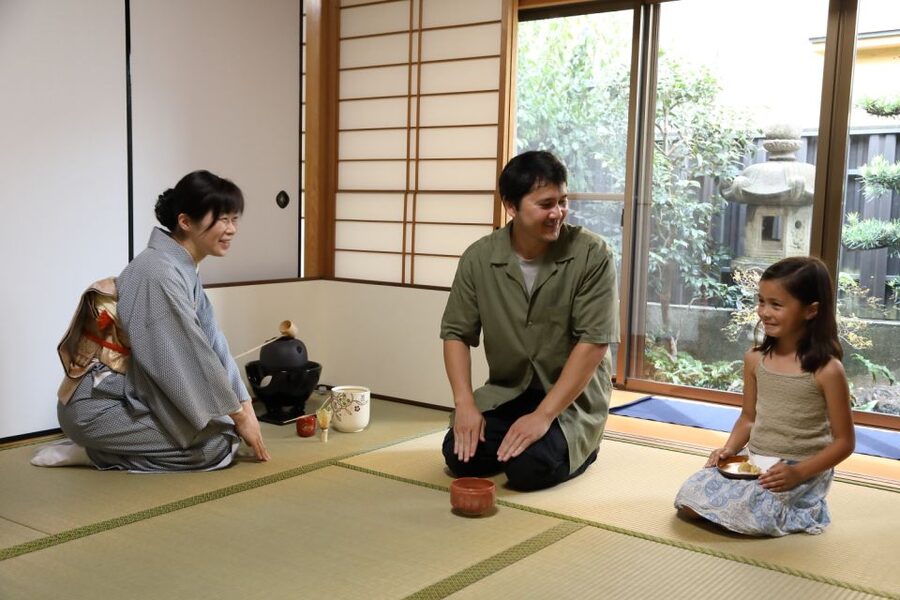
The best part of this Kyoto experience is the change of pace. Near Fushimi Inari, where the streets can feel crowded and noisy, you step into a local home, make a Japanese sweet by hand, and sit on tatami for a small tea ceremony. I especially like the hands-on wagashi lesson and the chance to prepare your own bowl of matcha instead of simply watching someone else do it.
I also like the small group size, limited to six, and the clear English explanations. The main consideration is that you must be comfortable removing your shoes and wearing socks, and sitting on the floor may not suit everyone. Chairs and tables can be arranged if requested in advance.
Key points at a glance
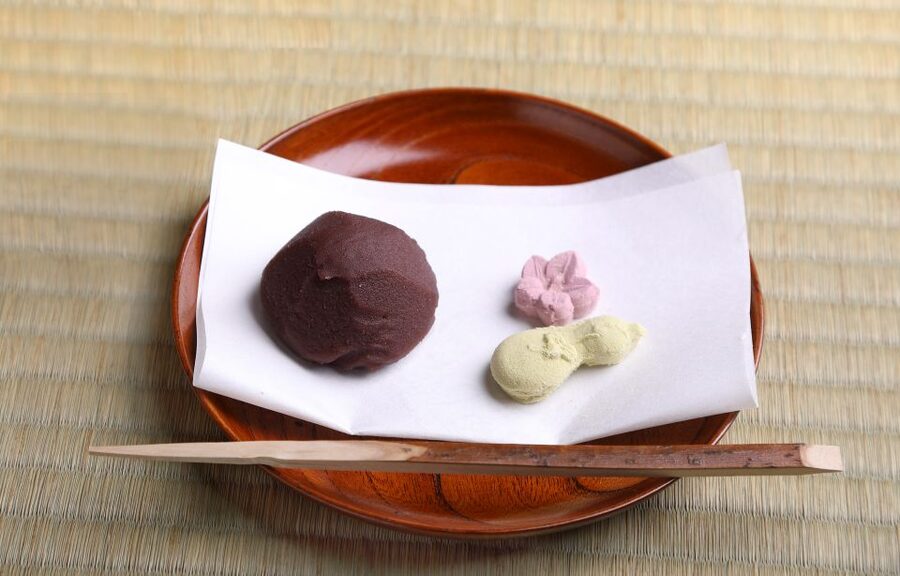
- Make wagashi yourself: This is a practical class, not a demonstration. The sweet may change with the season, and past sessions have included mochi with red bean and white bean paste.
- Prepare your own matcha: You receive two bowls of matcha, with one prepared by you using a bamboo whisk.
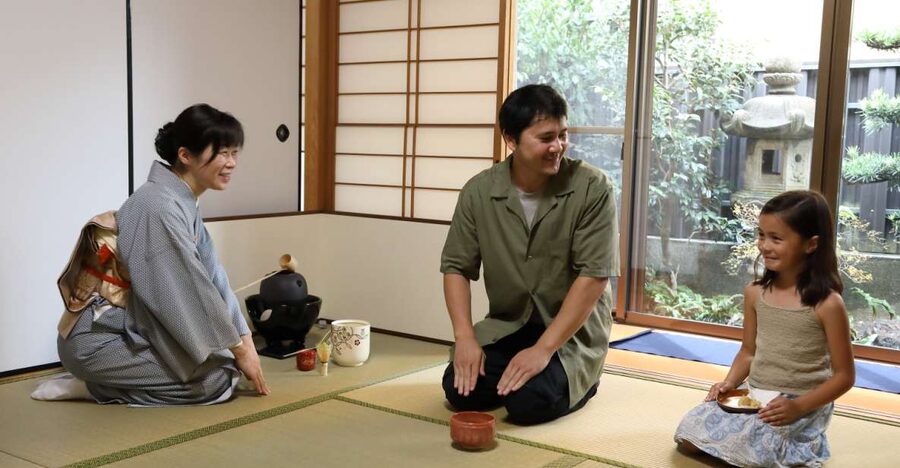
- Enter a real Japanese-style room: After walking through a small garden, you sit on tatami while the instructor explains tea ceremony manners, history, and symbolism.
- Learn in English: The instructors are licensed guide interpreters, and Miho has been praised for her warm hosting and clear English.
- Keep it personal: The group is capped at six people, making it easier to ask questions and follow each step.
- Plan for traditional rules: Wear socks, leave flash photography and video recording at home, and tell the host about food allergies before arrival.
A quiet Kyoto house near Fushimi Inari
This 75-minute activity gives you something many sightseeing stops around Fushimi Inari cannot: a quiet place to slow down. You visit a local house with Japanese-style rooms and a garden view, then learn two connected parts of Japanese food culture, wagashi and matcha.
The setting matters. Tea ceremony is not only about drinking tea. The room, the hanging scroll, the sweets, the movement of the host, and even the way you enter the space all play a role. Here, the instructor explains those details in plain English instead of asking you to copy a series of gestures without context.
I would not book this as a formal performance where you simply sit still and watch. You take part. You make a sweet, taste it, watch the ceremonial preparation of matcha, and then whisk your own bowl. That makes the experience useful after you return home, since you leave knowing how to prepare matcha and serve it to friends or family.
The atmosphere is friendly rather than severe. The tea ceremony is explained carefully, but you are allowed to take part at your own pace. That balance is helpful if this is your first encounter with the tradition.
Other cooking classes in Kyoto people book:
- Ramen Cooking Class at Ramen Factory in Kyoto
★ 5.0 · 1,937 reviews - Kyoto: Ramen Cooking Class at a Ramen Factory with Souvenir
★ 4.9 · 532 reviews - Kyoto: Ramen, Gyoza, and Onigiri Cooking Class
★ 5.0 · 445 reviews
Making wagashi in the kitchen
When you arrive, an English-speaking host welcomes you and leads you to the kitchen. The wagashi portion is hands-on, so you will work with the ingredients and shape one type of Japanese sweet yourself.
The exact sweet depends on the season. That is a plus for repeat visitors, but it means the finished result may not match the pictures you saw when booking. One session has included mochi with red bean paste and white bean paste, which gives you an idea of the soft, sweet style you may encounter.
You should expect a simple introduction to one kind of wagashi, not a full pastry course. In 75 minutes, the focus is on learning the basic process and understanding why these sweets are served with tea. The class is short enough to fit before or after sightseeing, but not long enough for a broad survey of Japanese confectionery.
I like this part because it gives you a reason to pay attention to texture and presentation. Wagashi is designed to be enjoyed with tea, so the sweetness prepares your palate for the matcha that follows. Making the sweet also gives you a small souvenir that is more memorable than another packaged snack from a shop.
Food restrictions should be shared in advance. The provided information does not promise that every allergy can be accommodated, so contact the host before booking if you need special arrangements.
Walking through the garden to the tea room
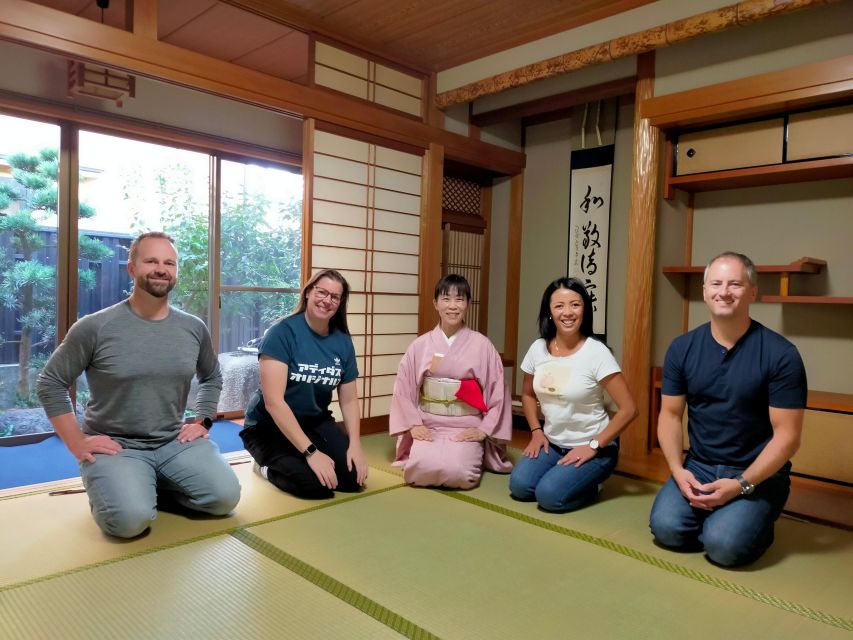
After the kitchen class, the host explains how to attend a tea ceremony and reviews basic manners for the Japanese room. If the weather allows, you walk through a tiny garden before entering an authentic Japanese-style room.
That short walk is part of the mood change. You leave the kitchen and move into a more formal space, with tatami underfoot and a hanging scroll in the alcove. If it rains, the outdoor walk may not take place, but the central tea ceremony still remains the focus.
Once seated, the instructor explains the history of tea and the meaning of the scroll on the back wall of the alcove. This is one of the most useful parts for first-time visitors. Without an explanation, a tea room can look beautifully simple but difficult to read. The guide gives you the clues needed to understand why the room is arranged as it is.
The setting is traditional, but the session is not described as rigid. You learn the correct way to take part, then receive enough guidance to feel at ease. If you are worried about making a mistake, this is less intimidating than a highly formal ceremony where every movement must be exact.
Tasting your sweet with matcha
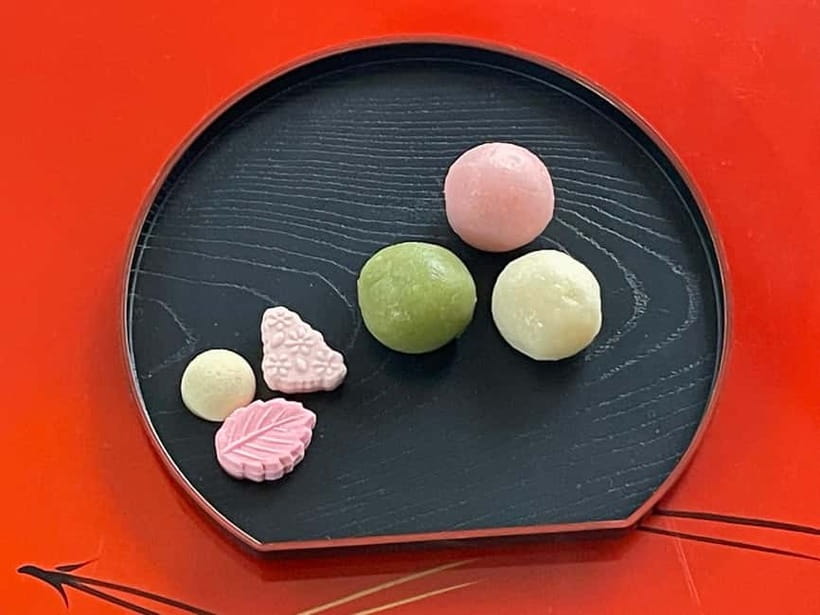
The sweet you made is served during the tea ceremony. The instructor first demonstrates how to drink matcha, then you follow the explanation as you enjoy the wagashi.
This order makes practical sense. The sweet offsets the bitterness of matcha, and tasting something you just prepared makes the ceremony feel personal. You are not only hearing about Japanese customs. You are experiencing the relationship between confectionery and tea.
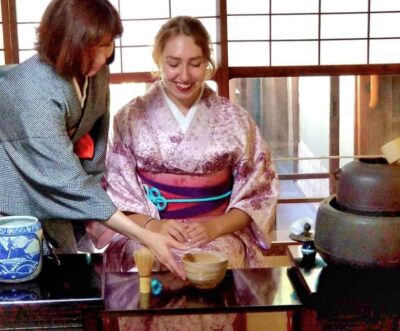
The activity includes two bowls of matcha. One is prepared by the host or tea instructor, and one is prepared by you. That is a good arrangement because you first see the technique before trying it yourself.
Expect matcha to have a distinctive flavor rather than the sweetness of a regular green tea drink. The point is not to turn it into a familiar café beverage. You learn how it is prepared and served in this setting, then decide how much you like the taste for yourself.
Other tea ceremonies in Kyoto people book:
- Kyoto: Tea Ceremony in a Traditional Tea House in Kiyomizu
★ 4.9 · 3,519 reviews - Kyoto: Tea Ceremony Ju-An at Jotokuji Temple
★ 4.9 · 3,207 reviews - Kyoto: 45-Minute Tea Ceremony Lesson Experience
★ 4.3 · 2,378 reviews - Kyoto: Table-Style Tea Ceremony at a Kyo-Machiya
★ 4.9 · 1,211 reviews
Whisking your own bowl of matcha
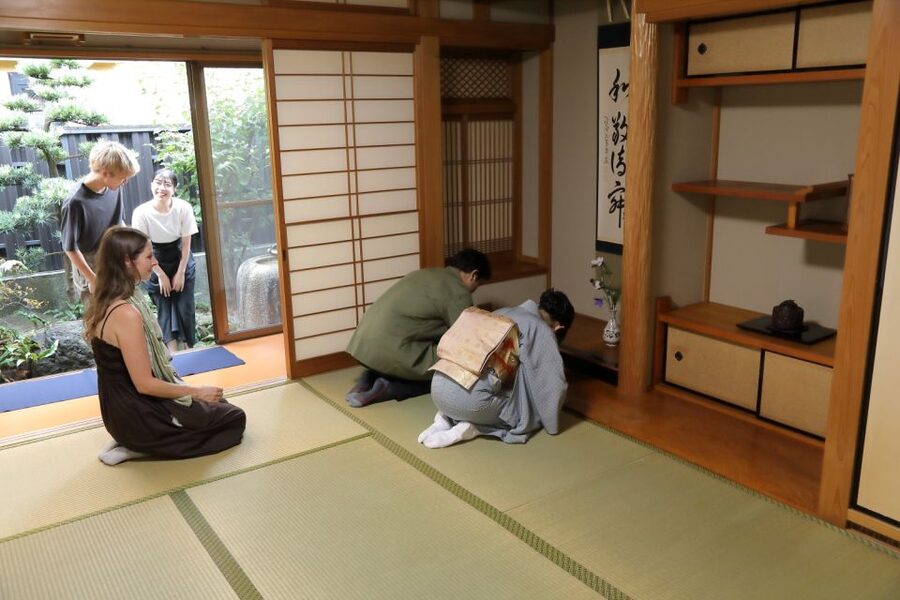
The final practical lesson is making one bowl of matcha with a bamboo tea whisk. The host demonstrates the ceremonial preparation, gives you the bowl and whisk, and guides you through the process.
This is where the small group helps. With no more than six participants, you can ask questions and watch the technique closely. The experience is still shared, but it does not have the feel of being lost in a large class.
The instructor also explains how to eat the sweet and how to handle the tea. Those details may seem small, yet they are exactly what help you repeat the experience at home. You will not become a tea master in one short session, but you can leave with enough understanding to prepare matcha for friends or family.
I would treat the whisking as a cultural lesson rather than a test. The emphasis is on understanding the steps and taking part respectfully. You do not need previous knowledge of tea ceremony.
What the English guidance adds
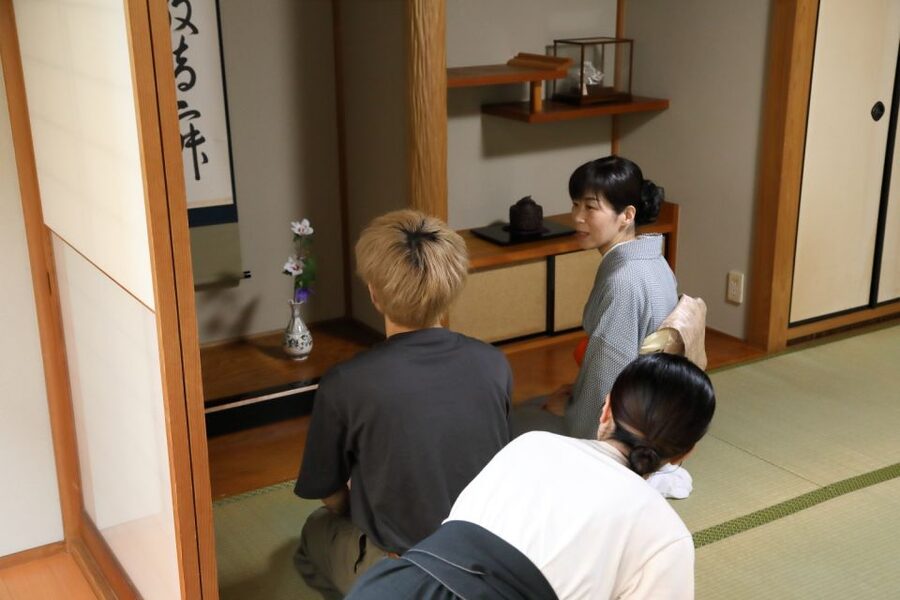
All instructors are licensed guide interpreters, and the class is conducted in English. That matters because tea ceremony has many small customs that are easy to miss if you are relying on gestures alone.
You receive explanations of the ceremony, the room, the scroll, the sweets, and the correct way to drink matcha. The English guidance also gives you a chance to ask cultural questions. Miho has been singled out as a particularly welcoming host, while the tea master is described as friendly and happy to discuss Japanese culture.
The tone appears to be warm and conversational. You can learn the formal steps without feeling that you are being examined. That is a good fit for someone who wants cultural context but does not want a long lecture.
Is $55 a good value for 75 minutes?
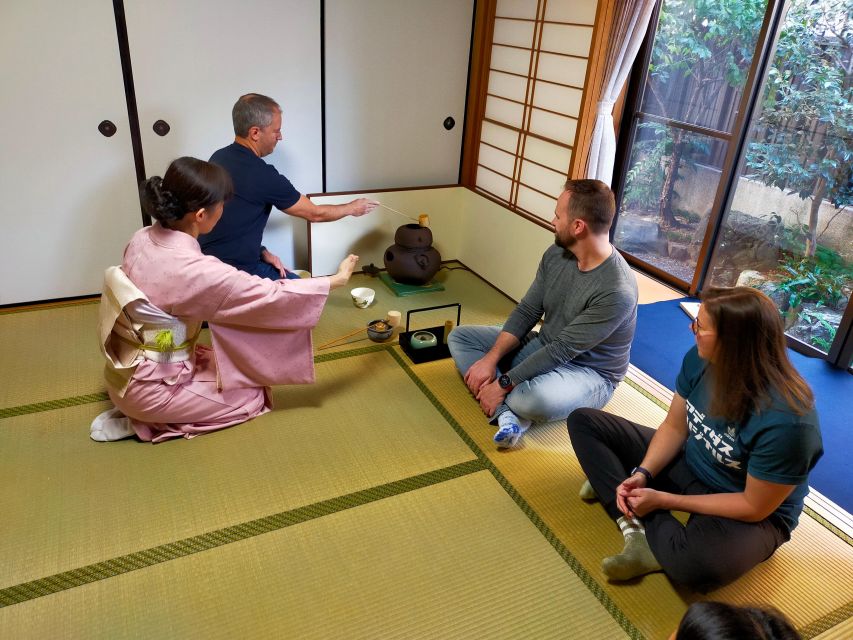
At $55 per person, this is not the cheapest way to taste matcha in Kyoto. You can find tea and sweets for much less at a café. The value here comes from the instruction, the private-home setting, the small group, and the fact that you make part of the experience yourself.
You receive two bowls of matcha, one kind of wagashi instruction, a traditional confectionery to eat, explanations of tea etiquette, and all fees and taxes. The price also covers the English-speaking instructor, which is important for an activity built around cultural details.
I think the cost is reasonable if you want more than a drink and a photo. It is less suitable if you only want a quick snack or a short ceremony with no participation. The experience earns its price through personal attention and practical learning, not through length. Seventy-five minutes goes by quickly, so arrive ready to take part rather than linger.
Timing, comfort, and practical details
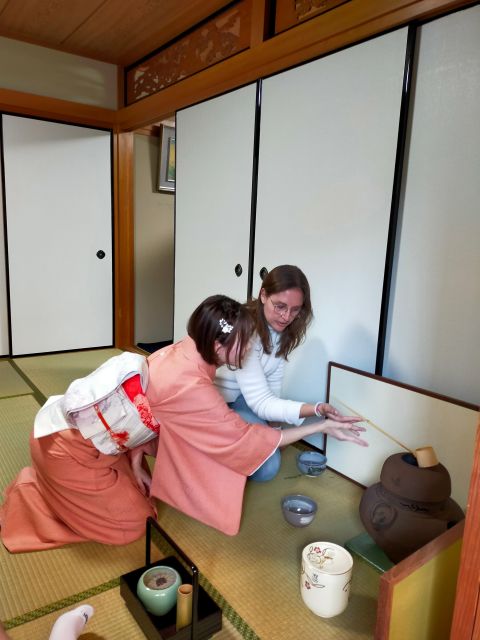
The activity lasts 75 minutes, with starting times shown according to availability. It can work well as a compact cultural stop during a day around Fushimi Inari, though you should allow enough time to reach the meeting point since hotel pickup and drop-off are not included.
You need to wear socks. Bare feet are not allowed, which is understandable in a traditional Japanese room. Comfortable clothing will make sitting and moving easier, though the provided information does not require any particular dress code.
Chairs and tables are available for people who have difficulty sitting on the floor. Tell the host in advance if you need them. The experience is not suitable for wheelchair users, and children under eight cannot take part.
Photography has limits. Flash photography and video recording are not allowed, and the host may ask you to put your camera away during part of the session. That can be disappointing if you want a record of every step, but it helps protect the calm of the ceremony and lets everyone focus on taking part.
The cancellation policy is flexible: you can cancel up to 24 hours ahead for a full refund. You can also reserve and pay later, which helps if your Kyoto schedule is still changing.
Who will enjoy this experience most?
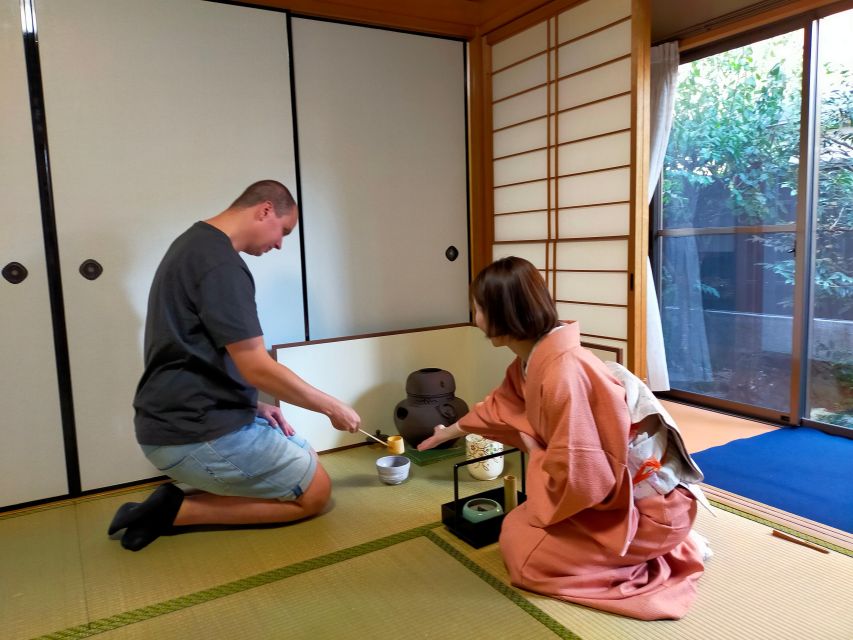
I would recommend this to adults and older children who want a calm cultural activity with real participation. It suits first-time visitors who want a simple introduction to tea ceremony, as well as people who have already visited Kyoto’s major temples and want something more personal.
It is especially good for you if:
- You want an English-speaking guide who explains customs clearly.
- You enjoy making food rather than only sampling it.
- You would like to learn a skill you can repeat at home.
- You prefer a group of six or fewer to a large class.
- You are curious about Japanese rooms, tatami, garden design, and tea etiquette.
- You can wear socks and manage a traditional floor-seating arrangement, or request chairs ahead of time.
It may not be right for you if you need full wheelchair access, dislike matcha, want extensive photography, or prefer a long cooking lesson. The wagashi class covers one type of sweet, and the full activity is over in just over an hour.
Should you book the wagashi and tea ceremony?
Book it if you want a friendly, practical introduction to two important parts of Japanese culture. The strongest features are the hands-on sweet making, the chance to whisk your own matcha, the small group, and the authentic room with a garden view.
I would also book it for the setting and the English explanations. The activity gives you enough structure to understand the ceremony without making you feel awkward about every movement. Just remember to wear socks, report allergies in advance, request chairs if needed, and expect seasonal changes in the sweets.
Skip it if your priority is a large meal, a long cooking course, or unrestricted photography. For everyone else, $55 buys a focused Kyoto experience and a useful skill you can carry home.
FAQ
How long does the wagashi and tea ceremony experience last?
The activity lasts 75 minutes.
How many people are in the group?
The group is limited to six participants.
Is the experience conducted in English?
Yes. The instructor speaks English, and the instructors are licensed guide interpreters.
What is included in the price?
The price includes the English-speaking instructor, two bowls of matcha, one bowl prepared by you, instruction in making one type of wagashi, one type of Japanese traditional confectionery, explanations of tea preparation and eating sweets, and all fees and taxes.
Do I get to make my own matcha?
Yes. The host first demonstrates the ceremonial preparation, then shows you how to make one bowl yourself with a bamboo tea whisk.
What should I wear or bring?
You must wear socks because bare feet are not allowed. Flash photography and video recording are not permitted.
Can someone who has difficulty sitting on the floor take part?
Chairs and tables are available if requested in advance. The activity is not suitable for wheelchair users.
More cooking classes elsewhere in Japan
- Kyoto: Japanese Washoku Bento Small Group Cooking Class
★ 5.0 · 380 reviews - Kyoto Ramen and Gyoza Cooking Class with Professional Chefs
★ 5.0 · 282 reviews - Kyoto: Afternoon Japanese Izakaya Cooking Class
★ 4.9 · 241 reviews - Izakaya Style Cooking Class
★ 5.0 · 219 reviews
More tea ceremonies elsewhere in Japan
- Kimono Tea Ceremony at Kyoto Maikoya, NISHIKI
★ 5.0 · 911 reviews - Kyoto: Arashiyama Bamboo Forest, Monkeys, Matcha & Temple Tour
★ 5.0 · 759 reviews - Kyoto: Tea Museum Tickets and Matcha Grinding Experience
★ 4.9 · 739 reviews - Kyoto: Kimono Tea Ceremony at Orizuruya Gion
★ 4.9 · 618 reviews
Just added in Kyoto
- Private Cooking Class Udon in Kyoto Japan★ 5.0 · 23 reviews
- Your Private Vacation Photography Session In Kyoto★ 5.0 · 110 reviews
- Kyoto: Zen Meditation at a Private Temple with a Monk★ 5.0 · 25 reviews
- Private Pewter Sake Cup Experience with a Kyoto Artisan★ 5.0 · 31 reviews
- Kyoto Wagashi(Japanese sweets) Cooking Class near Fushimiinari★ 5.0 · 60 reviews
- Kyoto:Family-Friendly Kimono & Yukata Experience at WARGO★ 5.0 · 147 reviews
- Private Guided Traditional Buddhist Cooking in Japan★ 5.0 · 16 reviews
- Kyoto: Gion Geisha District & Sake-in-Hand Walking Tour★ 5.0 · 37 reviews
Tea Ceremony Experiences, compared.

Tea Ceremony in a Traditional Tea House in Kiyomizu
Read our review →

World Heritage Kyoto & Nara Uji Authentic Matcha Experience
Read our review →
Arashiyama Bamboo Forest, Monkeys, Matcha & Temple Tour
Read our review →Browse the lists this tour appears in